Dee Why has excellent solar exposure and two things working against it: a constant salt film off the ocean, and a large resident bird population from the lagoon. Droppings are the more expensive of the two, because of how a panel is wired.
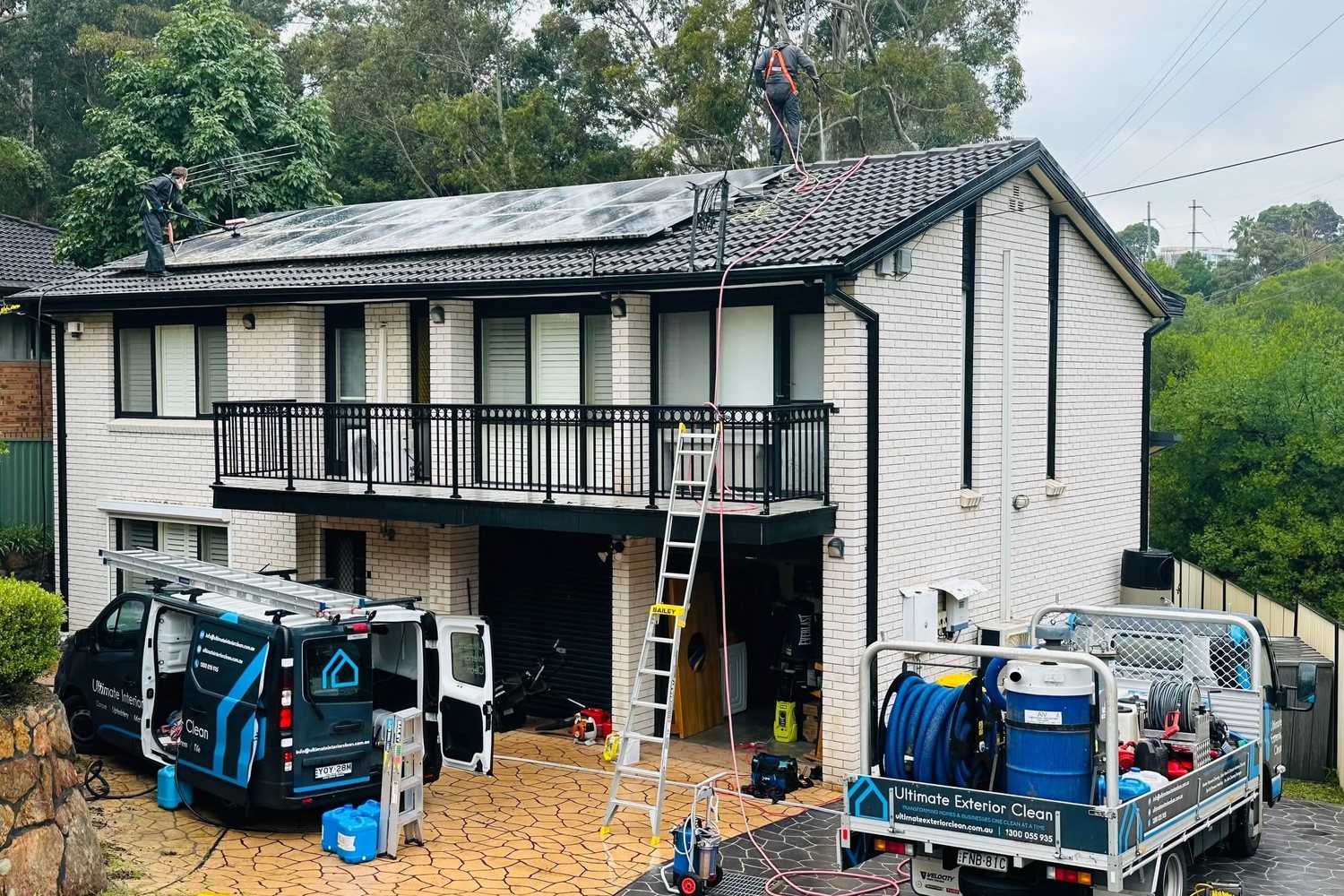
The onshore position that gives Dee Why its sun also delivers a steady salt aerosol onto the glass. Salt draws moisture from the air, so it stays slightly damp and binds windblown sand and dust into a film rather than letting it blow off. Rain clears the loose material and leaves the bonded layer, and because it builds evenly across the whole array there is no visible dirty patch to prompt a clean. Output just drifts downward.
Bird droppings are the sharper problem here. Dee Why Lagoon supports a substantial gull, ibis and cormorant population, and rooftop arrays sit directly under their flight paths. A dropping is opaque rather than translucent, so it does not dim a cell, it blocks it. Because cells run in series within a panel, one fully shaded cell throttles the current for the entire string it belongs to, which is why a few small droppings can cost far more output than their surface area suggests.
Many arrays here sit on low-pitch strata roofs, where there is less natural runoff to help and access is over common property.
We clean with purified water and a soft brush, no detergent and nothing abrasive, working from ladders and height-safety gear rather than walking the panels.
A solar system is an investment with a stated payback period, and everything that reduces output extends that period. In Dee Why two things are quietly doing exactly that.
The salt film is the constant one, and because it builds evenly there is no visual trigger to act on. The bird droppings are the sharper one, and their cost is disproportionate to their size. Because cells run in series, a single opaque dropping can throttle an entire string, so a handful of small marks can cost far more generation than their surface area suggests. That is the specific reason a lagoon-adjacent array is worth checking more often than most.
For strata buildings with a shared system, the same logic applies at a larger scale, and lost generation is a cost carried by every lot owner.
Left long enough, droppings bake onto the glass and become acidic enough to mark the surface permanently, which is a hardware cost rather than a performance one.
We clean with purified water and no detergent, from ladders and height-safety gear rather than by walking the array.
How we clean arrays with purified water and no detergent, and why output recovers once the glass is clear.
Proudly serving Sydney with expert exterior cleaning.
MONDAY: 7:30 AM — 6:00 PM
TUESDAY: 7:30 AM — 6:00 PM
WEDNESDAY: 7:30 AM — 6:00 PM
THURSDAY: 7:30 AM — 6:00 PM
FRIDAY: 7:30 AM — 6:00 PM
SATURDAY: CLOSED
SUNDAY: CLOSED