A lot of the hard surface in Dee Why is shared: strata driveways, carpark aprons, common paths and the concrete stairs between blocks. Those surfaces carry foot traffic, sand walked up from the beach, and a moss film that turns genuinely hazardous on a sloped ramp.
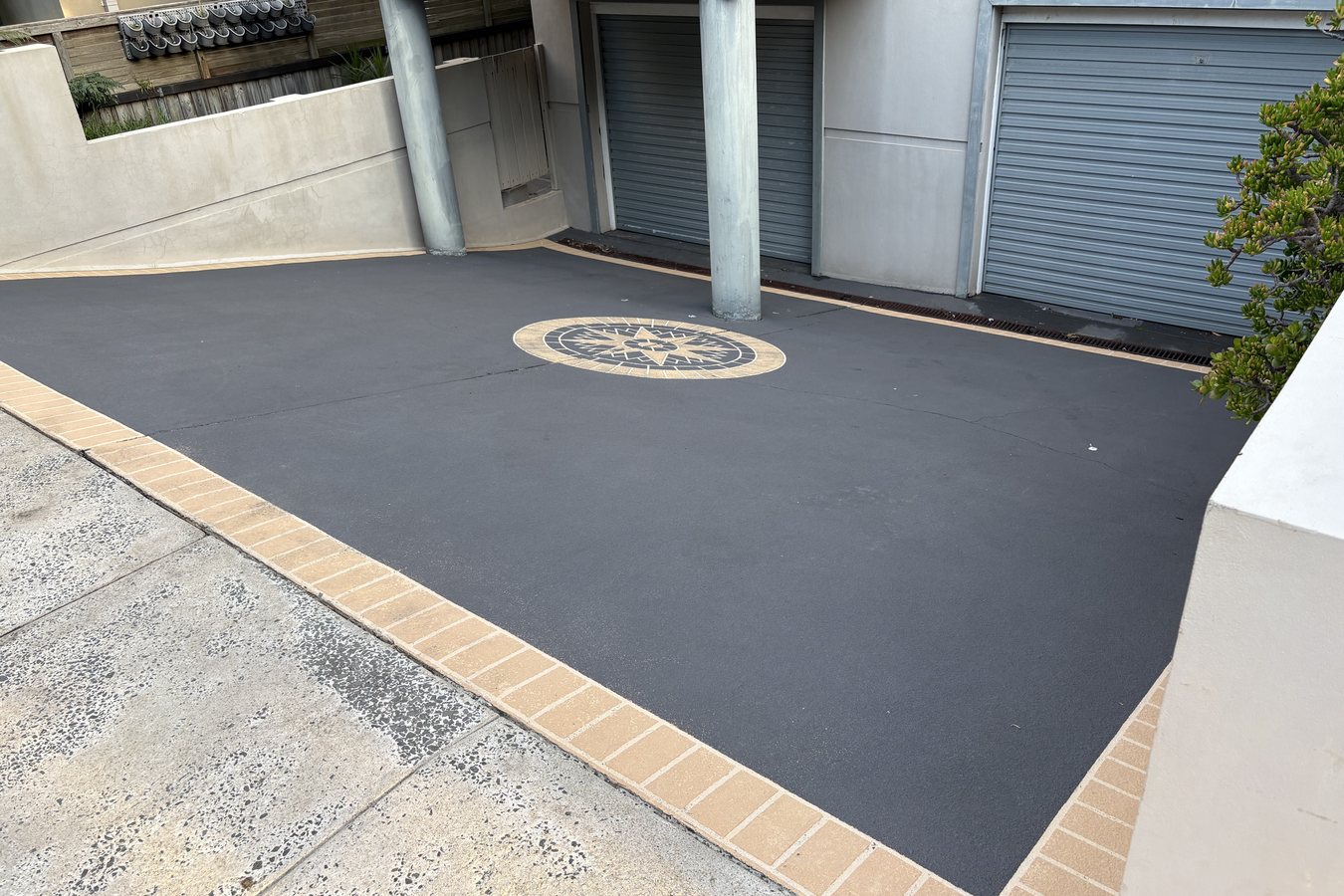
Dee Why has an unusually high proportion of shared hard surface for a beach suburb, because so much of it is strata. Driveway ramps down to basement parking, carpark aprons, common paths between blocks and external concrete stair flights all fall to the owners corporation.
Those surfaces get a specific kind of dirty. Sand walked up from the beach grinds into the concrete texture and greys it. Tyre rubber and oil mark the ramps and parking bays. And because many of these paths run down the shaded southern side of a building between two blocks, they hold moisture and grow a moss and algae film that never fully dries out.
On a sloped driveway ramp or a set of external stairs that film is a genuine liability, not a cosmetic issue, and it is the reason a lot of strata managers book this work at all.
The detached homes through the back streets bring the usual mix of plain slab, exposed aggregate and pavers, plus sandstone flagging on the older properties, which needs pressure dropped right down. We match pressure to surface and manage runoff rather than letting sand and detergent wash toward the lagoon catchment.
For a Dee Why owners corporation, pressure washing common areas is primarily a liability question.
Shared paths, driveway ramps and external stair flights are common property, and the owners corporation carries the duty of care for them. A moss film on a sloping ramp or a set of concrete stairs between blocks is a foreseeable hazard, and if someone falls the question asked afterwards is what maintenance schedule was in place. Regular cleaning is both the fix and the evidence.
Basement ramps are the specific concern. They are steep, often shaded, wet for much of winter, and used by both vehicles and pedestrians.
Beyond risk, there is straightforward asset presentation. Carpark aprons stained with oil and tyre rubber, and paths greyed with beach sand, shape how a building is perceived by prospective tenants and buyers well before anyone looks at a unit.
Because so much of this work sits over stormwater that drains toward the lagoon, containing and managing runoff rather than letting sand and detergent wash straight into the system matters here more than in most suburbs.
Driveways, paths, patios and paving across Sydney, and how we set pressure by surface rather than by habit.
Proudly serving Sydney with expert exterior cleaning.
MONDAY: 7:30 AM — 6:00 PM
TUESDAY: 7:30 AM — 6:00 PM
WEDNESDAY: 7:30 AM — 6:00 PM
THURSDAY: 7:30 AM — 6:00 PM
FRIDAY: 7:30 AM — 6:00 PM
SATURDAY: CLOSED
SUNDAY: CLOSED