Willoughby is partly built on stone. Hawkesbury sandstone makes up around 60 per cent of the ground in the south-central part of the suburb, quarrying along Flat Rock Creek began in the 1880s, and high sandstone retaining walls line the road beside the old incinerator on Small Street. Concrete driveways, pavers and pool surrounds add to the mix. Pressure cleaning in Willoughby means choosing the pressure for each surface, because the setting that lifts oil from a concrete driveway can scar soft local stone for good.
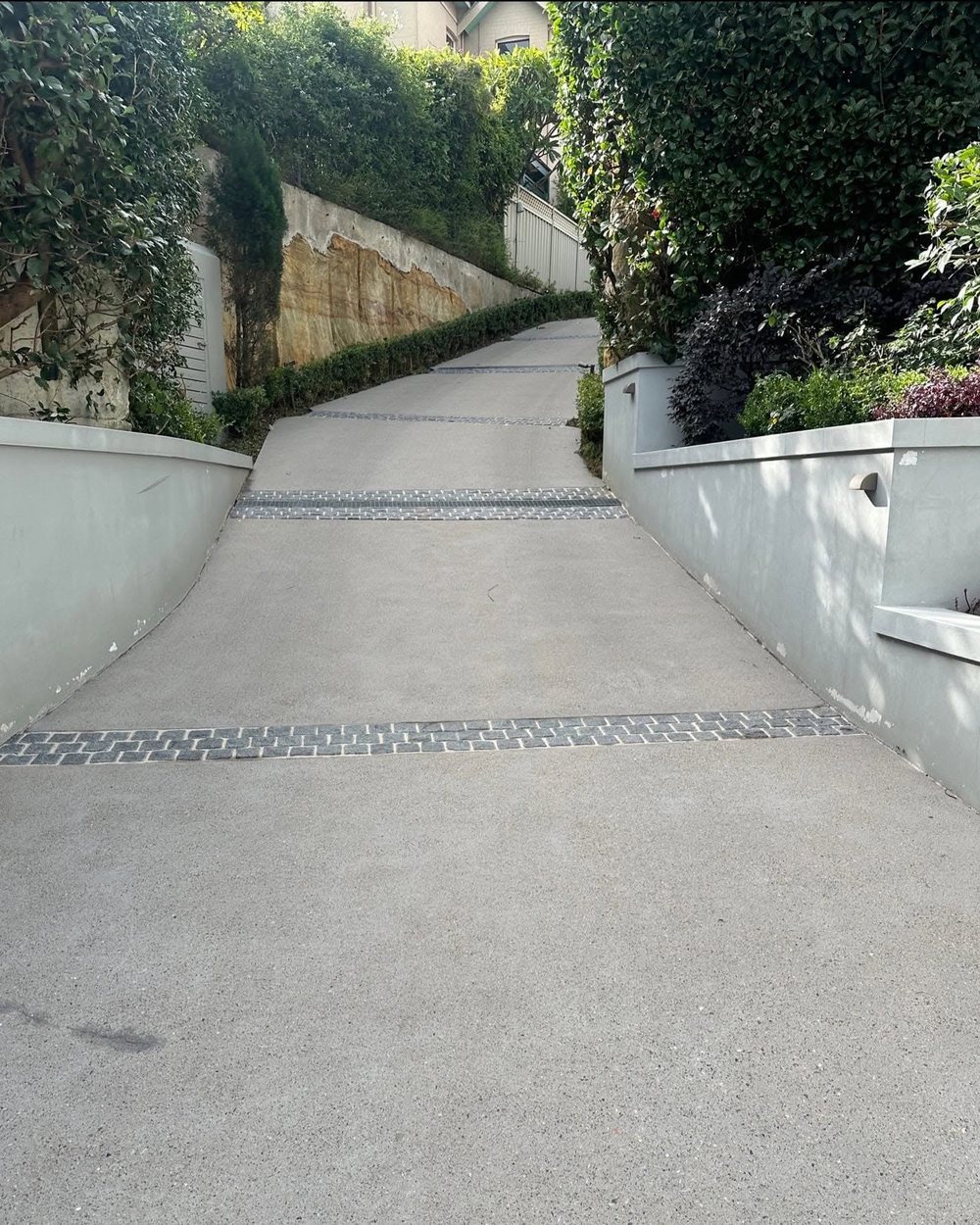
The south and south-east of the suburb fall toward Flat Rock Gully over moderate to very steep slopes, with exposed sandstone benches and broken scarps. On those blocks, paths and steps can end up crossing rock rather than lawn, and anything shaded by a rock face or by the gully's bushland stays damp long enough to grow moss and algae. On a sloping path that growth is a slip risk as much as a stain.
Up on the plateau, driveways, brick paving and pavers pick up their staining from above. Willoughby's mixed street plantings include jacaranda, camphor laurel and Canary Island date palms, and their flowers, berries and fruit leave purple, black and orange marks once they are crushed into a driveway by tyres. Leaf from Brush Box and eucalypts leaches tannin into porous concrete when it sits wet after rain.
Some of the local stonework is older than it looks. Depression-era sandstone retaining walls survive in Flat Rock Gully, with dry stone walling near Henry Lawson Cave, and council's heritage controls count pathways, hard surfaces and fencing as part of the protected setting in its conservation areas. Sandstone and older brick are cleaned with the pressure turned well down, and the higher settings are kept for concrete, where oil stains and tyre marks need them.
The first return is footing. A moss-covered sandstone step on a slope toward the gully, or a shaded side path between a house and its neighbour, is where people slip in wet weather. Clearing the growth back to the surface restores grip without replacing anything.
The second is preparation for sealing. Concrete driveways and pavers take a sealer far better once moss, algae, oil and tyre marks have been lifted, whereas sealer laid over dirt simply locks the stain in underneath. If you are planning to reseal, pressure cleaning is the necessary first step rather than an optional extra.
The third is looking after stone that cannot easily be replaced. Weathered sandstone has a soft outer face that carries its colour and banding, and in a heritage conservation area the hard surfaces of a property are part of what council expects to be kept. Measured pressure is aimed at removing the growth while leaving that face in place, which is the opposite of what a heavy-handed wash tends to do.
Each job is quoted on area, surface and the amount of build-up, so a short sandstone path and a long concrete driveway are each assessed on what they actually involve. You also get before-and-after photos of every surface we clean.
It can be, provided the pressure is matched to the stone. Sandstone is soft and porous, so it is worked at far lower settings than concrete, with water and dwell time doing more of the job. A high setting held close to the surface is what causes the lance marks and pitting that people associate with pressure washing.
Fresh flower and berry marks generally lift well, particularly on sealed concrete and pavers. Stains that have soaked into porous, unsealed concrete over several seasons may lighten rather than disappear entirely. We will tell you which kind you have once we see it, and whether sealing afterwards would help stop next season's drop from setting in.
Yes. Pool surrounds, patios, courtyards, paths, pavers, brick and sandstone are all part of our pressure cleaning work alongside driveways. Pool coping and surrounds grow algae where splash keeps them wet, and courtyards shaded by the house or by street trees hold moss in the paving joints. Each surface gets a pressure setting of its own.
Mainly in shade and slope. Properties on the southern side of the suburb can have rock steps, retaining walls and paths sitting in shadow from a scarp or bushland, so moss and algae build up more heavily. Our products are biodegradable and safe around gardens, pets and children, which suits a block that drains toward bushland.
Driveways, paths, patios and paving across Sydney, and how we set pressure by surface rather than by habit.
Proudly serving Sydney with expert exterior cleaning.
MONDAY: 7:30 AM — 6:00 PM
TUESDAY: 7:30 AM — 6:00 PM
WEDNESDAY: 7:30 AM — 6:00 PM
THURSDAY: 7:30 AM — 6:00 PM
FRIDAY: 7:30 AM — 6:00 PM
SATURDAY: CLOSED
SUNDAY: CLOSED