Chatswood has some of the steepest residential driveways on the Lower North Shore. Blocks fall away hard toward the Lane Cove River, and a steep drive that spends winter under canopy shade grows a moss film that turns it into something you genuinely do not want to walk down in the wet.
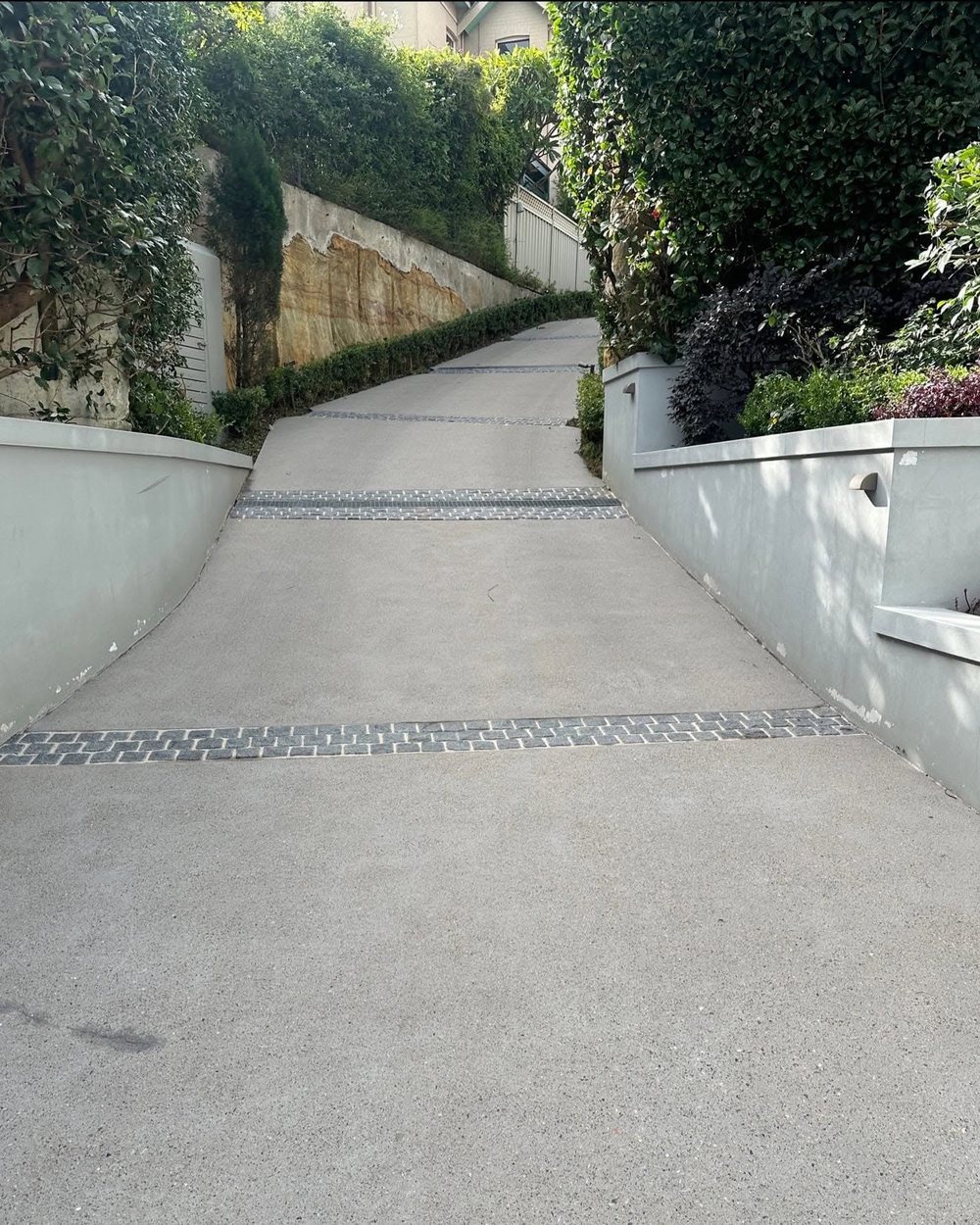
Gradient is the defining feature of hard surfaces in Chatswood, and it applies on both sides of the suburb.
Through the residential streets west of the highway the land drops toward the river, so driveways are steep, often turning, and frequently in permanent shade from the turpentine and blue gum canopy above them. Those surfaces stay damp for days after rain and hold a moss and algae film through most of winter. On a slope that is a hazard rather than a blemish, and the front steps beside the drive are usually just as bad.
The surfaces themselves are a mix of plain slab on the older builds, exposed aggregate and stencilled concrete on the renovated properties, and sandstone flagging and steps where the block falls away sharply.
Around the centre the equivalent problem is the basement ramp. Those are steep, shaded, wet through winter and used by vehicles and pedestrians together, and they carry tyre rubber and oil on top of the moss. Carpark aprons and the shared paths between blocks add foot traffic grime from the retail core.
We set pressure by surface, drop right down for sandstone, and manage runoff rather than letting it carry down the slope toward the river catchment.
On a flat block a mossy surface is untidy. On a Chatswood driveway it is a fall waiting to happen, and that is the main reason this work gets booked here.
A steep drive with an algae film offers very little grip in the wet, and the people most at risk are the ones walking down it rather than driving. Front steps running beside the drive are usually in the same shade and the same condition. For a private owner that is a household safety issue; on a property with tenants it becomes a maintenance obligation.
For an owners corporation the same logic applies to common property with more force. Basement ramps and shared paths are the corporation's duty of care, and a moss film on a steep ramp used by both cars and pedestrians is a foreseeable hazard. Cleaning on a schedule is the fix and the documentation at once.
Beyond grip there is surface life. Concrete that stays permanently damp deteriorates faster at the surface layer, and sandstone flagging degrades once the weathered face starts breaking down.
Setting pressure by surface is what protects that sandstone while still shifting ingrained material from the concrete.
Because on a slope it takes away grip. Many Chatswood blocks fall hard toward the Lane Cove River, and driveways under turpentine and blue gum canopy stay damp for days and hold a moss and algae film through winter. The people most at risk are those walking down rather than driving, and the front steps beside the drive are usually just as slippery.
Matching pressure to each finish is how that is done. Renovated Chatswood properties often have exposed aggregate or stencilled concrete, older builds are plain slab, and some blocks have sandstone flagging where the land falls away. Each gets its own setting rather than one for everything, and once clean the surface is ready for sealing if you want to protect it.
Yes, we work on strata and commercial properties as well as homes. Basement ramps around the centre are steep, shaded and wet through winter, and they carry tyre rubber and oil on top of moss. Carpark aprons and shared paths pick up grime from retail foot traffic. Cleaning on a schedule both fixes the hazard and documents it.
Rather than a fixed interval, aim for a clean before winter on a steep, shaded Chatswood drive, since it holds a moss and algae film through most of the cold months. On a tenanted property a mossy drive is a maintenance obligation as well as a safety issue, so a regular, recorded clean with before-and-after photos is a sensible part of upkeep.
Driveways, paths, patios and paving across Sydney, and how we set pressure by surface rather than by habit.
Proudly serving Sydney with expert exterior cleaning.
MONDAY: 7:30 AM — 6:00 PM
TUESDAY: 7:30 AM — 6:00 PM
WEDNESDAY: 7:30 AM — 6:00 PM
THURSDAY: 7:30 AM — 6:00 PM
FRIDAY: 7:30 AM — 6:00 PM
SATURDAY: CLOSED
SUNDAY: CLOSED