The wall that goes first in Chatswood is almost always the one facing the Lane Cove River valley. Blocks fall away to the west, the canopy is heavy, and those elevations hold damp through winter and grow a dark film that creeps up from the ground. On the apartment blocks it shows instead as streaking under every balcony.
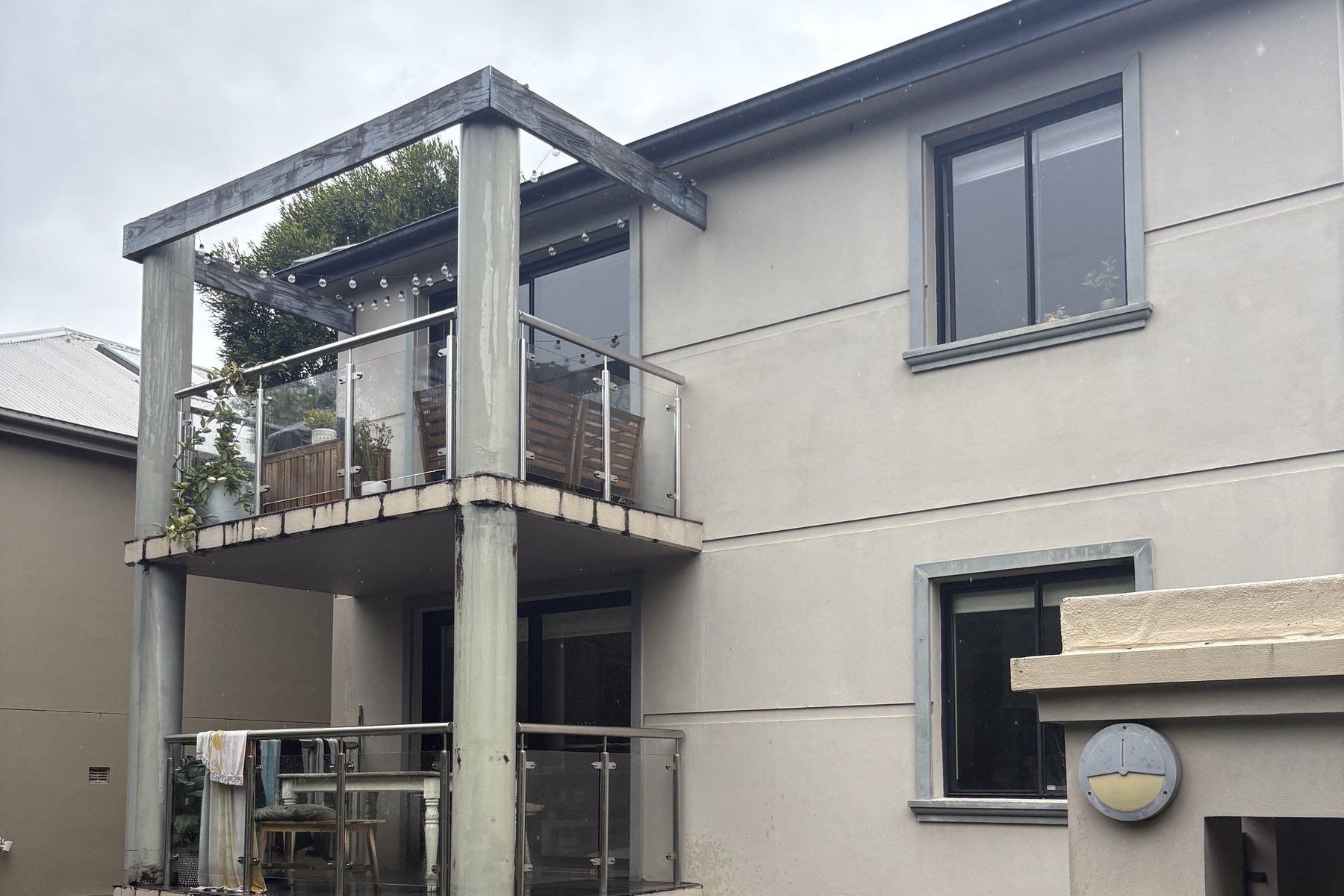
Chatswood's wall problems follow its topography and its two very different kinds of building.
Through the residential streets the land falls west toward the Lane Cove River, and the turpentine and blue gum canopy over those blocks is substantial. South and west-facing elevations, and anything set behind established planting, stay damp from one rain event to the next and grow a green-black film that starts at the base and works upward. Rendered surfaces show it obviously; face brick collects it in the mortar joints where it is harder to see until the whole wall has dulled.
Closer to the centre the stock changes to walk-ups, townhouses and towers. There the pattern is balcony soffits and the undersides of concrete slab edges, which sit out of the rain, stay damp and grow mould that then streaks down the wall below with every shower. Dust from the retail core and ongoing construction settles on top of it.
None of this responds well to pressure. High pressure on aged render drives water behind the coating, and on face brick it scours the mortar.
We apply a biodegradable solution at low pressure and let dwell time break the growth down at the root, then rinse gently.
Chatswood is a market where presentation converts directly into money, and exterior walls are the first thing anyone assesses.
For an owners corporation, streaked balcony soffits read as a poorly run building regardless of how well it is actually managed, and those judgements attach to the whole block rather than a single lot. Clean, evenly finished walls are one of the cheaper improvements available and they shift rental appeal and sale prices for every owner in the building.
Underneath that sits a maintenance case. A coating carrying mould holds moisture against itself continuously and fails early, and repainting a multi-storey block is a special-levy expense where washing it is an operating one. Getting the interval right materially changes how often the larger number comes around.
For the freestanding homes to the west, the benefit is that you stop repainting one elevation at a time. The shaded river-facing walls degrade years ahead of the rest of the house, and washing on a schedule brings the whole property back onto a single repaint cycle.
There is a liveability angle as well, since the heaviest growth is usually on the walls closest to outdoor areas and windows.
Why low pressure is the right method for render, painted brick and weatherboard, and what the process involves.
Proudly serving Sydney with expert exterior cleaning.
MONDAY: 7:30 AM — 6:00 PM
TUESDAY: 7:30 AM — 6:00 PM
WEDNESDAY: 7:30 AM — 6:00 PM
THURSDAY: 7:30 AM — 6:00 PM
FRIDAY: 7:30 AM — 6:00 PM
SATURDAY: CLOSED
SUNDAY: CLOSED