Chatswood is one of the few suburbs where an array can lose output to things being built near it. Construction dust from the ongoing development around the centre settles on panels for streets in every direction, and further out the turpentine canopy drops litter onto the arrays that dust did not reach.
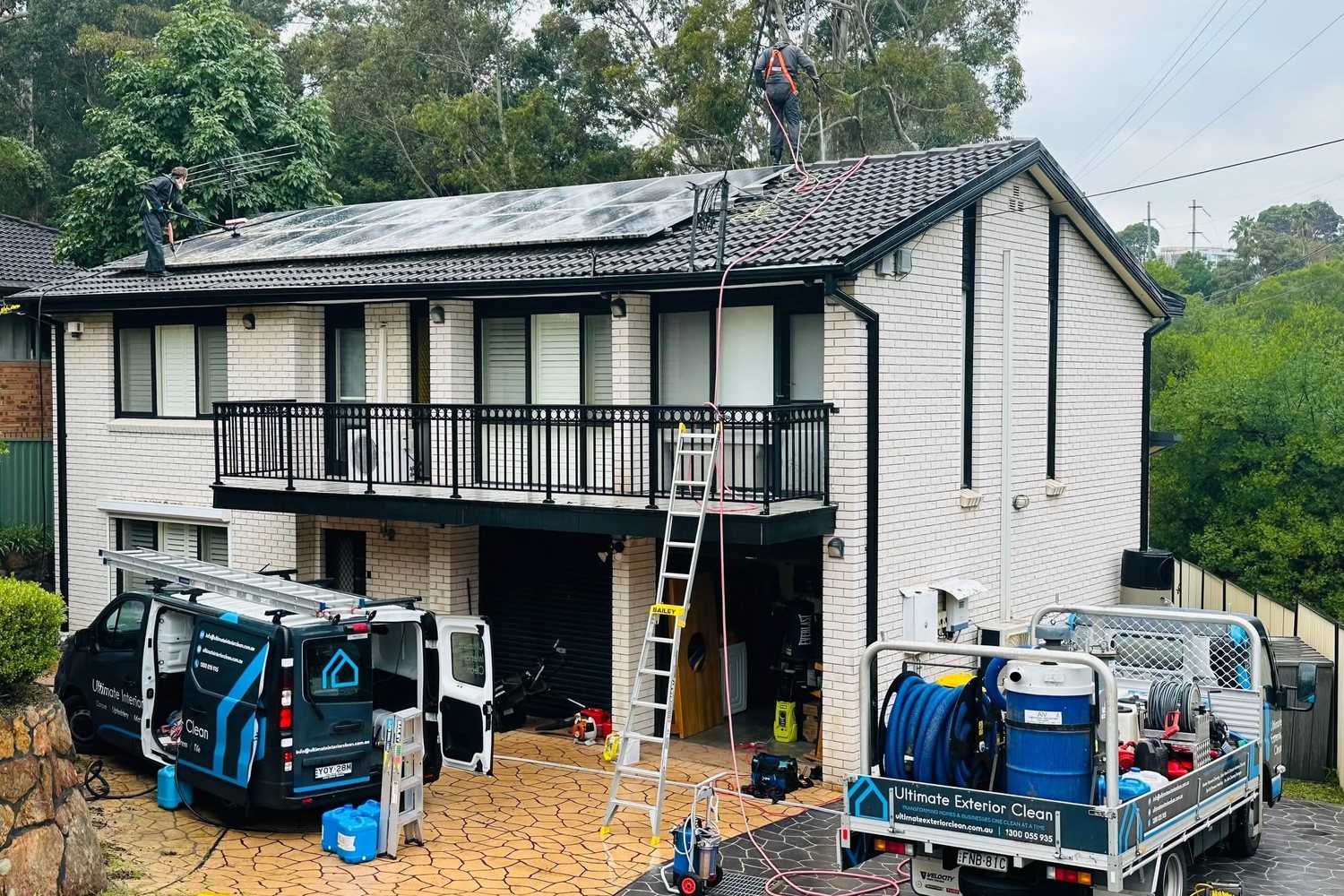
An array in Chatswood is dealing with a suburb that is still changing shape around it.
Around the centre there is more or less continuous construction, and fine cement and site dust travels a long way on the wind. It settles as an even film across whole arrays, and because it is fine it works into the textured surface of the glass rather than sitting loosely on top. Rooftop arrays on the walk-ups and townhouses near the core get the most of it, and low-pitch strata roofs give runoff very little help in shifting it.
Overshadowing is the other centre-adjacent issue worth knowing about. Arrays installed a decade ago on buildings near the commercial core may now sit in the afternoon shadow of something taller, and it is worth establishing whether reduced output is soiling or shading before spending money either way.
West of the highway the picture is the usual North Shore one. Turpentine and blue gum drop leaf and bark onto panels, and it lodges along the lower frame of each row rather than blowing clear, holding moisture against the glass and the panel seal.
We clean with purified water and a soft brush, no detergent and nothing abrasive, working from roof ladders with height-safety equipment.
Solar is one of the few exterior services where you can measure the result, and in Chatswood that measurement is genuinely worth taking.
Because there are two possible causes of reduced output here, soiling and overshadowing, cleaning the array is the cheapest way to separate them. If generation recovers, it was dirt. If it does not, you have learned something important about your roof before quoting additional panels or a battery on the assumption that the system has degraded.
The soiling itself is worth removing on its own terms. Construction dust is fine enough to work into the glass surface and does not simply wash off in the next shower, and a system carrying it is extending its own payback period every month it runs below capacity.
On the residential side, litter lodged along the lower frame does more damage than the shading suggests. Because cells run in series, a band of debris across the bottom edge of a row constrains the whole string behind it rather than costing a proportional share, and the trapped moisture sits against the panel seal, which is the part most vulnerable to long-term ingress.
For strata buildings with a shared system, lost generation is a cost carried by every lot owner.
How we clean arrays with purified water and no detergent, and why output recovers once the glass is clear.
Proudly serving Sydney with expert exterior cleaning.
MONDAY: 7:30 AM — 6:00 PM
TUESDAY: 7:30 AM — 6:00 PM
WEDNESDAY: 7:30 AM — 6:00 PM
THURSDAY: 7:30 AM — 6:00 PM
FRIDAY: 7:30 AM — 6:00 PM
SATURDAY: CLOSED
SUNDAY: CLOSED