Sun is taken seriously in Crows Nest's planning rules. Council's residential controls ask new development to leave adjoining solar panels with three hours of midwinter sun, and towers of up to 21 storeys have been approved above the metro station. That sun is wasted if the glass itself is filmed over. Solar panel cleaning here deals with soot from the highway and fluff from the plane trees, using purified water and no detergent, so the light that reaches a panel can actually be used.
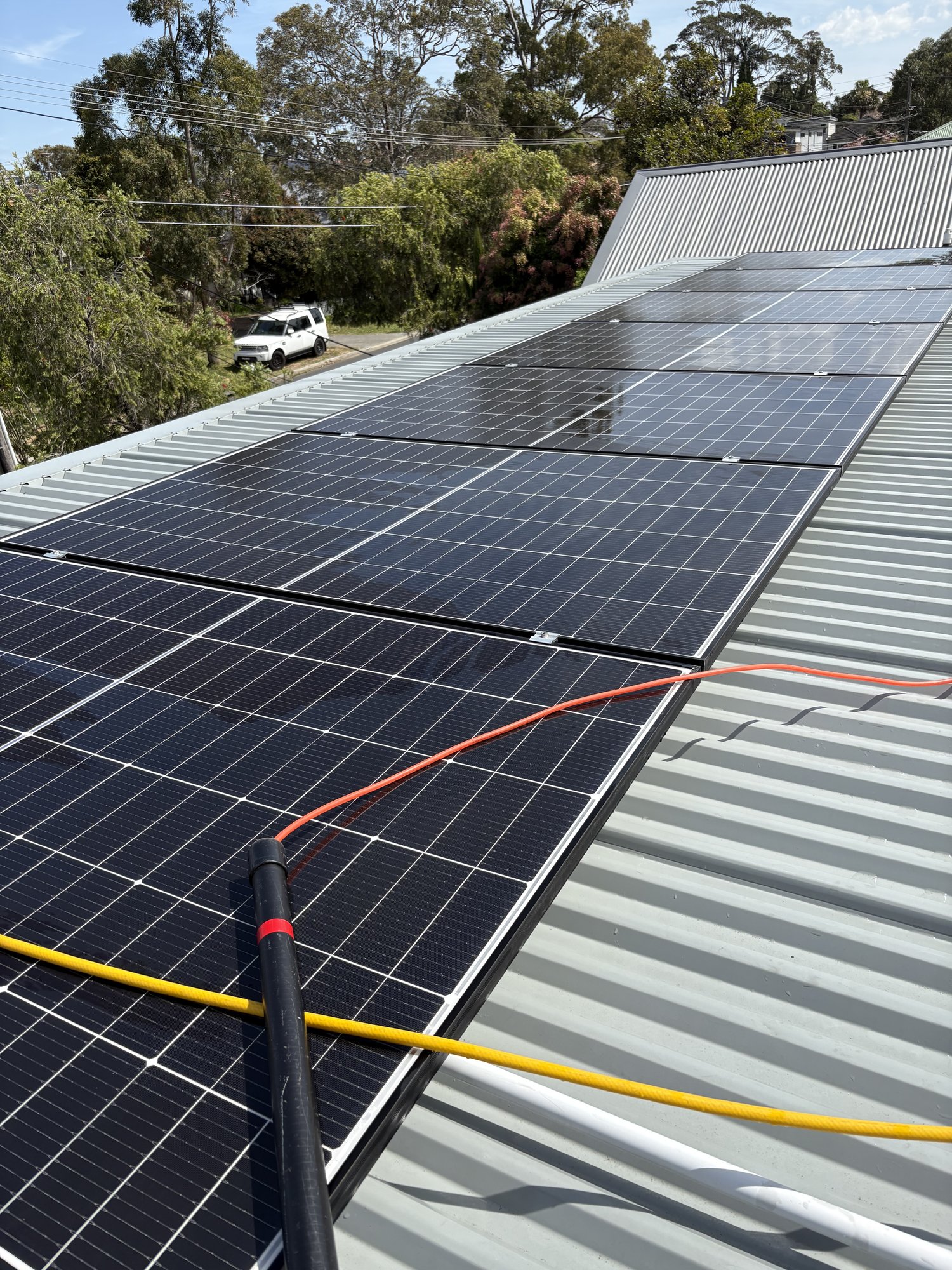
Holtermann Estate panels are often placed where nobody sees them. In conservation areas, council's heritage controls ask for solar panels and other roof-mounted structures to sit away from visually prominent roof planes and front elevations. That tends to mean rear planes and skillion extensions, viewed mainly from a back lane if at all, and an owner may go a long time without looking at them.
What lands on them depends on the nearest road and tree. The Pacific Highway and Falcon Street are major sub-arterial roads, and the Warringah Freeway runs along the northern edge of the suburb, so a fine traffic film is a normal background here. Council's own tree strategy describes Falcon Street as very high-traffic. Roofs close to the plane trees pick up something different: in spring, young leaves shed minute hairs, and the seed clusters also release stiff hairs as they break down. Together with pollen and road film, that settles into a dull layer that light rain does not always shift.
Birds complete the picture. Council's tree strategy lists bird droppings from overhanging trees among the complaints it deals with, and each dropping blocks light to the cells below.
Flat and strata buildings add another variable. Arrays on low-pitched roofs give rain less slope to work with, and access usually has to be arranged through the owners corporation.
At 93 metres, and named for its commanding position, Crows Nest gives a well-placed array a decent view of the sky. A layer of grime quietly gives some of that advantage back. Because it builds up evenly, nothing looks wrong from the ground, and the first hint is often a generation figure that seems low for the weather.
Purified water avoids making the problem worse. It contains no detergent, so no residue stays behind to catch the next round of dust, and it dries without leaving mineral spots. That also protects the coatings on the glass, and there is no detergent in the run-off reaching the cottage garden below.
For owners of panels on a hidden rear roof, the before-and-after photos may be the clearest look they have had since installation. Hold them alongside your inverter or app readings and you have a fair way to judge what the clean did for you, and to decide how often it is worth repeating.
Rented homes and strata buildings make up a large part of the suburb, and the person who benefits from the power is not always the one who pays for upkeep. A dated photo record helps landlords and committees show the system is being looked after. The work is fully insured, and team members are certified to work safely at heights.
Usually, and that is a common spot in the Holtermann Estate because council steers panels away from prominent roof planes. Access is assessed when quoting, including any rear lane approach and the roof material under the array. Team members are certified to work safely at heights, and photos show you the result.
It adds to the film. Plane trees release fine hairs from young leaves and seed clusters, and they settle along with pollen and traffic dust. A single layer will not stop a system, but it reduces light on the cells until it is removed. Purified water rinses it off without detergent.
Cleaning cannot move a shadow. It only makes sure the panels use the direct and reflected light they still receive, which matters more once sunny hours are limited. If you think new development has affected your solar access, North Sydney Council's planners can explain how its controls apply to your site.
The planning controls say tree removal will not be supported purely to give sun to a new solar system, though pruning to maintain sun on an existing one may be considered case by case. That request goes to council. Keeping the glass clean is the part you can arrange yourself.
How we clean arrays with purified water and no detergent, and why output recovers once the glass is clear.
Proudly serving Sydney with expert exterior cleaning.
MONDAY: 7:30 AM — 6:00 PM
TUESDAY: 7:30 AM — 6:00 PM
WEDNESDAY: 7:30 AM — 6:00 PM
THURSDAY: 7:30 AM — 6:00 PM
FRIDAY: 7:30 AM — 6:00 PM
SATURDAY: CLOSED
SUNDAY: CLOSED