Willoughby's rooftops sit on a cleared plateau at an elevation of 97 metres, so arrays on the ridge-top streets have little terrain standing between them and the sun. What tends to cut their output is what lands on the glass: pollen and flowers from the mixed street plantings, droppings from birds feeding in those trees, and grime from the busy roads around the suburb. Solar panel cleaning here means lifting that film with purified water before the long days of summer.
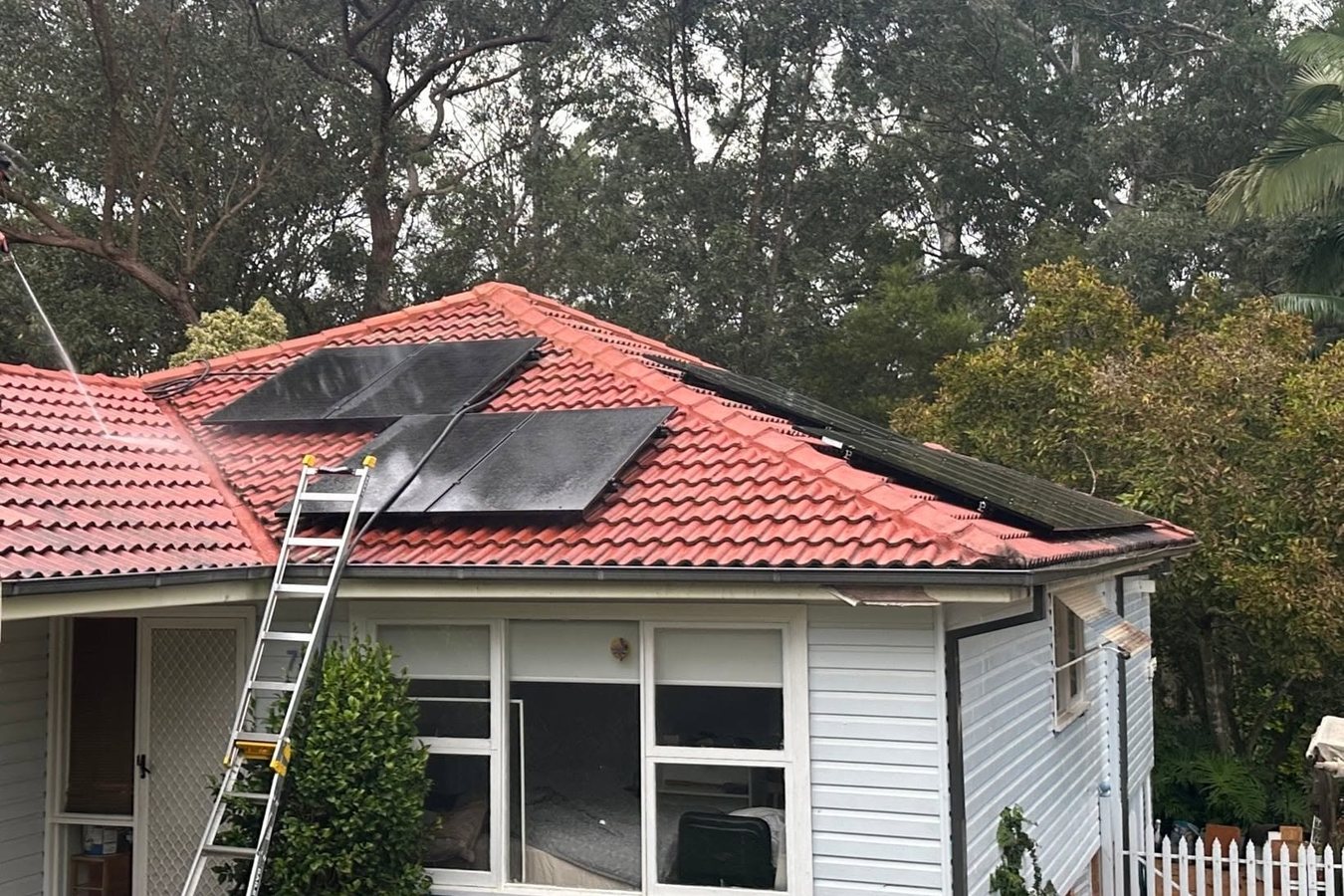
Council's records show the streets of south-central Willoughby carry no remnant native vegetation. Their trees were planted, often fifteen or twenty species to a street, and for an array that means a rolling sequence of deposits rather than one leaf season. Eucalypts, bottlebrush and banksias shed pollen and flower parts, jacarandas drop purple blooms that cling to wet glass in late spring, and the Brush Box avenues send down leaf and capsules that lodge along a panel's lower frame.
Birds are the other part of the picture. Flowering natives draw nectar-feeding birds into the street canopy, and panels near those trees can collect droppings that bake hard on the glass. A dropping blocks light to part of a cell completely, and because the cells in a panel are wired together, that small patch can drag down more output than its size would suggest.
Road grime adds a finer layer. Eastern Valley Way and Penshurst Street are the arterials framing the suburb, with the Gore Hill Freeway on the southern edge, and particulate from all three can settle as a grey film. Willoughby's wettest months fall in summer and early autumn, and storm runoff smears that film across the glass rather than rinsing it off.
Purified water is used, with no detergent, so the panels dry spot-free and the glass and its coatings are protected, and the work is carried out by team members certified for work at heights.
Summer is when a rooftop system earns most of its return, and in Willoughby it follows straight on from the spring flowering of the street trees. Cleaning ahead of that period means the panels enter their most productive months clear, rather than carrying a season of pollen, petals and droppings into them.
Bird droppings are worth dealing with promptly whatever the season. Beyond the lost generation, a fully shaded cell can run hotter than the cells around it, and persistent hot spots are a recognised cause of long-term damage to solar panels.
What a clean leaves behind matters as much as what it removes. Tap water dries with mineral spotting, and detergent can leave a residue that grabs the next layer of dust and pollen. Purified water dries clear, so the glass is not carrying anything that would help new deposits stick.
Then there is safety. A pitched tile roof is slippery underfoot, especially with moss on its shaded side, and a fall from even a single-storey bungalow can cause serious injury. Leaving the job to people certified for height work, and checking the result in before-and-after photos, keeps you on the ground.
Compare your system's generation with the same month last year, ideally across similar sunny days. A gradual decline with no new shading often points to soiling. From the ground, look for droppings, debris collected where each row meets its bottom frame, or a dull film when the sun is low. Our before-and-after photos then show what was removed.
Detergent can leave a residue that draws dust and pollen back onto the glass, and the wrong product can be hard on panel coatings. Purified water has its dissolved minerals removed, so it lifts dust, pollen, soot and droppings and then dries without spots. It is also gentle on the glass itself and on your garden below.
Yes. Strata and commercial rooftops are part of our work, not only houses. Panels mounted at a shallow angle shed rain slowly, so deposits tend to sit on the glass for longer than on a steeper array. Roof access through common property needs to be arranged with the strata or building manager before the clean.
It can. Jacaranda flowers fall in late spring, stick to glass when damp and leave a sticky purple residue as they break down. Panels near Brush Box, camphor laurel or flowering natives gather their own mix of leaf, seed and pollen. If your array sits beside a street tree, a clean after its main drop is worth considering.
How we clean arrays with purified water and no detergent, and why output recovers once the glass is clear.
Proudly serving Sydney with expert exterior cleaning.
MONDAY: 7:30 AM — 6:00 PM
TUESDAY: 7:30 AM — 6:00 PM
WEDNESDAY: 7:30 AM — 6:00 PM
THURSDAY: 7:30 AM — 6:00 PM
FRIDAY: 7:30 AM — 6:00 PM
SATURDAY: CLOSED
SUNDAY: CLOSED