A solar array in Balmain sits on a peninsula with harbour on almost every side: Iron Cove to the west, White Bay to the south-east and Mort Bay to the north-east. Panels in that position can collect a fine salt film along with dust, pollen and bird droppings, and each of them cuts into the light reaching the cells. We clean with purified water and no detergent, so the glass dries spot-free and its coatings are protected.
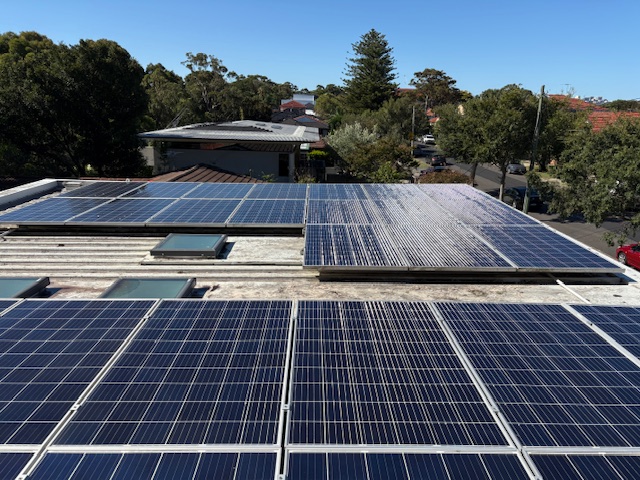
Balmain lies about 2 km west of the CBD on a peninsula ringed by Port Jackson, so most roofs here are never far from open water. Breezes off the bays can carry a fine salt mist that dries onto glass as a thin film. A light shower will not shift it reliably, and once it is there, fine dust and pollen stick to it.
Tree cover is patchy across the suburb but heavy where it occurs. Council records large stands of trees in the parks and open spaces of The Valley, even though its streets have few, and Elkington Park on Iron Cove has mature trees, palms and Edwardian plantings. Panels near that kind of canopy gather leaf, pollen and bird droppings, and a dropping left to bake onto the glass shades the cells underneath until someone washes it off.
Iron and terracotta tile are the roof materials council records most often in The Valley and the Waterview Estate, so that is what most Balmain panels are likely to be fixed to, and many of those roofs belong to houses that step down steep slopes towards the bays. Some are two-storey terraces right at the street edge; others sit above stone retaining walls or tight courtyards. Our team members are certified to work safely at heights.
Solar pays its way only through what it generates, and anything sitting on the glass cuts into that. A film of salt, dust and pollen builds so slowly and evenly that the drop in output is easy to miss, while a few bird droppings can shade individual cells badly enough to pull down more than their own share. Clearing both lets the whole array work with all the light it is getting.
Small systems feel this most. Much of Balmain's housing is terraces, semis and cottages on narrow lots, and where roofs are small the arrays usually are too. On a modest system there are no spare panels to cover for a soiled one.
The purified water is part of the value. Tap water dries with mineral spots and detergent can leave a residue for grime to grip; purified water leaves neither behind, so repeated cleans protect the glass and its coatings rather than wearing at them.
Safety counts as well. A steep two-storey roof above a retaining wall, a lane or a neighbour's courtyard is no place for a garden hose and a household ladder, and walking across panels risks damaging them. Cleaning an array in that position is work for people trained to do it at height.
Rain shifts loose dust, but it often leaves salt film, bird droppings and baked-on grime behind, and on a low-pitched section it can dry into streaks. A harbour setting and nearby park trees can add to those deposits. A periodic clean with purified water removes what the rain leaves, without adding detergent to the glass.
Purified water has had its dissolved minerals removed, so it lifts grime and dries spot-free without any soap. Leaving detergent out means no residue is left on the glass for dust and salt to cling to, and it protects the glass and its coatings. It suits the mix of salt, pollen and soot that panels can collect in Balmain.
Two-storey terraces on sloping streets are part of Balmain's housing, and our team members are certified to work safely at heights, with $10 million public liability insurance behind every job. When you ask for a quote, describe the roof, its height and how it is reached so the access can be planned properly.
You receive before-and-after photos of the panels, which show what came off them. For output, check your inverter or monitoring app on a few clear days before the clean and a few after. Weather varies, so compare similar days rather than reading much into one result. How much changes depends on how dirty the panels were.
How we clean arrays with purified water and no detergent, and why output recovers once the glass is clear.
Proudly serving Sydney with expert exterior cleaning.
MONDAY: 7:30 AM — 6:00 PM
TUESDAY: 7:30 AM — 6:00 PM
WEDNESDAY: 7:30 AM — 6:00 PM
THURSDAY: 7:30 AM — 6:00 PM
FRIDAY: 7:30 AM — 6:00 PM
SATURDAY: CLOSED
SUNDAY: CLOSED