Rozelle sits on a peninsula between two arms of tidal salt water, Iron Cove to the north-west and Rozelle Bay and White Bay to the south-east. Solar panels here can gather a salt film that rain does not always clear, plus whatever the working harbourfront and the suburb's big fig trees add. The iron roofs of narrow terraces and cottages leave limited room for panels, so one dirty panel can be a bigger share of the system than it would be on a broad suburban roof.
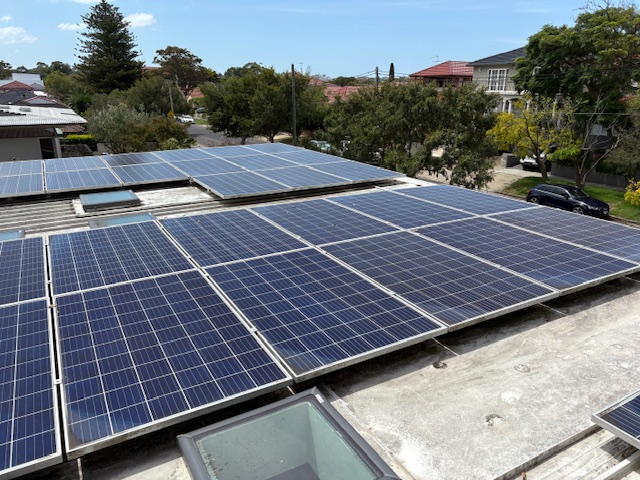
Water bounds Rozelle on two sides. Iron Cove is an estuarine bay of the Parramatta River, and Rozelle Bay, fed by Whites Creek and Johnstons Creek, is part of Sydney Harbour. Homes near either shore sit in air carrying salt, and once that dries on glass it leaves a fine haze which holds onto dust and scatters light before it reaches the cells.
The south-east side also has a working edge. Glebe Island is a reclaimed port, and the concrete batching and aggregate handling facility approved there in 2021 may operate 24 hours a day, seven days a week, producing up to a million cubic metres of concrete a year. Objectors to the project cited dust and air quality for nearby homes, so panels on that side are worth checking for a dull film.
Trees play a different role here than in leafier suburbs. Street planting is light across much of The Valley, but large figs surround Easton Park and line Victoria Road, and fruiting figs draw birds. Droppings are among the most costly things to leave on a panel, because they block light to the cells beneath outright rather than merely dimming them.
Council's study of The Valley records iron as the common roofing material there, and a narrow terrace roof leaves little room for a large array. Panels are cleaned with purified water and no detergent, by a team certified to work safely at heights.
When an array is only a few panels, there is no spare capacity to hide behind. Salt haze, port dust or a cluster of droppings on one module cuts into output that a small system was sized to rely on, and because the film builds slowly, the loss is easily mistaken for normal ageing.
Purified water matters as much as the cleaning itself. It carries no dissolved minerals, so it dries without spotting, and with no detergent there is no residue left on the glass for the next round of dust and salt to cling to. That also spares the glass and its coatings, which the panels' performance depends on.
There is a safety benefit that is easy to underrate. A narrow terrace roof, often attached on both sides and reached from a street with no driveway, is no place for a garden hose and a domestic ladder. Handing the job to people certified to work at heights takes that risk off your hands.
Each clean is photographed before and after, so you can see exactly what came off the panels. If you keep an eye on your inverter readings, the photos also give you a reference point for the condition of the glass at the time.
Tap water leaves minerals behind as it evaporates, which shows up as spots on the glass, and detergent leaves a residue that attracts dust. Purified water has neither problem. It dries spot-free and is gentle on the glass and its coatings, which is why no detergent goes near the panels at all.
It can. Salt carried off the water dries on the glass as a thin haze, and it grips the dust and pollen that would otherwise blow away. Homes close to Iron Cove, Rozelle Bay or White Bay are the most exposed, so arrays there deserve a closer look than those further from the shore.
Glebe Island is a port area, and objectors to the concrete batching plant approved there in 2021 raised dust as a concern for nearby homes. Whether it reaches your roof depends on location and wind. If your panels look dull soon after rain, a dust film could be the cause, and purified water removes it.
Yes, droppings are one of the main things removed. They are worth dealing with promptly, since they shade the cells underneath completely rather than just dimming the panel. The fig trees around Easton Park and along Victoria Road attract birds when fruiting, so homes nearby may see more of it.
How we clean arrays with purified water and no detergent, and why output recovers once the glass is clear.
Proudly serving Sydney with expert exterior cleaning.
MONDAY: 7:30 AM — 6:00 PM
TUESDAY: 7:30 AM — 6:00 PM
WEDNESDAY: 7:30 AM — 6:00 PM
THURSDAY: 7:30 AM — 6:00 PM
FRIDAY: 7:30 AM — 6:00 PM
SATURDAY: CLOSED
SUNDAY: CLOSED