In Rozelle's heritage streets, pressure cleaning is rarely about a driveway, because most homes there do not have one. Council's guidelines keep the old sandstone kerbs unbroken, so cars stay on the street and the hard surfaces that matter are the front step, the path to the door, the rear courtyard and the odd stone retaining wall. These are small areas, often shaded and used every day, and their brick and sandstone need pressure set for the surface rather than the most the machine can deliver.
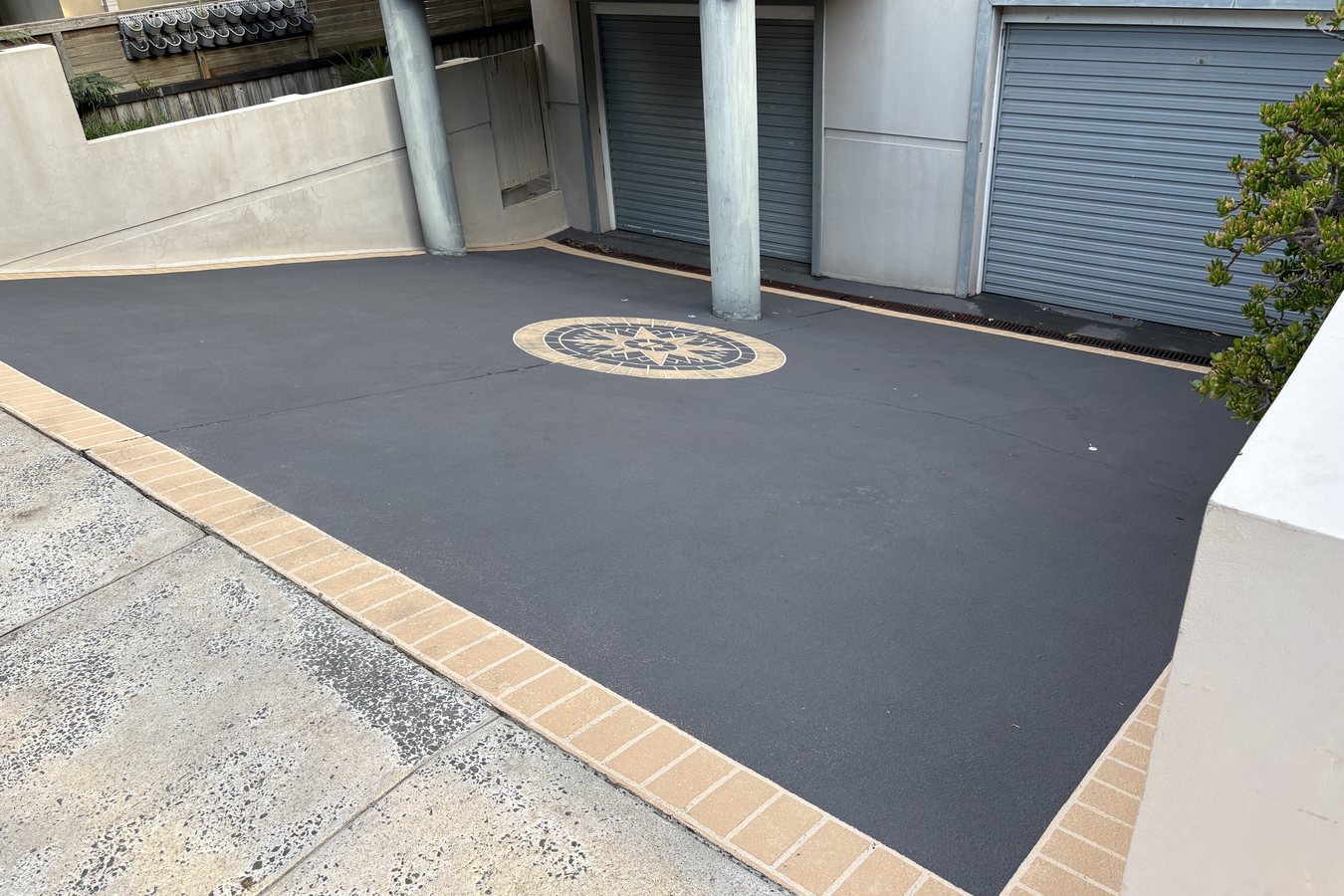
Rozelle was carved into small plots. The Merton Estate in The Valley was cut into 197 allotments, generally 30 by 100 feet, and auctioned from 1874, while Alfred Hancock sold around 1,600 small lots to working men. On lots that size, the outdoor area usually comes down to a narrow front strip, if there is one, and a rear courtyard boxed in by neighbouring walls.
That rear courtyard tends to be the main hard surface on the lot. With continuous building lines and back lanes that council describes as rare, many courtyards get little direct sun and can stay damp after rain, which lets moss and algae spread across pavers, brick and concrete. Getting equipment to them can mean coming through the house, which is worth mentioning when you ask for a quote.
Stone is part of the ground here. Stone retaining walls are listed among the features of both The Valley and the Easton Park heritage areas, the Hornsey Street area has small rock outcrops in its streetscape, and some of its narrow terraces were built of stone probably quarried on the spot. Sandstone is soft and porous, so it is cleaned at a pressure suited to stone, rather than one suited to concrete.
The slope adds risk. Streets in The Valley rise and fall with the land from the Darling Street ridge, so many homes have front steps or a sloping path, and a film of algae on a worn step is exactly where slips happen.
On a small Rozelle lot the courtyard is often the only private outdoor space the house has, and a green, slippery one effectively takes it away. Clearing moss and algae from pavers, brick and concrete hands that space back for eating outside, drying washing or simply sitting in the sun.
Safety is the next return. Algae on a step or a sloping path is treacherous in the wet, and with homes built into the slope, those steps carry daily traffic. For a landlord, keeping them clean is part of keeping a rental reasonably safe for the people living there.
Sandstone and old brick gain the most from getting the pressure right. Lifting moss and grime at a pressure matched to stone lets its natural colour come through, without the scarring a careless jet leaves on soft stone. If you plan to seal pavers or stone afterwards, a thorough pressure clean is the preparation the sealer needs.
Because the work is quoted on area, surface and build-up, a small courtyard and a set of front steps are priced as what they are, not as a driveway job. And with before-and-after photos taken on every job, you have a clear record of the surfaces as they were and as they were left.
On a Rozelle terrace or cottage that usually means the rear courtyard, the front step and path, any side passage, pavers, brick and sandstone such as retaining walls or steps. Patios and pool surrounds are covered too. Oil stains and tyre marks only come into it if you have off-street parking somewhere on the property.
Pressure cleaning is quoted on the area, the surface and how much build-up there is. A shaded brick courtyard thick with moss is a different job from a sunny concrete path, so it helps to describe the surface and its condition when you call. Quotes are free on 1300 055 935.
Sandstone can be pressure cleaned, but not at full force. Pressure is matched to the surface, and soft, porous stone is treated far more gently than concrete. The aim is to lift moss, algae and grime so the stone's own colour shows through, without cutting into the weathered face that took decades to form.
They should be. Sealing over moss, algae or old grime locks it in under the sealer, so the surface has to be properly clean first. Pressure cleaning is the usual preparation for sealing pavers, concrete and stone, and the area should be allowed to dry out completely before any sealer goes on.
Driveways, paths, patios and paving across Sydney, and how we set pressure by surface rather than by habit.
Proudly serving Sydney with expert exterior cleaning.
MONDAY: 7:30 AM — 6:00 PM
TUESDAY: 7:30 AM — 6:00 PM
WEDNESDAY: 7:30 AM — 6:00 PM
THURSDAY: 7:30 AM — 6:00 PM
FRIDAY: 7:30 AM — 6:00 PM
SATURDAY: CLOSED
SUNDAY: CLOSED