Solar on an Annandale roof shares space with a lot of history. Chimneys, decorative fire walls and finials are part of a roofscape council wants kept, so panels have to be fitted around them on whatever roof plane is left. That can put an array right beside the features that shade it and trap debris, on roofs of old terracotta or slate. Cleaning them well is as much a question of height and access as of glass.
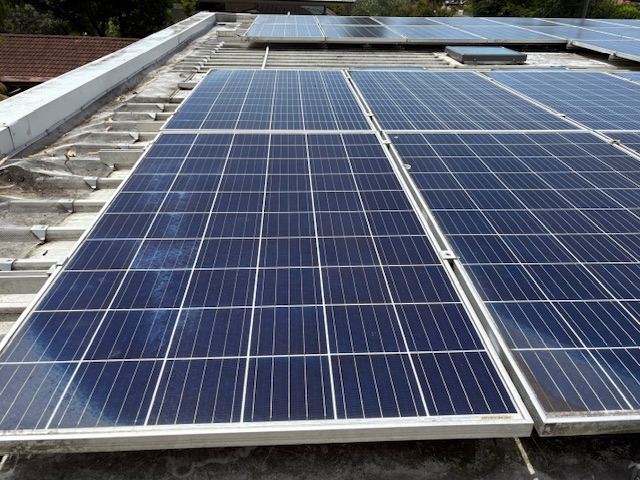
Three kinds of deposit are likely on an Annandale array. Toward the southern edge, council's heritage statement for Parramatta Road records high levels of traffic pollution, and that fine soot settles on glass as a film rain does little to shift. Across the rest of the suburb, the brush box planted along the streets adds leaf, spent flowers and pollen in season. And the roofline itself, with its chimneys, capping and finials, gives birds plenty of places to sit above the array.
Obstructions matter more on a heritage roof than on a plain one. Panels next to a chimney or fire wall already lose light to its shadow for part of the day, and wind-blown leaf tends to settle against the same obstruction, where it dries slowly and leaves a stain.
Roof size varies a lot. Terraces on the small creekside lots have little roof to work with, so an array may be split across planes at different pitches, while pre-war flats and the industrial buildings scattered near Booth Street and the creek edges offer broader roof areas.
We clean with purified water and no detergent, which dries spot-free and protects the glass and its coatings. Our team is certified to work safely at heights, which on a roof of old tile is not optional.
On a small terrace roof, every panel has to pull its weight. When an array is squeezed onto one or two planes between chimneys and fire walls, there is no spare capacity to cover for panels running dirty, and the shortfall goes straight onto the power bill.
Road soot is the deposit owners are least likely to notice. It builds as an even film that looks like nothing from the ground, and the system simply produces less than it should. If your inverter has monitoring, comparing output before and after a clean shows what the film was costing.
Bird droppings work differently. They sit on one spot and block a cell completely until someone removes them, which drags on output well beyond what their size suggests.
Purified water is part of the value. Tap water leaves mineral spots as it dries, and detergent can leave a residue that holds dust, whereas purified water rinses clean and spares the coatings on the glass.
You also receive before-and-after photos, which may be the first close look you have had at your own panels since installation.
No. Panels are cleaned with purified water only. With the minerals taken out it dries without spotting and leaves no film behind, and going without detergent protects the glass and its coatings. It still lifts soot, which matters for Annandale homes near Parramatta Road.
They can. Brush box lines many Annandale streets, and its leaves, flowers and pollen can be blown onto nearby roofs. Leaves caught along the lower edge of a panel hold moisture and grime there, so if your array faces the street it is worth having it checked.
If your system has monitoring, compare recent output with the same months last year; a gradual fall the weather doesn't explain is often soiling. From the street you may also spot bird droppings or leaf along the lower edges. On Annandale roofs, the panels closest to chimneys and fire walls are worth checking first.
Yes, we work on commercial properties as well as homes. Annandale still has industrial buildings scattered along the creek edges, at the northern end and around Booth Street, and where one of those carries a rooftop array we can quote on cleaning it with the same purified water method.
How we clean arrays with purified water and no detergent, and why output recovers once the glass is clear.
Proudly serving Sydney with expert exterior cleaning.
MONDAY: 7:30 AM — 6:00 PM
TUESDAY: 7:30 AM — 6:00 PM
WEDNESDAY: 7:30 AM — 6:00 PM
THURSDAY: 7:30 AM — 6:00 PM
FRIDAY: 7:30 AM — 6:00 PM
SATURDAY: CLOSED
SUNDAY: CLOSED