Solar on Leichhardt's older houses works within tight limits. On the older narrow lots, some only 16 to 30 feet wide, the roof leaves room for a modest array, and many of those roofs also carry chimneys and decorative ridging, so every panel carries a large share of the output. When pollen, dust, bird droppings or traffic soot settle on the glass, that share drops. We clean with purified water and no detergent, so the panels dry spot-free and their coatings are left alone.
The roofs set the shape of the array. Hipped and gabled forms are the norm in the Leichhardt Street and Stanley Street area and in the Scarvell Estate, which breaks each roof into several smaller planes, and the elaborate chimneys there can throw shade across nearby panels at certain times of day. An array split across planes and partly shaded relies even more on clean glass for the hours it does get full sun.
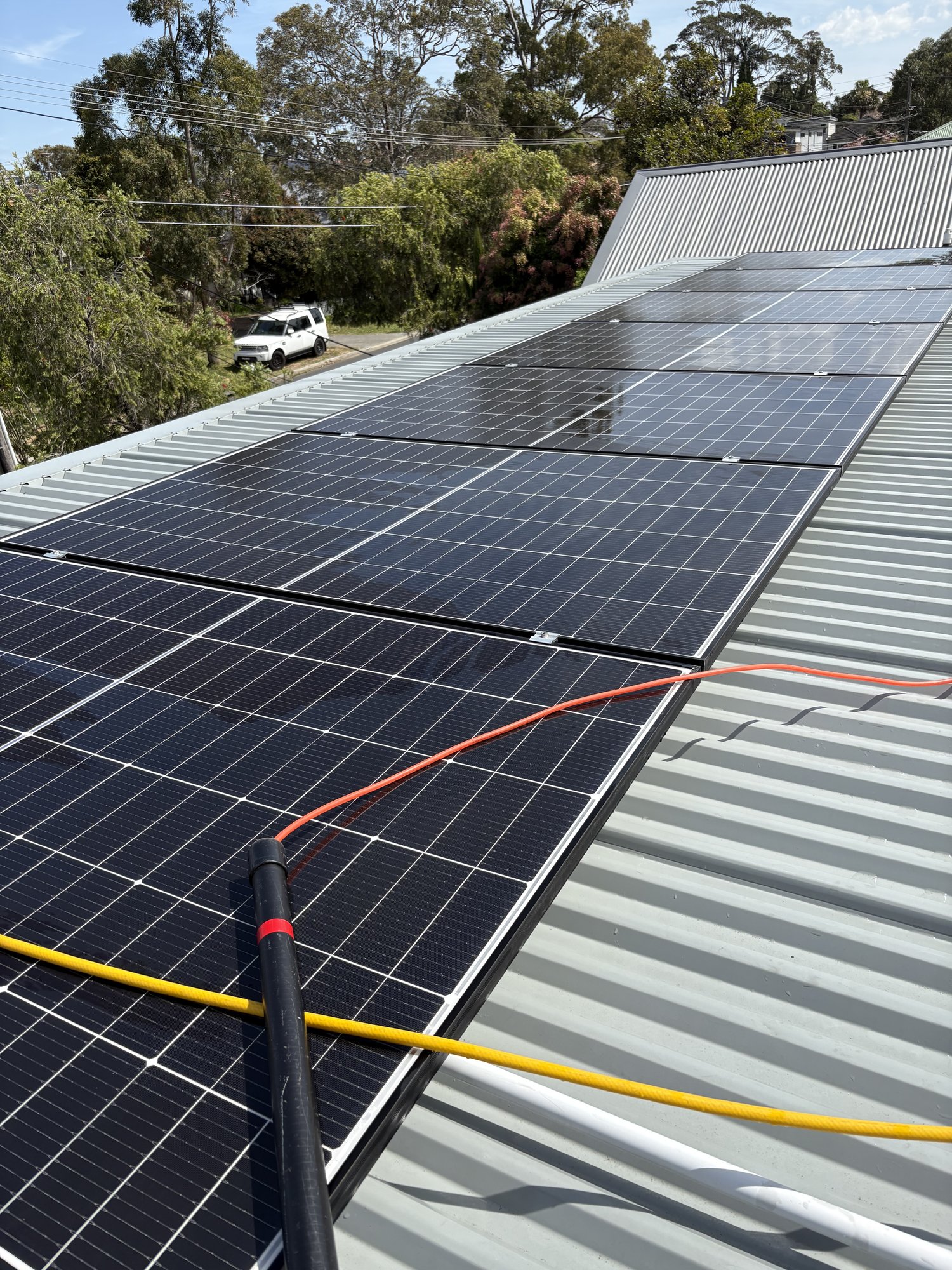
Metal roofs are common too. Iron predominates in the Excelsior streets between Parramatta Road and Marion Street. In September 2025 we cleaned a rooftop system on a corrugated metal roof in Leichhardt using a water-fed pole and purified water, which dries spot-free on the glass.
What lands on the panels varies from street to street. Carlisle Street's crepe myrtles drop spent flowers in summer and leaves in autumn, the brush box planted in the roadway on North Avenue and South Avenue shed leaves and capsules, and the mix of natives and deciduous trees around Norton Street adds pollen in season. Near busy roads such as Parramatta Road and the City West Link, soot from passing traffic can settle on the glass too, and a passing shower may not shift it on its own.
On a small system there is no spare capacity to absorb dirty glass. Panels are commonly wired together in strings, so a patch of leaf litter or droppings across one panel can pull down the output of the panels it is connected to, not just its own. Clearing the whole array evenly gives each panel the same chance to produce.
Purified water is how we avoid leaving anything behind. It carries no detergent and dries spot-free, so there is no residue for dust and pollen to cling to and nothing to dull the anti-reflective coatings many modern panels carry. That looks after the glass you paid for as well as what it generates.
It is also a job best kept off the domestic ladder. Tightly packed houses and narrow side passages rarely leave a comfortable place to stand one, and our team is certified to work safely at heights and fully insured, with $10 million public liability cover.
After a clean, it is worth comparing your inverter or monitoring app figures with the weeks before. Every job also includes before-and-after photos, so you can see exactly what came off the panels.
Tap water carries dissolved minerals that can dry as spots on the glass, and reaching panels on a Leichhardt roof from a ladder wedged into a narrow side passage or lane is risky. We use purified water, which dries clear, and our team is certified to work safely at heights.
No. We clean with purified water only. Detergent can leave a film on the glass that attracts dust, and some products are not kind to panel coatings. Purified water lifts dust, pollen, soot and bird droppings and dries spot-free, so nothing is left sitting on the surface.
Yes. In September 2025 we cleaned a rooftop array on a corrugated metal roof here in Leichhardt, using a water-fed pole and purified water. Metal roofs are common in the Excelsior streets toward Parramatta Road, and the same purified-water method is used whatever the roof underneath is made of.
It depends on what is overhead and how much your output dips. Arrays near the crepe myrtles on Carlisle Street or the brush box on North and South Avenue can collect more litter than panels under open sky. Watching your monitoring app for a gradual fall in generation is the best guide to when a clean is due.
How we clean arrays with purified water and no detergent, and why output recovers once the glass is clear.
Proudly serving Sydney with expert exterior cleaning.
MONDAY: 7:30 AM — 6:00 PM
TUESDAY: 7:30 AM — 6:00 PM
WEDNESDAY: 7:30 AM — 6:00 PM
THURSDAY: 7:30 AM — 6:00 PM
FRIDAY: 7:30 AM — 6:00 PM
SATURDAY: CLOSED
SUNDAY: CLOSED