Plenty of Leichhardt homes have no driveway at all. Council protects the old sandstone kerbs and avoids cutting new crossings through them, so the hard surfaces here are often a tiled front path, a side passage between close-set houses, or a courtyard out the back. Pressure cleaning those small, mixed areas is less about power than about setting the right pressure for tile, brick, concrete and pavers, one surface at a time.
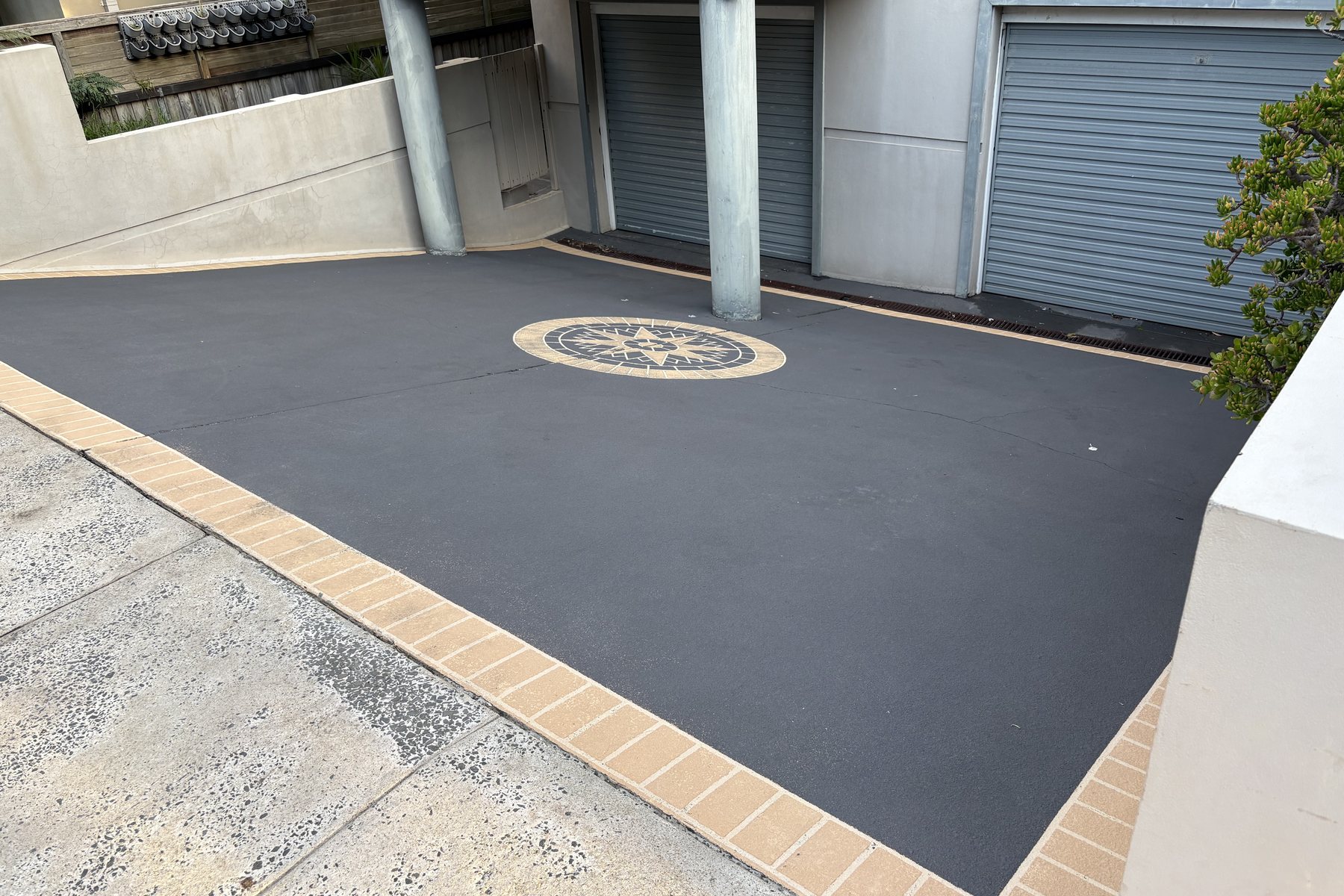
Start at the front gate. In the Scarvell Estate, low face brick fences enclose small gardens, and the paths and walls carry decorative tiles. Those tiles and their grout need a much gentler setting than a concrete slab. Where a front path is plain concrete or pavers, a firmer setting is fine, and the pressure is adjusted as we move from one surface to the next.
Down the side and out the back, space is tight. Lots in the older subdivisions were narrow, 20 feet near Parramatta Road and as little as 16 feet on the lower Excelsior land, and the buildings sit close together. A passage squeezed between two walls gets little sun, so it can stay damp long enough to grow moss and a slippery algae film. Where a property backs onto a rear lane, a parking pad or garage apron can add oil drips and tyre marks to the list.
Terrain plays a part too. Ground falls from the Norton Street ridge toward the low-lying area east of Flood Street, and on the Catherine Street side the Scarvell Estate slopes toward Whites Creek and the old reclaimed estuarine land. Courtyards on those lower, flatter sites can hold water after rain, letting moss settle into the joints of pavers and brick. Where a cleaning agent is needed we use biodegradable products, which matters when the runoff heads for the street drains.
The first gain is underfoot. On a narrow lot a shaded side passage may be the only outside route from the street to the back of the house, and a film of algae turns it slippery in the one place everyone has to walk. Taking it back to clean concrete makes that daily trip noticeably safer.
The second is the life of the surface. Decorative path tiles of the kind found in the Scarvell Estate are hard to replace like for like, and the wrong pressure can strip their grout or chip their faces. Cleaning at a matched setting lifts moss, algae and grime while leaving the surface intact. If you plan to seal pavers or concrete afterwards, a proper clean is the preparation the sealer needs to bond.
Then there is how the space feels. On a small Leichhardt block the rear courtyard may be the only outdoor area you have, and a clean one is somewhere you will actually want to sit. Oil stains and tyre marks can be lifted from a rear parking pad as well, which tidies the view from the lane.
Because pressure cleaning is quoted on area, surface and build-up, the price reflects exactly what you want done, whether that is one front path or every hard surface on the property. Before-and-after photos come with every job.
Yes, with the pressure set for tile and grout rather than concrete. Decorative path tiles like those in the Scarvell Estate are cleaned gently enough to lift moss and grime from the surface and the joints. If some tiles are already loose or cracked, mention them when you ask for a quote so the setting can be planned around them.
Pressure cleaning lifts oil stains and tyre marks, and how far an old stain comes out depends on how long it has soaked into the concrete or pavers. If your parking is reached from a rear lane, mention the access when you ask for a quote so the setup can be planned around it.
That is your call, and it depends on the pavers and how you use the space. If you do plan to seal, a thorough pressure clean is the right preparation, because sealer needs a surface free of moss, algae and grime to bond properly. We can do the clean ahead of whoever applies it.
We quote on the area involved, the type of surface and how much build-up there is. A short tiled path and a shaded side passage are very different jobs from a large paved courtyard, so the quote is based on what is actually there. Quotes are free on 1300 055 935 during office hours.
Driveways, paths, patios and paving across Sydney, and how we set pressure by surface rather than by habit.
Proudly serving Sydney with expert exterior cleaning.
MONDAY: 7:30 AM — 6:00 PM
TUESDAY: 7:30 AM — 6:00 PM
WEDNESDAY: 7:30 AM — 6:00 PM
THURSDAY: 7:30 AM — 6:00 PM
FRIDAY: 7:30 AM — 6:00 PM
SATURDAY: CLOSED
SUNDAY: CLOSED