Hard surfaces in Lane Cove spend a lot of time in shade. Bushland reserve runs up the gullies between the streets, the land falls toward the river, and a path or driveway on the shaded side of a block here can stay damp for the better part of a week after rain.
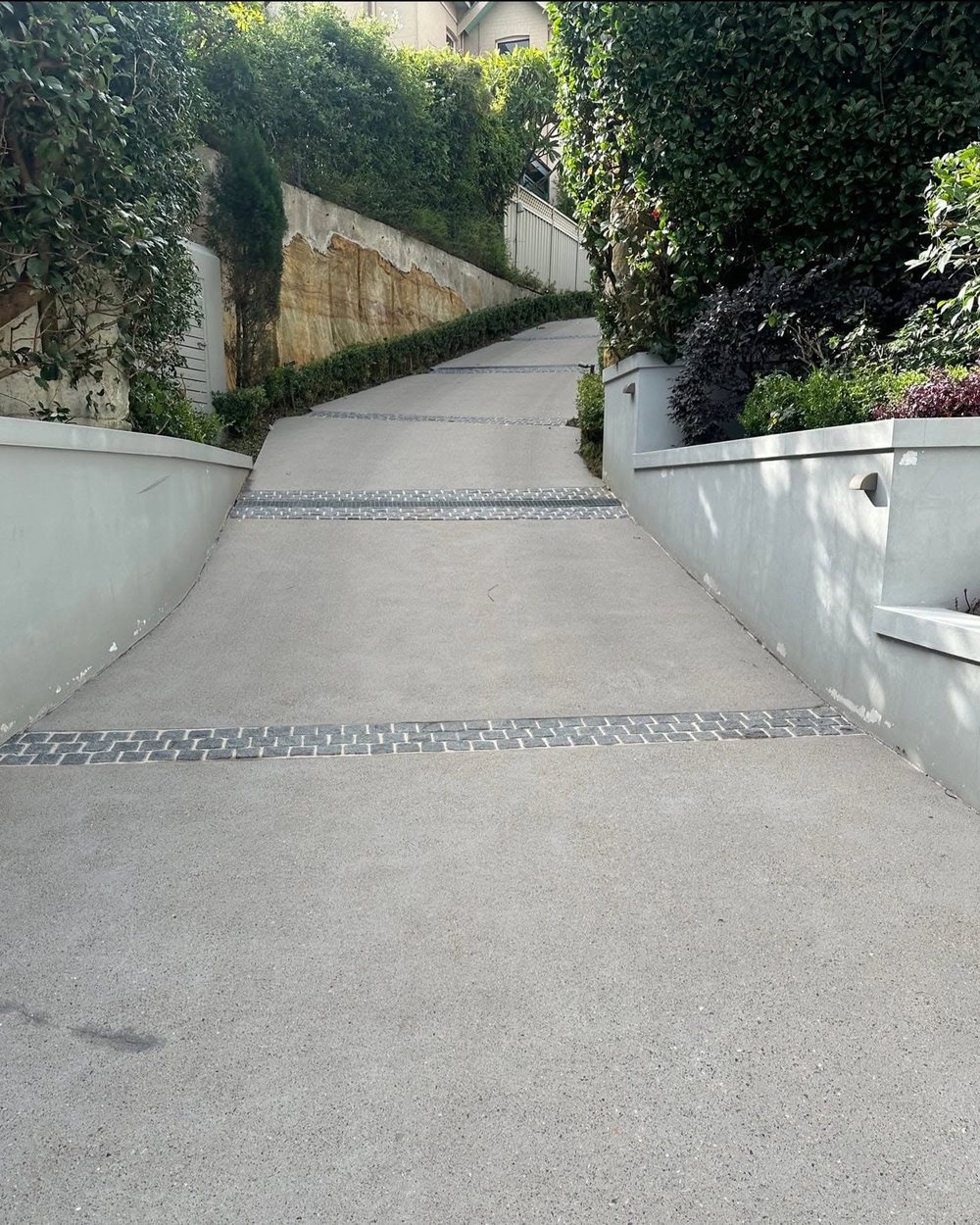
Lane Cove's hard surfaces are shaped by bushland and by slope, and the two compound each other.
Reserve pushes up the gullies between the streets, so driveways and paths frequently run alongside unmanaged canopy rather than a garden. That means constant leaf and bark drop onto the surface and very little direct sun to dry it. Eucalypt litter sitting wet on concrete leaches a brown tannin that penetrates the slab, and the shaded sections grow a moss film that persists through winter.
The land falls steeply toward the river, so driveways are often steep and turning, and paths step down the block. On a slope that moss film is a hazard rather than a cosmetic issue, and the steps beside the drive are usually in the same condition.
Sandstone appears as outcrop, steps and retaining walls where the land drops away, and it is soft enough to be permanently marked by the wrong nozzle.
Around the village the equivalent surfaces are strata: carpark aprons, ramps and the shared paths between walk-up blocks, all carrying foot traffic and tyre rubber.
We set pressure by surface and manage runoff, which matters given how directly these blocks drain toward the river.
The practical case here is grip, and it applies whether the surface is yours alone or shared.
A shaded path or a steep driveway carrying a moss film is the daily route to the door, and under permanent bushland shade that film does not clear on its own over summer the way it does in an open street. For a private owner that is a household safety issue. On a strata property, ramps and shared paths are common property and the corporation carries the duty of care, so a documented cleaning schedule is both the fix and the answer if a fall is ever contested.
Surface life is the second return. Concrete that stays permanently damp deteriorates faster at the face, and sandstone degrades once the weathered outer layer starts breaking down.
The tannin staining is worth addressing simply because it lifts. On a long drive under constant leaf fall the discolouration reads as permanent, and treated properly most of it is not.
Managing wash water rather than letting it run downhill matters more here than most places, given how directly these blocks drain into the river and the reserve.
Driveways, paths, patios and paving across Sydney, and how we set pressure by surface rather than by habit.
Proudly serving Sydney with expert exterior cleaning.
MONDAY: 7:30 AM — 6:00 PM
TUESDAY: 7:30 AM — 6:00 PM
WEDNESDAY: 7:30 AM — 6:00 PM
THURSDAY: 7:30 AM — 6:00 PM
FRIDAY: 7:30 AM — 6:00 PM
SATURDAY: CLOSED
SUNDAY: CLOSED