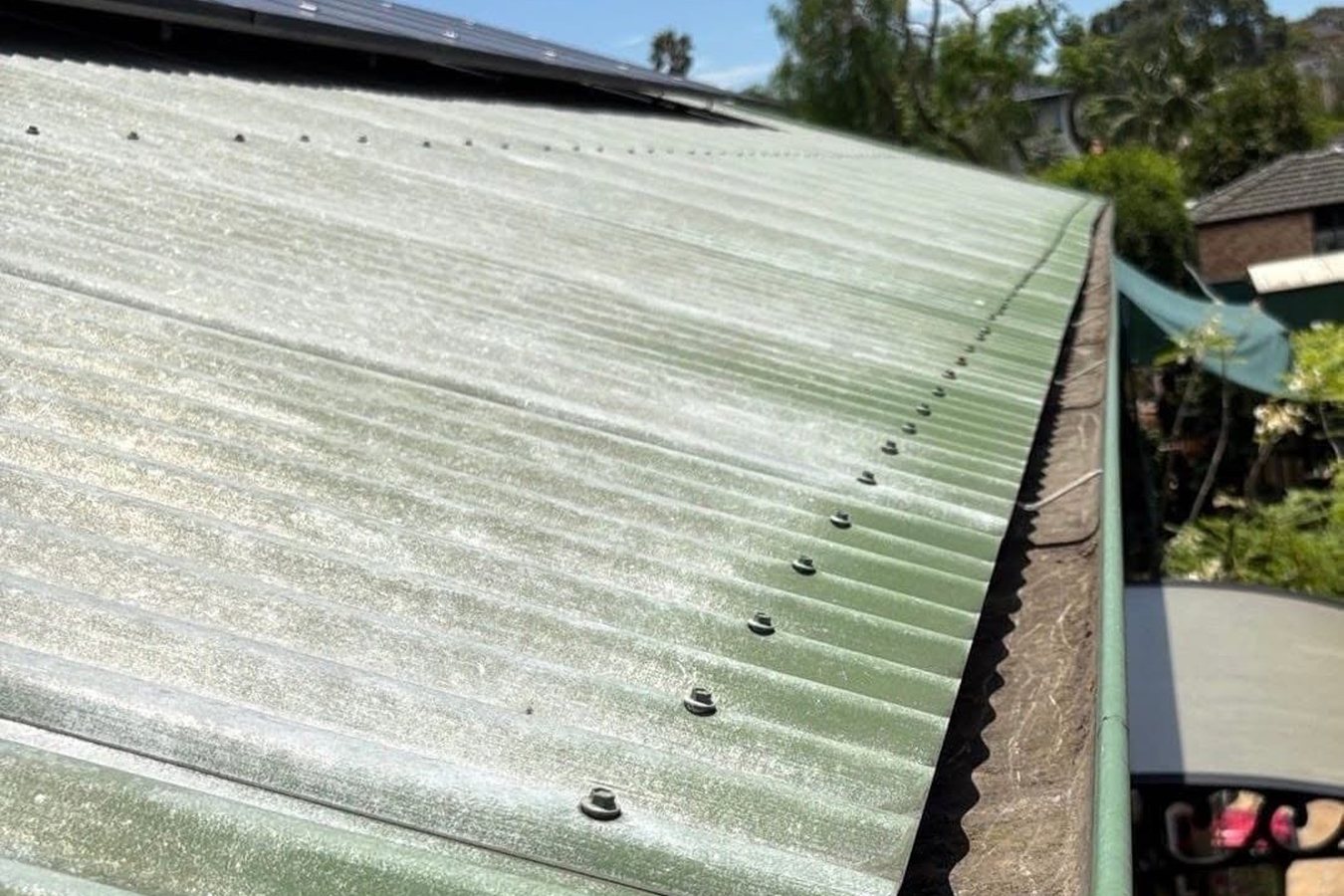
With reserve running up the gullies between the streets, a lot of Lane Cove properties have bushland on the boundary rather than in the distance. The gutters take a continuous load of gum leaf and bark, and on the walk-up blocks near the village that same material collects in box gutters nobody can see.
Lane Cove has two gutter jobs, and the reserve network feeds both of them.
On the freestanding homes, bushland reserve pushes up the gullies between the streets and Lane Cove National Park wraps the western and southern edges, so turpentine, blue gum and angophora drop onto these roofs year round. Bark is the difficult part: long strips that bridge a gutter and dam everything behind them rather than washing through. Because the land falls sharply toward the river, the rear gutter on a street-level house is frequently two storeys up at the back, over a slope or retaining wall.
Around the village the stock is 1960s and 1970s walk-ups and newer apartments. Those carry box gutters behind parapets draining through a few outlets, plus roof plant and aerials that trap debris, and access runs over common property where ladder work is generally restricted.
The same bushland litter lands on both, but on a parapet building a blockage ponds and finds the membrane rather than spilling over an edge.
We vacuum from ground level in both cases, clear downpipes rather than flushing into them, and check outlet flow specifically on the box-gutter buildings.
The consequences of a blocked gutter here depend entirely on which side of the suburb you are on, and both are worth avoiding.
On a house backing onto reserve, the overflow runs behind the fascia into the eaves, and on a block that falls away toward the river that water tracks along the structure rather than away from it. The litter load never stops, so the interval matters more than any single clean.
On a walk-up block near the village the failure is sharper and more expensive. A ponding box gutter behind a parapet has no safe failure mode, and the water finds the membrane above a top-floor ceiling. For an owners corporation that means a claim, a make-good and a question about the maintenance schedule, which is exactly the sort of thing a clearing record answers.
There is a fire consideration for the properties directly on the reserve boundary, where dry bark and leaf packed into a gutter is fuel sitting at the roof line.
Working from the ground removes the work-at-heights exposure on both, and keeps ladders off retaining walls and common paths.
How vacuum gutter clearing works, what we check while we are there, and what it costs across Sydney.
Proudly serving Sydney with expert exterior cleaning.
MONDAY: 7:30 AM — 6:00 PM
TUESDAY: 7:30 AM — 6:00 PM
WEDNESDAY: 7:30 AM — 6:00 PM
THURSDAY: 7:30 AM — 6:00 PM
FRIDAY: 7:30 AM — 6:00 PM
SATURDAY: CLOSED
SUNDAY: CLOSED