Lane Cove has bushland running right through it. The national park follows the river along the western and southern edges, and reserves push into the suburb between the streets, so a great many roofs here sit with gum canopy directly overhead rather than at a comfortable distance.
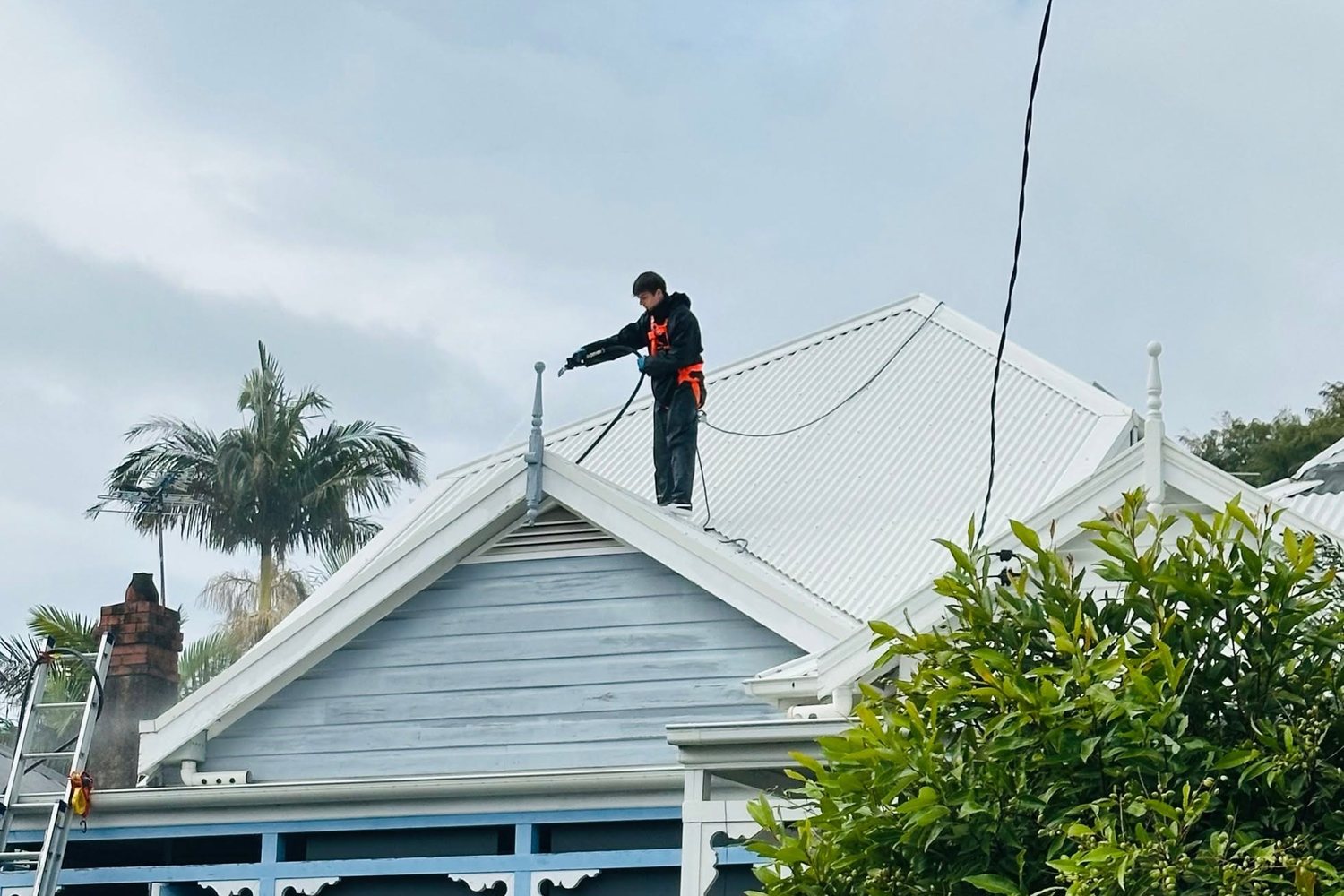
The reserve network is the defining feature of roof work in Lane Cove.
Lane Cove National Park follows the river around the suburb, and smaller reserves run up the gullies between the streets, which means bushland is rarely more than a block away and frequently on the boundary. Turpentine, blue gum and angophora drop leaf, bark and seed onto roofs continuously rather than seasonally. Bark is the awkward part, coming off in long strips that do not break down and instead bridge across valleys, damming everything behind them.
The land falls steeply toward the river, so houses step down their blocks and southern pitches on the downhill side can hold damp for days. That shade is what turns the litter load into established moss and lichen on the unglazed concrete tile common through the post-war streets.
Around the village the stock changes to 1960s and 1970s walk-up blocks and newer apartments, where the roofs are low pitch or flat, carry plant and aerials, and drain through a small number of outlets.
We soft wash tile so the surface and ridge pointing survive, take care around fixings on metal deck, and clear the valleys in the same visit.
A roof beside bushland is on a different maintenance clock to one on an open street, and recognising that is most of the value here.
The litter load never stops, so a roof cleaned on a generic schedule spends much of the year carrying material that feeds growth and blocks valleys. On the tile roofs through the post-war streets that means moss thick enough to lift tile edges and let water track under the overlap, which is how a sound roof starts leaking.
Bark makes it worse than the leaf volume suggests. A strip bridging a valley forms a dam early in the season and then collects everything that follows, so a roof that looked clear in summer can be holding water by the first heavy autumn rain.
For the walk-up blocks near the village the risk is sharper. Debris on a low-pitch roof feeds into box gutters and outlets that have no safe failure mode, and the water finds a top-floor ceiling rather than an edge.
Every clean doubles as an inspection, so failing flashings, cracked tiles and corroded valley irons get flagged early rather than after a ceiling stain appears.
How we clean tile, terracotta and metal roofs across Sydney, what the process involves and what it costs.
Proudly serving Sydney with expert exterior cleaning.
MONDAY: 7:30 AM — 6:00 PM
TUESDAY: 7:30 AM — 6:00 PM
WEDNESDAY: 7:30 AM — 6:00 PM
THURSDAY: 7:30 AM — 6:00 PM
FRIDAY: 7:30 AM — 6:00 PM
SATURDAY: CLOSED
SUNDAY: CLOSED