Dee Why has more strata than most Northern Beaches suburbs, and unit block gutters fail differently to house gutters. Long runs, box gutters draining to a handful of outlets, and a resident bird population off the lagoon that treats a blocked gutter as nesting material.
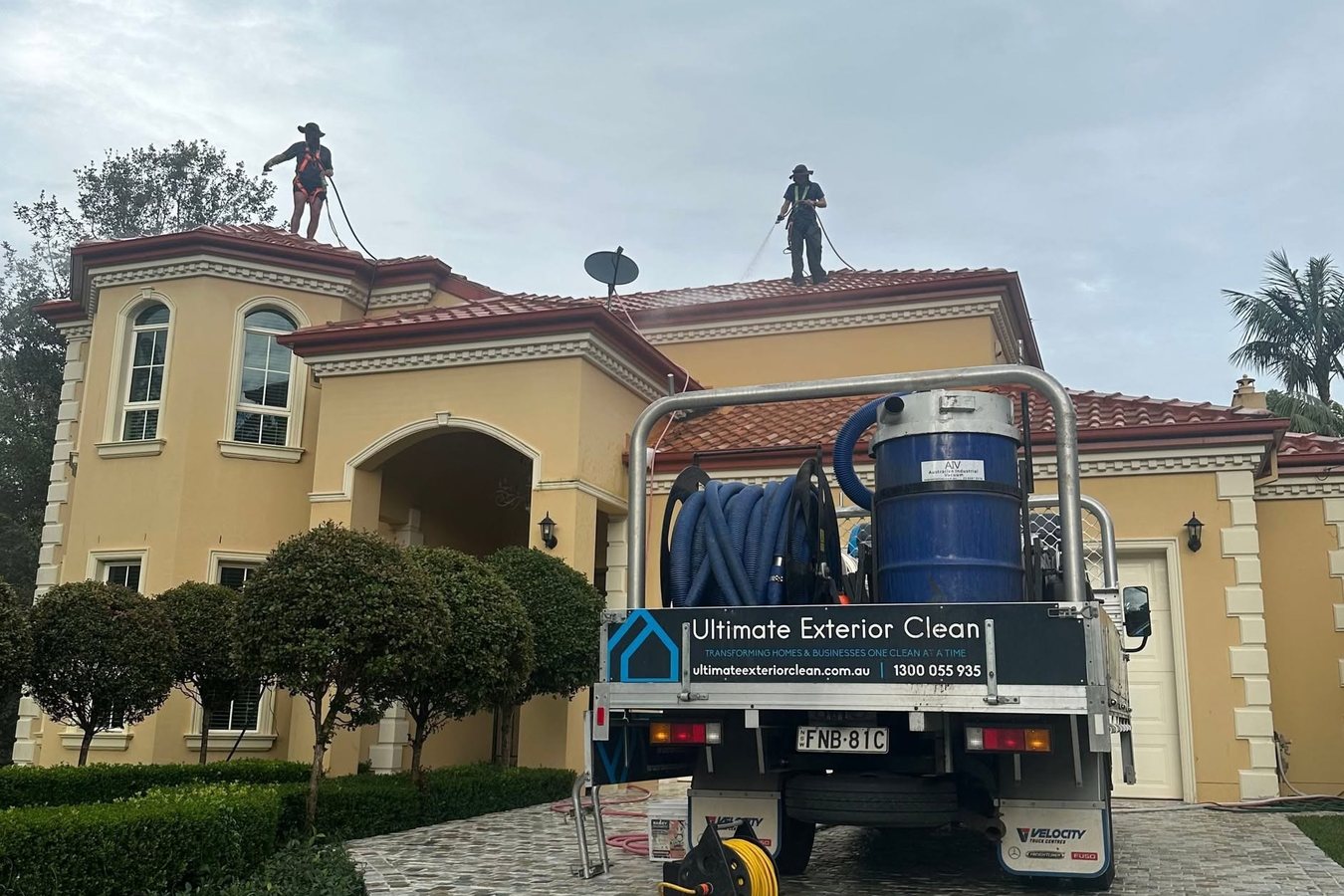
Gutter work in Dee Why splits into two very different jobs.
On the walk-up blocks that make up much of the suburb, the gutters are long continuous runs, often box gutters set behind a parapet and draining through only a few outlets. That design has no safe failure mode: when an outlet blocks, water does not spill over an edge, it ponds and finds its way through the membrane into the top-floor units. Access is over a flat or low-pitch roof, and strata rules generally rule out ladder work over common property paths and gardens.
On the detached homes through the back streets and up the slope toward Cromer, it is a more conventional eaves gutter, but the debris is unusual. Dee Why Lagoon sits at the northern end of the suburb and supports a substantial bird population, and gutters here regularly hold nesting material, feathers and droppings alongside the Norfolk Island pine needle fall from the beachfront plantings.
Windblown beach sand binds the whole lot into a dense mat that ordinary flushing will not move.
We vacuum from ground level, which suits both cases, and check outlet flow specifically on box-gutter blocks because that is where the expensive failures happen.
For a Dee Why owners corporation, gutter clearing is one of the cheapest pieces of risk management available.
Box gutters behind a parapet have no safe failure mode. When an outlet blocks, water ponds on the roof and finds the weakest point in the membrane, and that point is directly above someone's ceiling. A single ingress event into a top-floor unit brings an insurance claim, a make-good on the lot owner's property, and a strata dispute about whether maintenance was reasonable. The cost of that sequence dwarfs a scheduled clean.
There is a building-fabric cost too. Standing water on a low-pitch roof works at the membrane and at flashing laps, and re-membraning a roof is a special-levy expense.
Documented, regular maintenance also matters if a claim is ever contested. An owners corporation that can show a clearing schedule is in a materially better position than one that cannot.
Because we work from the ground, there is no ladder access over common property, no contractor on the roof edge, and no work-at-heights exposure for the building to carry.
Dee Why Lagoon at the northern end of the suburb supports a substantial bird population, and a blocked gutter makes a handy nesting spot. Gutters here regularly hold nesting material, feathers and droppings alongside pine needles from the beachfront plantings, all bound together by windblown beach sand. Vacuuming lifts that whole mat out, where flushing would simply run over it.
Many of the walk-ups have long box gutters behind parapets draining through only a few outlets, so we clear the runs and check outlet flow specifically, because that is where costly failures happen. Every gutter clean includes before-and-after photos and a roof inspection report, giving the owners corporation documented maintenance if a claim about water in a top-floor unit is contested.
Not for vacuum clearing. Our high-reach gutter vacuums are worked from the ground, so there is no ladder over common paths or gardens, no contractor on the roof edge and no work-at-heights exposure for the building to carry. The business is fully insured, and team members are certified to work safely at heights.
On a regular schedule rather than after an overflow. Pine needles, windblown sand and lagoon bird debris keep arriving, and one blocked outlet on a parapet roof can put water into a top-floor unit. A recurring clean costs far less than an insurance claim and make-good, and the photo record from each visit shows the schedule is being kept.
How vacuum gutter clearing works, what we check while we are there, and what it costs across Sydney.
Proudly serving Sydney with expert exterior cleaning.
MONDAY: 7:30 AM — 6:00 PM
TUESDAY: 7:30 AM — 6:00 PM
WEDNESDAY: 7:30 AM — 6:00 PM
THURSDAY: 7:30 AM — 6:00 PM
FRIDAY: 7:30 AM — 6:00 PM
SATURDAY: CLOSED
SUNDAY: CLOSED