Ocean-facing glass in Dee Why hazes over within weeks. That film is salt, and it is why wiping with tap water never quite works: the minerals dry back onto the pane. We use purified water through a water-fed pole, which lifts the salt and dries clear without touching a ladder to your balcony.
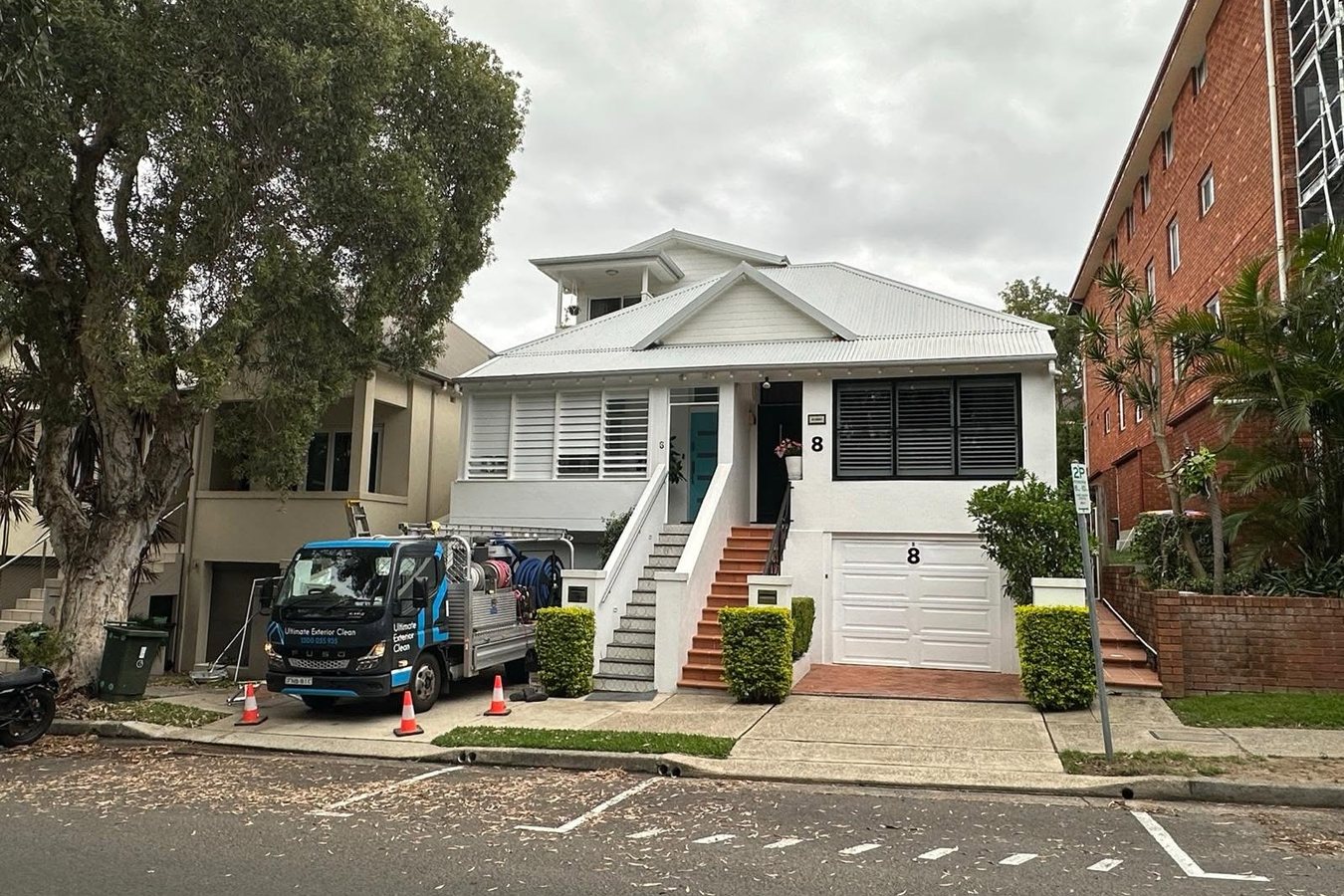
Dee Why is a high-glass suburb. The walk-up and newer residential blocks along the beachfront and Pittwater Road corridor are built to face the water, which means large sliding doors and balcony glazing on the most exposed elevation available.
That glass takes a continuous salt aerosol off the ocean. Salt is hygroscopic, so rather than drying to a dust that blows away it stays faintly damp and catches windblown sand and dust, building the grey haze that dulls an ocean outlook. East and north-east elevations get the worst of it, which is exactly where the view is.
Aluminium sliding door tracks are the secondary problem. Salt and sand collect in the tracks and drainage slots, and over time that shows as pitting and stiff, gritty doors long before anyone thinks to blame the windows.
Access on strata property is the practical constraint. Ladders over common paths, garden beds and carpark aprons are usually not permitted and rarely safe. Water-fed poles reach three storeys from the ground with nothing resting against the building, and the purified water leaves no mineral spotting as it dries, which matters on glass that gets inspected in full afternoon sun.
In a suburb with this much strata, window cleaning is often less about the glass than about who is permitted to reach it.
Ladder work over common property paths, garden beds and carpark aprons is usually restricted and frequently unsafe, which is why upper-level glass on Dee Why blocks tends to go uncleaned for years. Reaching three storeys from the ground with a water-fed pole removes the access problem entirely, along with the work-at-heights exposure the building would otherwise be carrying.
For an owners corporation there is a straightforward presentation return. Clean, evenly finished glass across a whole facade materially changes how a block reads to prospective tenants and buyers, and it is one of the cheaper improvements available.
For individual owners, the benefit is the view. Ocean-facing glass is why these apartments command what they do, and salt haze steadily erodes that.
The tracks matter as much as the panes here. Salt and sand in aluminium sliding door tracks corrode and stiffen them, and that is a repair rather than a clean once it sets in.
That is typical on Dee Why strata, where ladders over common paths, garden beds and carpark aprons are usually not permitted. Working from the ground with water-fed poles, we can clean balcony glazing up to three storeys high, and the block avoids carrying any work-at-heights exposure. The business is fully insured for public liability.
That is the point of using purified water. It carries no dissolved minerals, so it dries without the spotting that shows up once balcony glass catches full afternoon sun. No detergent is used either, which means there is no film left on the pane for salt to grip. Before-and-after photos let you compare.
Ocean-facing glass along the beachfront and Pittwater Road can haze over within weeks, with east and north-east elevations affected most. Those exposed panes justify more frequent cleans than the rest of the building. It is also worth keeping an eye on sliding door tracks, since salt and sand collecting there leads to pitting and stiff doors.
Salt and beach sand collect in aluminium sliding door tracks and drainage slots. Over time that causes corrosion pitting and stiff, gritty doors, often well before anyone connects it to the windows. Once a track has corroded it becomes a repair rather than a clean, so keeping tracks clear matters as much as clean glass.
Water-fed poles, purified water and spot-free glass up to three storeys, without a ladder against your gutters.
Proudly serving Sydney with expert exterior cleaning.
MONDAY: 7:30 AM — 6:00 PM
TUESDAY: 7:30 AM — 6:00 PM
WEDNESDAY: 7:30 AM — 6:00 PM
THURSDAY: 7:30 AM — 6:00 PM
FRIDAY: 7:30 AM — 6:00 PM
SATURDAY: CLOSED
SUNDAY: CLOSED