The 1960s and 1970s brick walk-ups that define much of Dee Why weather in a particular way. Salt settles on the render and the underside of balcony slabs, holds moisture there, and grows the dark staining that runs down from every balcony edge. Low pressure and the right solution lift it without damaging the surface.
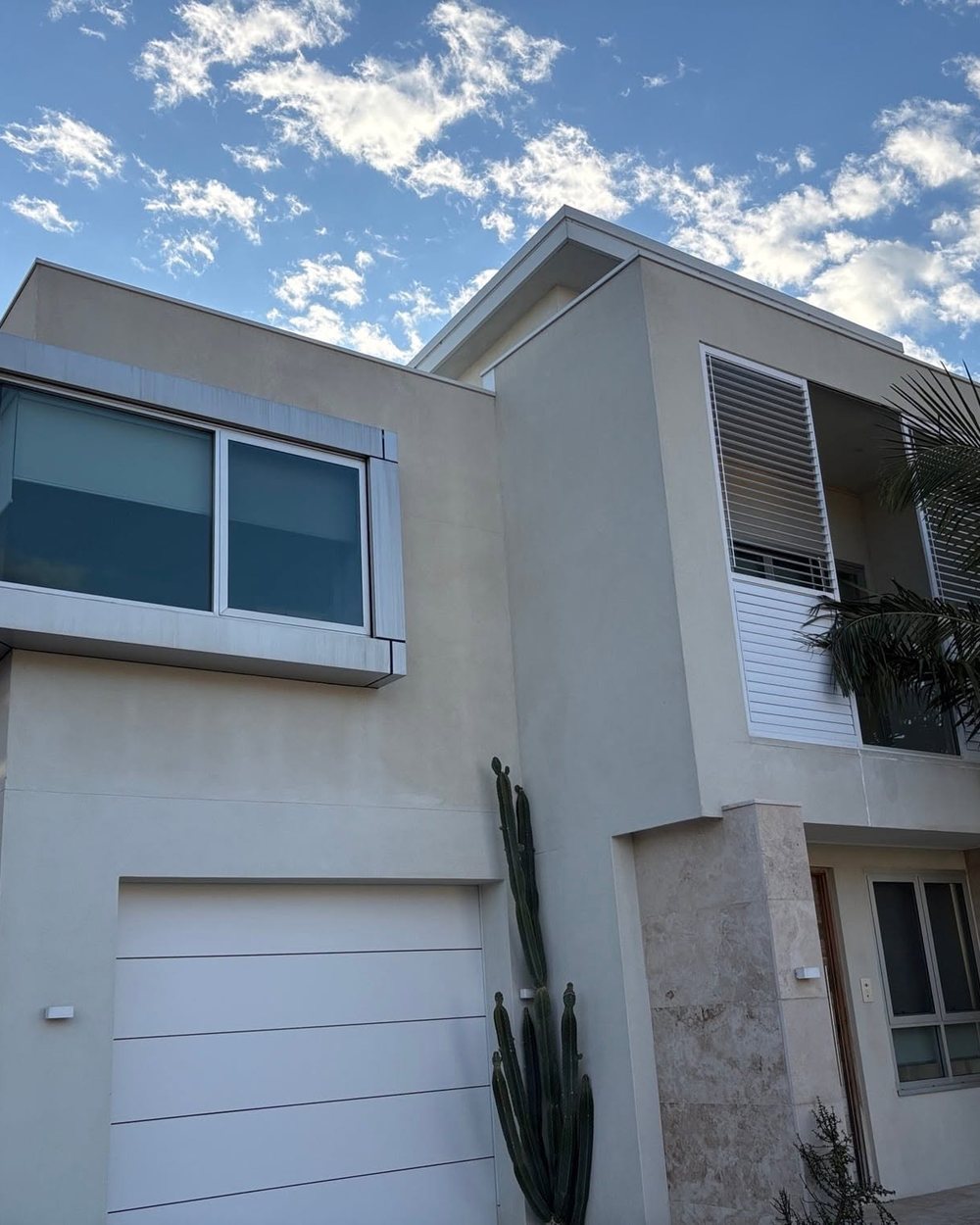
Walk past a Dee Why unit block and the staining tells you how the building sheds water. Balcony soffits and the underside of concrete slab edges are almost always the worst affected, because salt-laden air collects there out of the rain, stays damp, and grows mould that then streaks down the wall below with every shower.
The suburb's face brick from that era is porous and holds salt in the mortar joints. Render on the newer blocks shows it differently, as an even grey dulling on the seaward elevation that people mistake for the paint fading.
On the detached homes behind the beach the pattern is more conventional: rendered and painted brick, with mould concentrating on the shaded southern side and anywhere planting sits close to the wall.
None of this responds well to pressure. High pressure on aged render drives water behind the coating, and on face brick it scours the mortar. We work at low pressure with a biodegradable solution and let dwell time break the growth down at the root, then rinse thoroughly with fresh water so the salt is carried off rather than left to draw moisture straight back in.
For a Dee Why block, the exterior walls are the first thing a prospective tenant or buyer assesses, and streaked balcony soffits read as neglect regardless of how well the building is actually run.
That is the commercial case. Rental appeal, sale price and the general perception of how a block is managed all track with how the facade presents, and on a strata property those judgements are made about the whole building rather than a single lot.
The maintenance case sits underneath it. Salt held in render and face brick draws moisture into the surface continuously, and a coating under that load fails early. Repainting a three-storey block is a special-levy expense; washing it is an operating one. Getting the interval right materially changes how often the larger number comes around.
Concrete balcony edges and soffits are the specific area to stay on top of, because the staining there is both the most visible and the most persistent.
Low pressure is not optional on aged render. High pressure drives water behind the coating and creates the problem it was meant to solve.
Why low pressure is the right method for render, painted brick and weatherboard, and what the process involves.
Proudly serving Sydney with expert exterior cleaning.
MONDAY: 7:30 AM — 6:00 PM
TUESDAY: 7:30 AM — 6:00 PM
WEDNESDAY: 7:30 AM — 6:00 PM
THURSDAY: 7:30 AM — 6:00 PM
FRIDAY: 7:30 AM — 6:00 PM
SATURDAY: CLOSED
SUNDAY: CLOSED