Much of Mosman's housing predates the materials that tolerate high pressure. Federation brick laid in lime mortar, original render, painted timber detailing: all of it will be damaged by an aggressive wash. Soft washing cleans these surfaces with chemistry and dwell time instead of force.
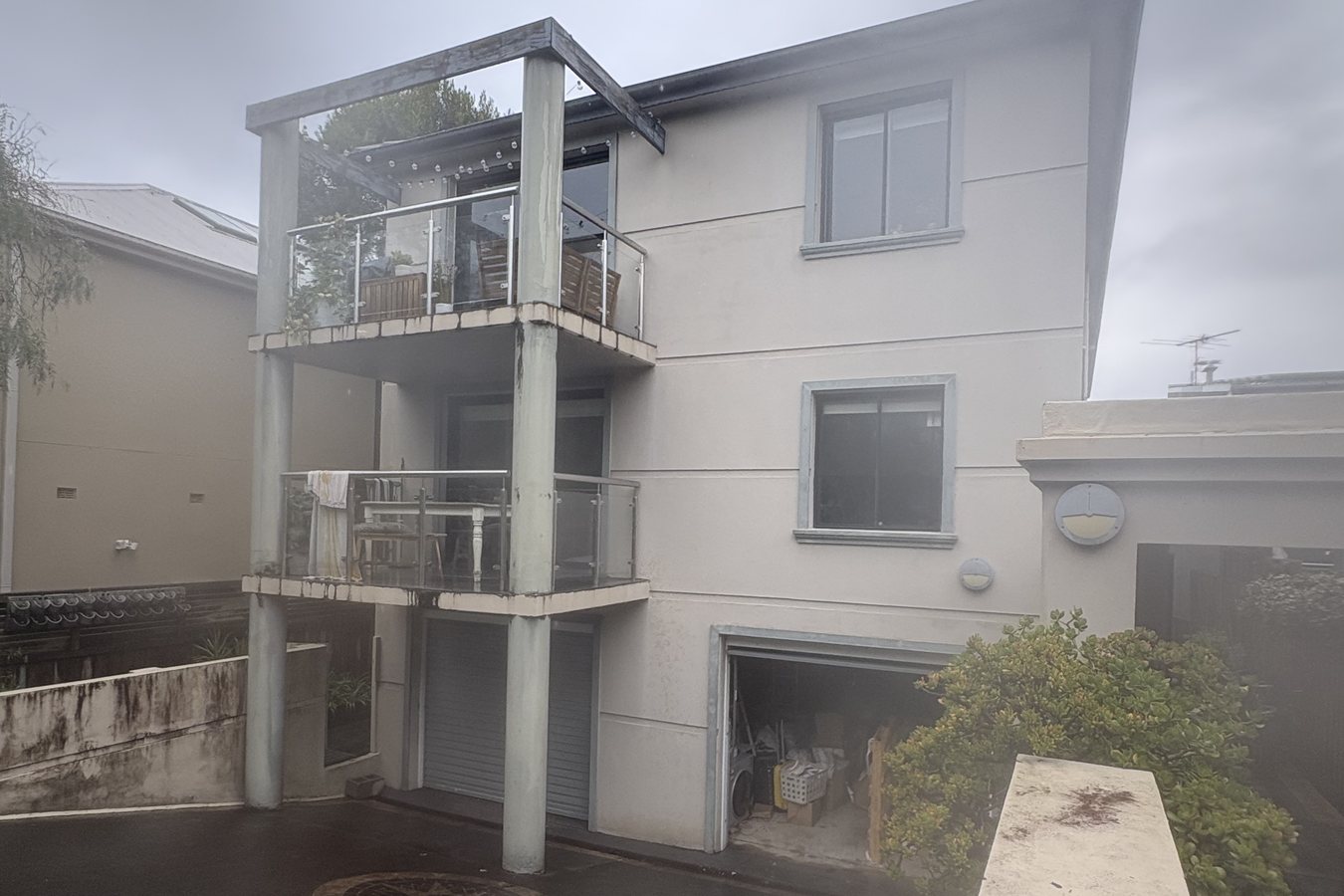
The walls of a Federation or inter-war Mosman home are not what a pressure washer was designed for. Brickwork of that period is typically laid in lime mortar, which is deliberately softer than the brick so the wall can move. High pressure scours that mortar straight out of the joints, and repointing a heritage facade is a far larger job than the clean that caused it.
Painted render and the timber fretwork on verandahs and gables have the same problem in a different form. Pressure gets behind the paint film, lifts it, and leaves you with a preparation job rather than a clean wall.
What makes them dirty here is shade and moisture rather than pollution. Under the tree canopy that covers most of the suburb, south-facing walls and anything set behind established planting stay damp through winter and grow a dark mould film. On the harbour side, salt in the air holds that moisture in place for longer.
We apply a biodegradable solution at low pressure, let it work, then rinse gently. On heritage brick and lime mortar that is not a preference, it is the only defensible method. It is equally safe on the rendered and painted surfaces of the newer builds through the suburb.
On most houses the question is how clean the wall ends up. On a Mosman heritage facade the more important question is what condition it is in afterwards.
Lime mortar is the reason. It is softer than the brick around it by design, and a pressure washer will strip it out of the joints in a single pass. Repointing a heritage facade is skilled, slow work priced per square metre, and it dwarfs the cost of the clean that caused the damage. Once the mortar is gone the wall also takes water differently, which creates a damp problem where there was none.
Original painted timber, fretwork and rendered detailing carry the same risk in a different form. Water driven behind a paint film lifts it, converting a wash into a preparation and repaint job.
Soft washing avoids all of that by design, and it also delivers a longer-lasting result. Killing the growth at the root rather than blasting the visible layer off means the wall stays clean through the following winter instead of greening again within months.
For a conservation-area property, using a non-destructive method is also simply the defensible choice.
Why low pressure is the right method for render, painted brick and weatherboard, and what the process involves.
Proudly serving Sydney with expert exterior cleaning.
MONDAY: 7:30 AM — 6:00 PM
TUESDAY: 7:30 AM — 6:00 PM
WEDNESDAY: 7:30 AM — 6:00 PM
THURSDAY: 7:30 AM — 6:00 PM
FRIDAY: 7:30 AM — 6:00 PM
SATURDAY: CLOSED
SUNDAY: CLOSED