The Federation and Arts and Crafts houses through Wahroonga were built with roughcast render, shingled gables and a great deal of painted timber, and all of it sits under gardens that have had a century to grow over it. Those surfaces hold mould readily and tolerate pressure very poorly.
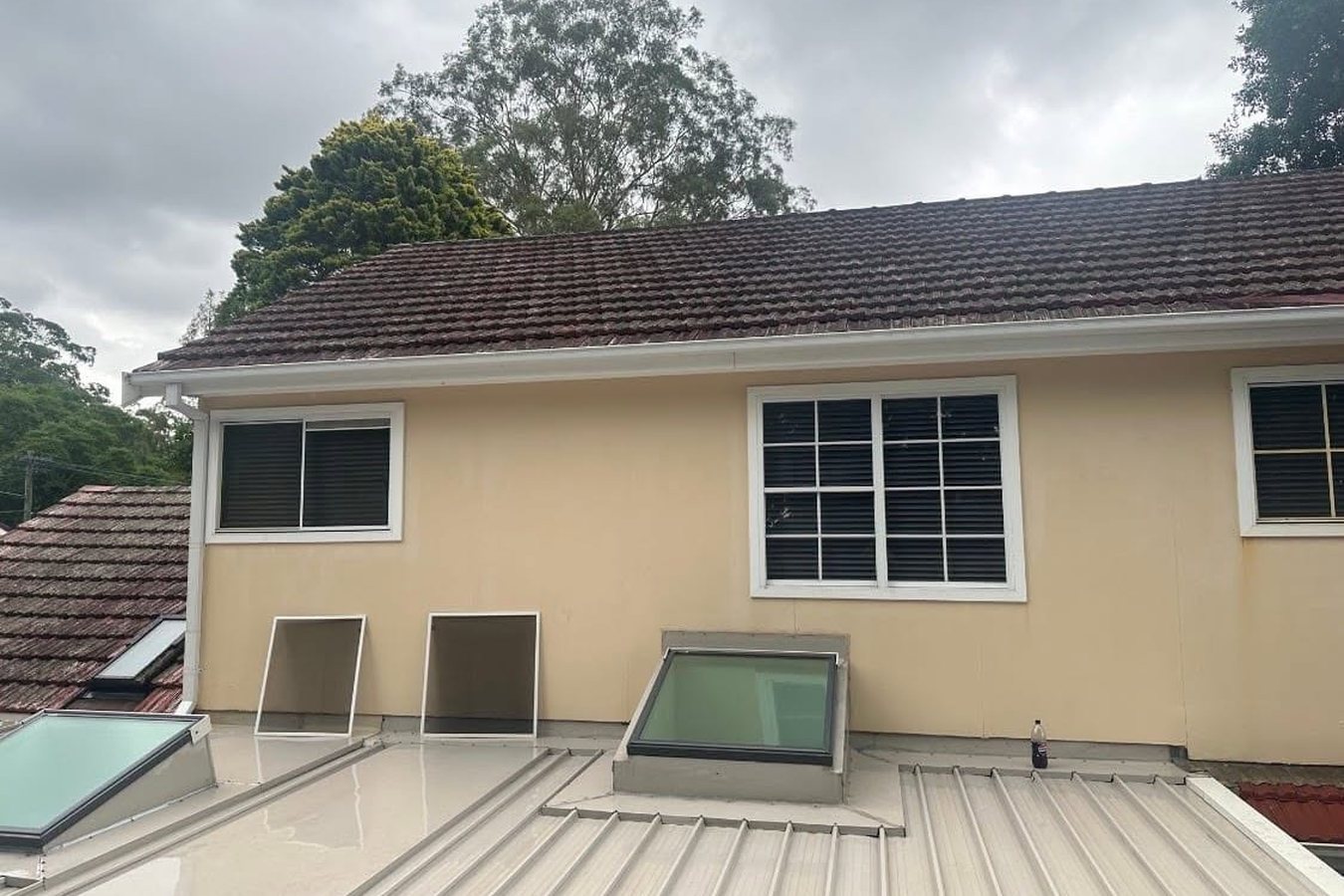
Wahroonga's walls are old, textured and permanently shaded, which is close to the worst combination there is.
The heritage housing here brings surfaces you rarely meet elsewhere. Roughcast and pebbledash render on Arts and Crafts homes has a deeply textured face that holds moisture and gives mould somewhere to sit, and it cannot be scrubbed without losing the aggregate. Shingled gable ends, timber bargeboards, verandah posts and window joinery are all painted and all original on the better houses. Face brick from the period is laid in lime mortar that a pressure washer will strip out of the joints in a single pass.
The gardens are the other half. These are large blocks with mature exotic and remnant forest planting, much of it now taller than the houses, so whole elevations sit in shade for most of the day and never fully dry through winter. Growth concentrates on the southern and eastern faces and anywhere planting has crept close to the wall.
There is no salt and little pollution here, so what is on these walls is biological and needs to be killed rather than blasted.
We apply a biodegradable solution at low pressure, let dwell time do the work, and rinse the surrounding garden as we go.
On a Wahroonga heritage house the question is not how clean the wall looks afterwards, it is what condition the fabric is in.
Roughcast render is the clearest example. Its texture is the finish, and aggressive cleaning takes the aggregate off and leaves a patchy, smoothed face that cannot be restored without re-rendering a whole elevation to match. Lime mortar behaves the same way, washing out of the joints and leaving a wall that then takes water differently, creating a damp problem where there was none.
Painted timber carries the same risk in a different form. Water driven behind a paint film lifts it, and on shingled gables and moulded bargeboards that converts a wash into a preparation and repaint job on elements that are expensive to replicate.
Against that, the benefit of doing it properly is real. Under this much shade, mould never dies back over summer the way it does in an open suburb, so left alone it only advances, holding moisture against coatings and joinery year round.
In a conservation area, using a non-destructive method is also simply the defensible choice.
Why low pressure is the right method for render, painted brick and weatherboard, and what the process involves.
Proudly serving Sydney with expert exterior cleaning.
MONDAY: 7:30 AM — 6:00 PM
TUESDAY: 7:30 AM — 6:00 PM
WEDNESDAY: 7:30 AM — 6:00 PM
THURSDAY: 7:30 AM — 6:00 PM
FRIDAY: 7:30 AM — 6:00 PM
SATURDAY: CLOSED
SUNDAY: CLOSED