Hornsby walls carry two marks the rest of Sydney does not see together. There is the mould that comes from sitting in a damp gully under permanent canopy, and there is the rust-brown splash-back along the bottom metre of the wall, thrown up off wet leaf litter in the garden bed beside it.
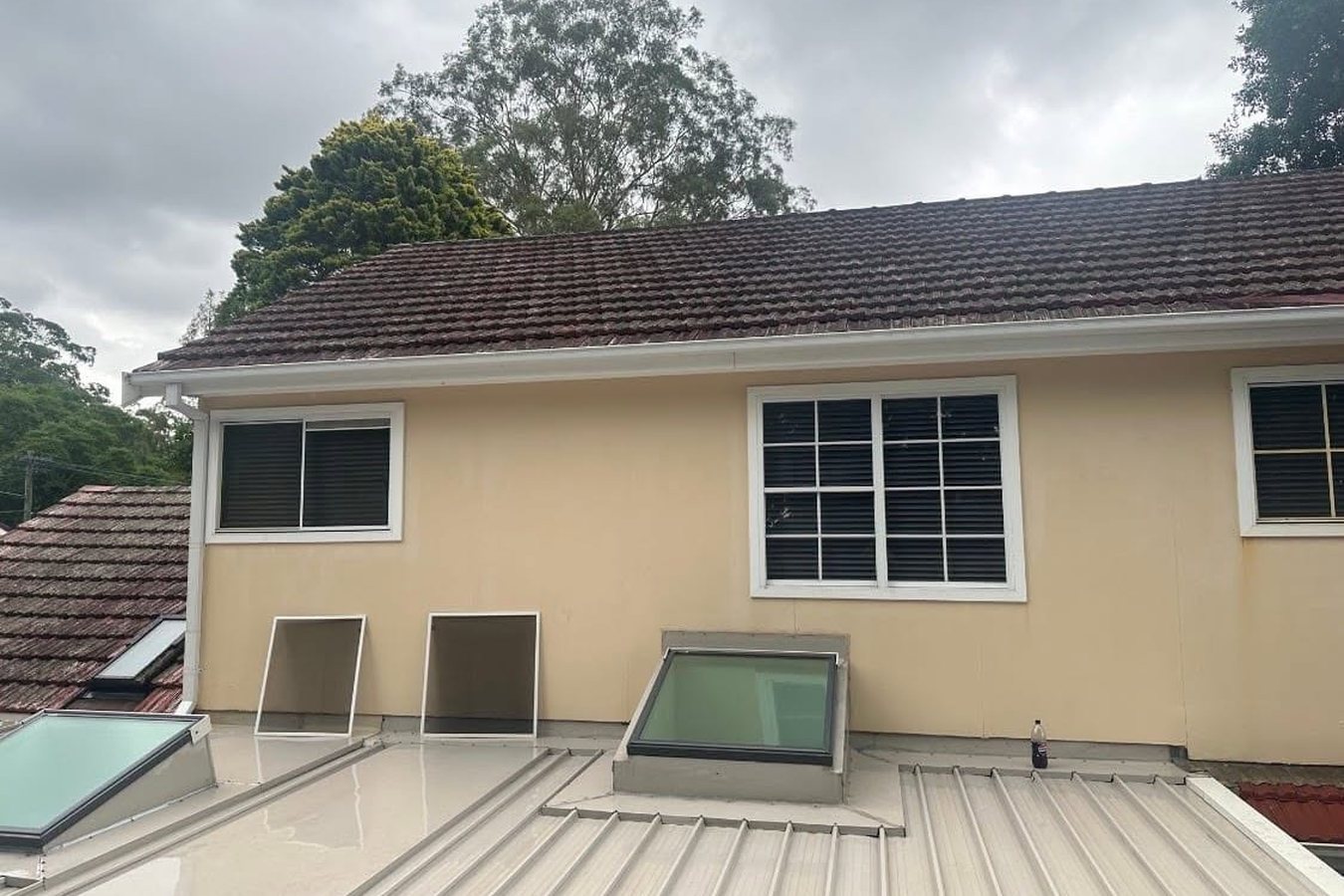
Hornsby properties sit in and around gullies, and gullies hold cold air and moisture long after the ridge above them has dried out.
That is the first driver. Walls facing south or east, or set behind established garden and bushland, stay damp for days after rain and develop a green-black mould film that never fully clears over summer the way it would in an open suburb. On a property backing onto reserve the rear elevation is often the worst affected and the least often looked at.
The second is tannin. Eucalypt litter accumulating in garden beds against the house breaks down into a brown pigment, and rain splashing off it stains the bottom of the wall in a band. Owners usually read that as rising damp; more often it washes off.
The substrates are varied. The 1960s to 1980s housing is brick and rendered brick, but there is a lot of original fibro and weatherboard on the older cottages and on rear additions, and both are easily damaged. High pressure drives water into mortar joints, behind paint, and straight through a fibro sheet joint.
We work at low pressure with a biodegradable solution and dwell time, and rinse overhanging planting as we go.
The thing to understand about mould on a Hornsby wall is that it does not have an off season. In a gully under canopy it never dries out enough to die back, so left alone it only advances.
That has a direct cost in paint. A film holding moisture permanently against a coating degrades it from behind, and on the south and rear elevations owners here often repaint one face of the house years before the rest of it needs attention. Washing on a schedule is what keeps the whole property on one longer cycle.
On weatherboard and fibro the stakes are higher again. Timber that stays wet behind a failing paint film starts to rot, and replacing weatherboard or dealing with a damaged fibro sheet is trade work with its own complications. Cleaning without forcing water into joints is the whole point of the method.
The tannin band along the base of the wall is worth addressing simply because it is fixable. Most owners assume it is permanent staining or a damp problem, and are surprised when it lifts.
There is a health angle too, since the heaviest growth sits on the walls closest to windows and outdoor living areas, and spores do not stay outside.
Why low pressure is the right method for render, painted brick and weatherboard, and what the process involves.
Proudly serving Sydney with expert exterior cleaning.
MONDAY: 7:30 AM — 6:00 PM
TUESDAY: 7:30 AM — 6:00 PM
WEDNESDAY: 7:30 AM — 6:00 PM
THURSDAY: 7:30 AM — 6:00 PM
FRIDAY: 7:30 AM — 6:00 PM
SATURDAY: CLOSED
SUNDAY: CLOSED