A Hornsby driveway is usually long, usually steep, and usually running down through bush to a house set well below the street. That combination gives you the two problems at once: tannin staining soaked into the concrete from wet leaf litter, and a moss film on the sections that never see sun.
Hard surfaces in Hornsby are shaped by the fact that the houses sit off the ridge rather than on it.
Driveways run long and steep from the street down into the block, frequently curving through bush and past sandstone outcrop. Eucalypt and turpentine litter lands on them constantly, sits wet, and leaches a brown tannin that penetrates the concrete rather than resting on the surface. Hosing lightens it; only a treatment that breaks the organic staining down first will actually lift it.
Moss is the more dangerous of the two. Under canopy on a south-facing slope these surfaces stay damp for days after rain, and a steep drive or a set of steps with an algae film is a real hazard, particularly for anyone carrying anything down to a house below street level.
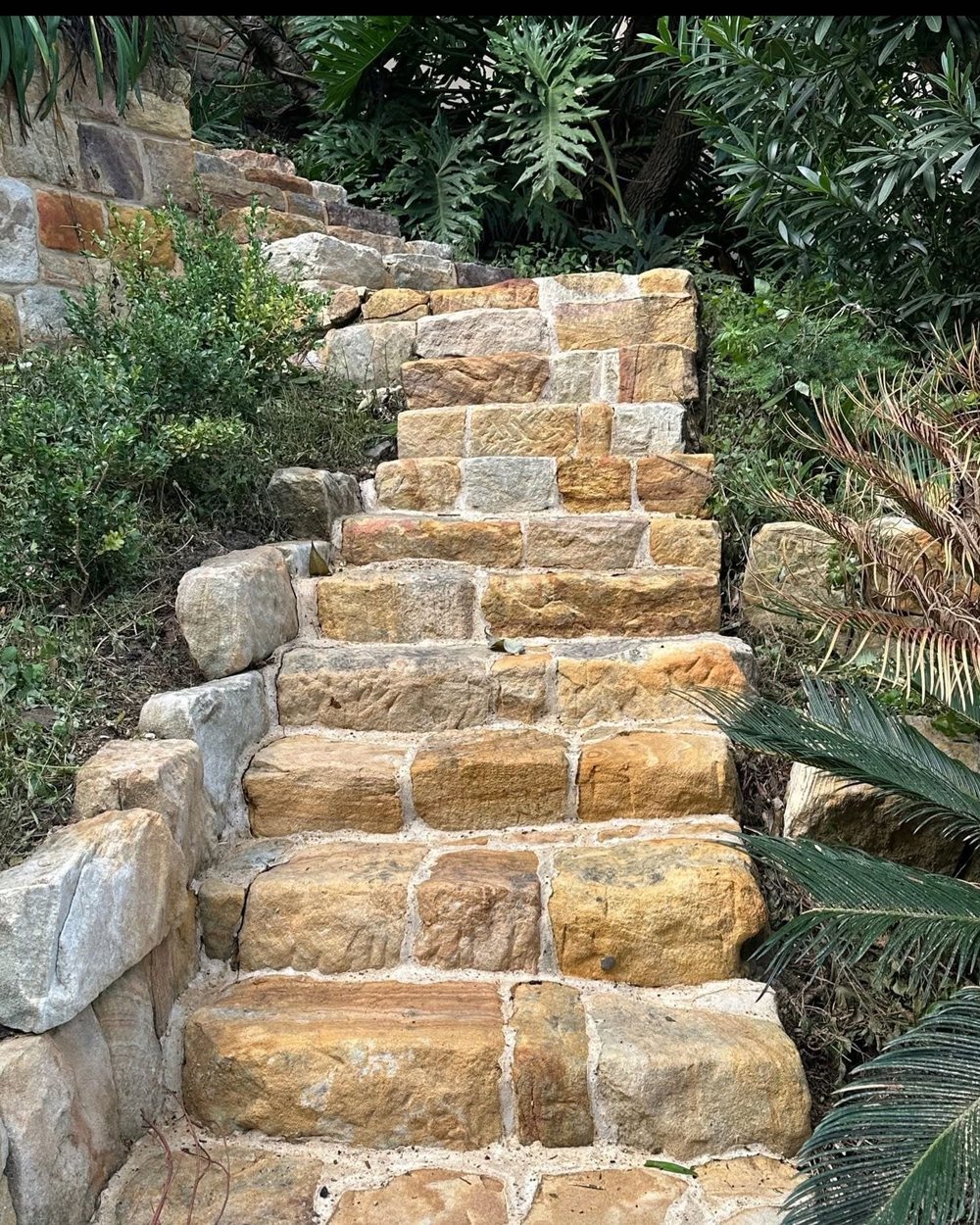
Sandstone is common here, as outcrop, steps and retaining walls, and it is soft. High pressure erodes the weathered face permanently and leaves lance marks that cannot be undone.
Runoff needs care. A great deal of Hornsby drains directly into bushland gullies and creeks feeding Berowra Valley, so we contain and manage wash water rather than letting it run off the slope.
Owners here often accept that a long driveway will simply look brown. It does not have to, and the alternative to cleaning it is far more expensive.
Tannin penetrates concrete rather than sitting on it, which is why ordinary washing only ever lightens it. Treated properly most of it comes out, and on a driveway that can run thirty or forty metres the difference between cleaning and resurfacing is a very large number.
The safety argument is the stronger one though. On a steep drive falling away from the street, a moss film removes what little grip a wet slope offers, and the same applies to the steps that usually run beside it down to the front door. That is a daily risk for residents and a genuine problem for older occupants.
Sandstone steps and retaining walls are worth protecting for their own sake. The weathered face gives the stone its colour and took decades to form; the wrong pressure removes it in seconds.
Because these blocks drain into bushland, managing wash water rather than letting it run downhill matters more here than in a suburb draining to street stormwater.
Driveways, paths, patios and paving across Sydney, and how we set pressure by surface rather than by habit.
Proudly serving Sydney with expert exterior cleaning.
MONDAY: 7:30 AM — 6:00 PM
TUESDAY: 7:30 AM — 6:00 PM
WEDNESDAY: 7:30 AM — 6:00 PM
THURSDAY: 7:30 AM — 6:00 PM
FRIDAY: 7:30 AM — 6:00 PM
SATURDAY: CLOSED
SUNDAY: CLOSED