A Turramurra driveway usually drops away from the street rather than running level, and a steep drive under canopy in the wettest part of Sydney holds a moss film for most of the winter. That is a safety problem before it is an appearance one.
Gradient and rainfall are the two things that make hard surfaces here behave differently.
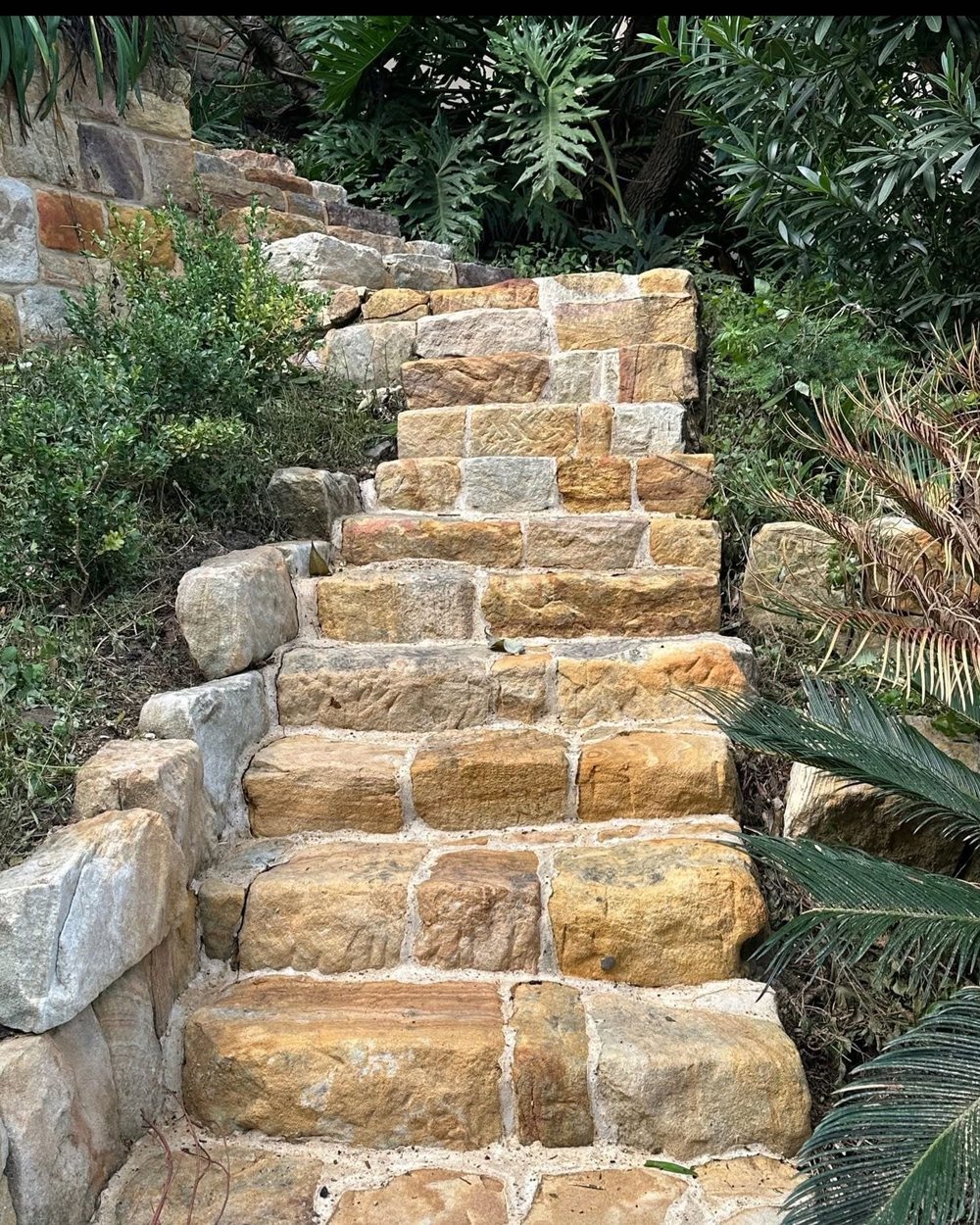
Blocks fall away sharply into the gullies, so driveways are steep and often turning, and the house frequently sits well below street level with a flight of steps beside the drive. Those surfaces sit under canopy, and with the suburb taking more rain than the coastal and inner suburbs they stay damp for days at a time. The result is a moss and algae film that on a steep slope removes what little grip a wet surface offers.
Tannin is the other mark. Eucalypt and turpentine litter breaking down on concrete leaches a brown pigment that penetrates the slab rather than sitting on it, and on a long drive under constant leaf fall that discolouration covers the whole surface rather than appearing in patches.
Sandstone outcrop, steps and retaining walls are common as the land steps down, and the stone is soft enough to scar permanently.
Runoff needs managing. These blocks drain directly into bushland gullies feeding Lane Cove National Park and Ku-ring-gai Chase, so we contain wash water rather than letting it run down the slope into the reserve.
On a flat block a mossy driveway is untidy. On a Turramurra block it is the surface you walk down carrying shopping, in the rain, on a slope.
That is the first and strongest argument. A steep drive and the steps beside it, both under canopy and both damp for most of winter, offer very little grip once an algae film establishes. The people most at risk are pedestrians rather than vehicles, and on a property with older occupants it is a genuine hazard rather than a theoretical one.
The second is that the tannin discolouration comes out. Owners here generally accept that a long bush driveway will simply look brown, and are surprised when it does not have to. Treated properly, with the organic pigment broken down before pressure is applied, most of it lifts, and the alternative is resurfacing a very large area.
Sandstone steps and retaining walls are worth protecting for their own sake, since the weathered face that gives the stone its colour does not come back.
Because these blocks drain into reserve, managing wash water matters more here than in a suburb draining to street stormwater.
Driveways, paths, patios and paving across Sydney, and how we set pressure by surface rather than by habit.
Proudly serving Sydney with expert exterior cleaning.
MONDAY: 7:30 AM — 6:00 PM
TUESDAY: 7:30 AM — 6:00 PM
WEDNESDAY: 7:30 AM — 6:00 PM
THURSDAY: 7:30 AM — 6:00 PM
FRIDAY: 7:30 AM — 6:00 PM
SATURDAY: CLOSED
SUNDAY: CLOSED