Turramurra sits on the ridge with national park falling away on both sides, and it collects more rain than almost anywhere else in metropolitan Sydney. More rain, more shade and a porous concrete tile is the exact recipe for the thick moss you see on roofs through these streets.
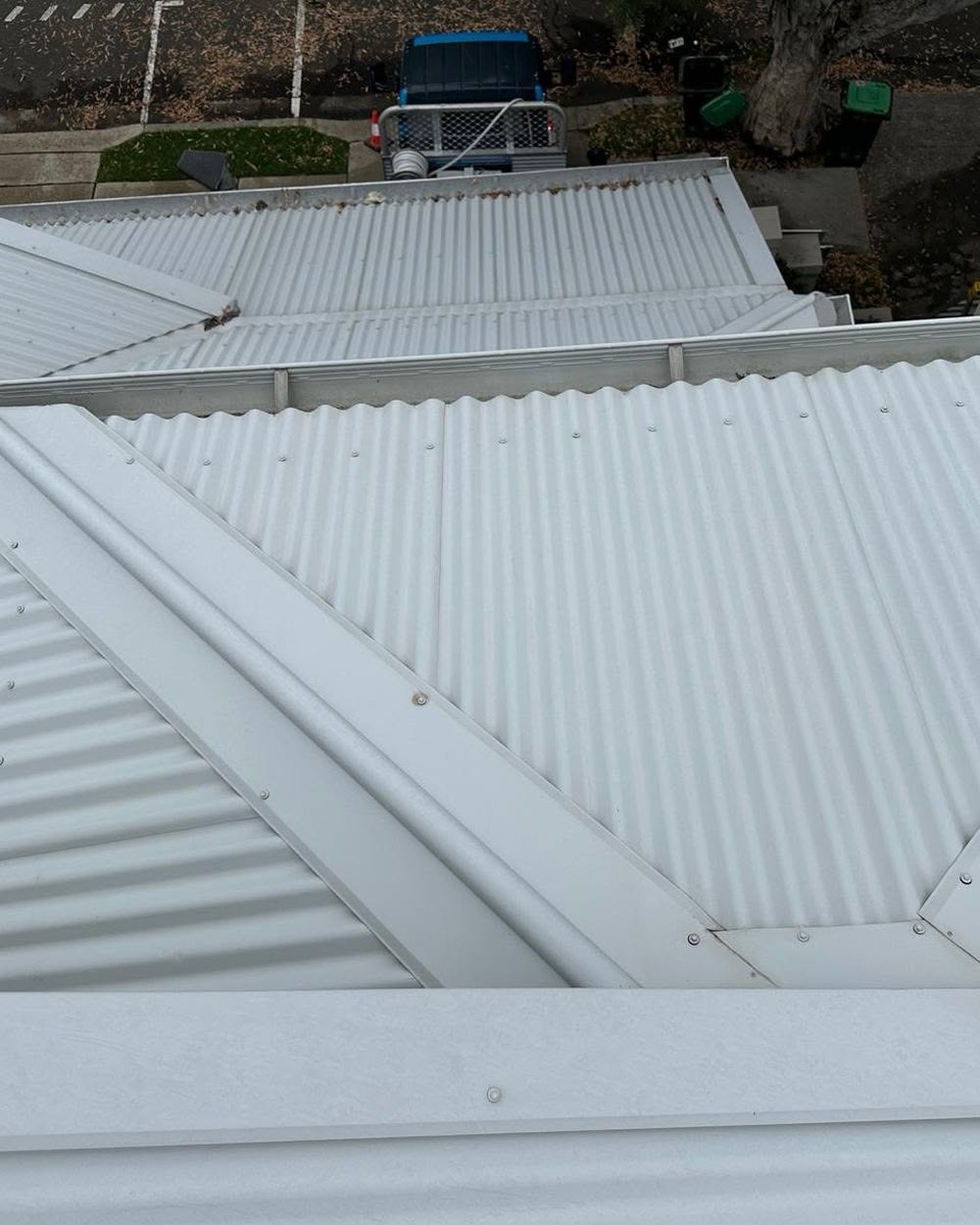
Turramurra's position is what makes its roofs different, and it works against them in three ways at once.
The suburb runs along the ridge with Ku-ring-gai Chase falling away to the north and Lane Cove National Park to the south, and that elevation means it records noticeably higher rainfall than the coastal and inner suburbs. More rain landing on a roof that is already shaded is the first factor.
The second is the gullies. Blocks here fall away sharply from the street into those valleys, so houses sit below the road with bushland immediately behind. Cold air and moisture settle in a gully and sit there, and a roof plane facing south into one may not dry properly for days.
The third is the tile. The 1960s through 1980s housing that fills much of the suburb is roofed in unglazed concrete, which is far more absorbent than glazed terracotta. Combine that with permanent damp and you get thick, cushiony moss that lifts tile edges rather than the thin algae film an open suburb gets.
Blackbutt and blue gum from the surrounding forest feed it continuously, and steep pitches on blocks that drop away make this height-safety work. We soft wash rather than blast, and clear the valleys in the same visit.
Owners here often clean a roof, see it green over again within a couple of years and conclude it is not worth doing. The interval is the thing that needs adjusting, not the decision.
Turramurra puts more water on a roof and gives it less opportunity to dry than almost any suburb we service, so a schedule set for an open suburb will always look like failure here. Matched to the actual conditions, cleaning keeps the moss from ever reaching the stage that does damage.
And thick moss does mechanical damage rather than cosmetic. It holds water permanently against porous tile and lifts the tile edge as it establishes, letting water track sideways under the overlap instead of running off. That is how a roof with no history of leaks starts staining ceilings. Left longer it works into the ridge pointing, and repointing a large roof on a steep block is a serious number.
There is a drainage benefit too, because the moss and litter shedding off the roof is exactly what fills the gutters below it.
On blocks that fall away this sharply, this is height-safety work rather than a weekend job.
How we clean tile, terracotta and metal roofs across Sydney, what the process involves and what it costs.
Proudly serving Sydney with expert exterior cleaning.
MONDAY: 7:30 AM — 6:00 PM
TUESDAY: 7:30 AM — 6:00 PM
WEDNESDAY: 7:30 AM — 6:00 PM
THURSDAY: 7:30 AM — 6:00 PM
FRIDAY: 7:30 AM — 6:00 PM
SATURDAY: CLOSED
SUNDAY: CLOSED