A Turramurra wall facing into a gully barely gets a chance. High rainfall, deep shade and cold air pooling in the valley mean the surface is damp far more often than it is dry, and mould here does not die back over summer the way it does in an open suburb.
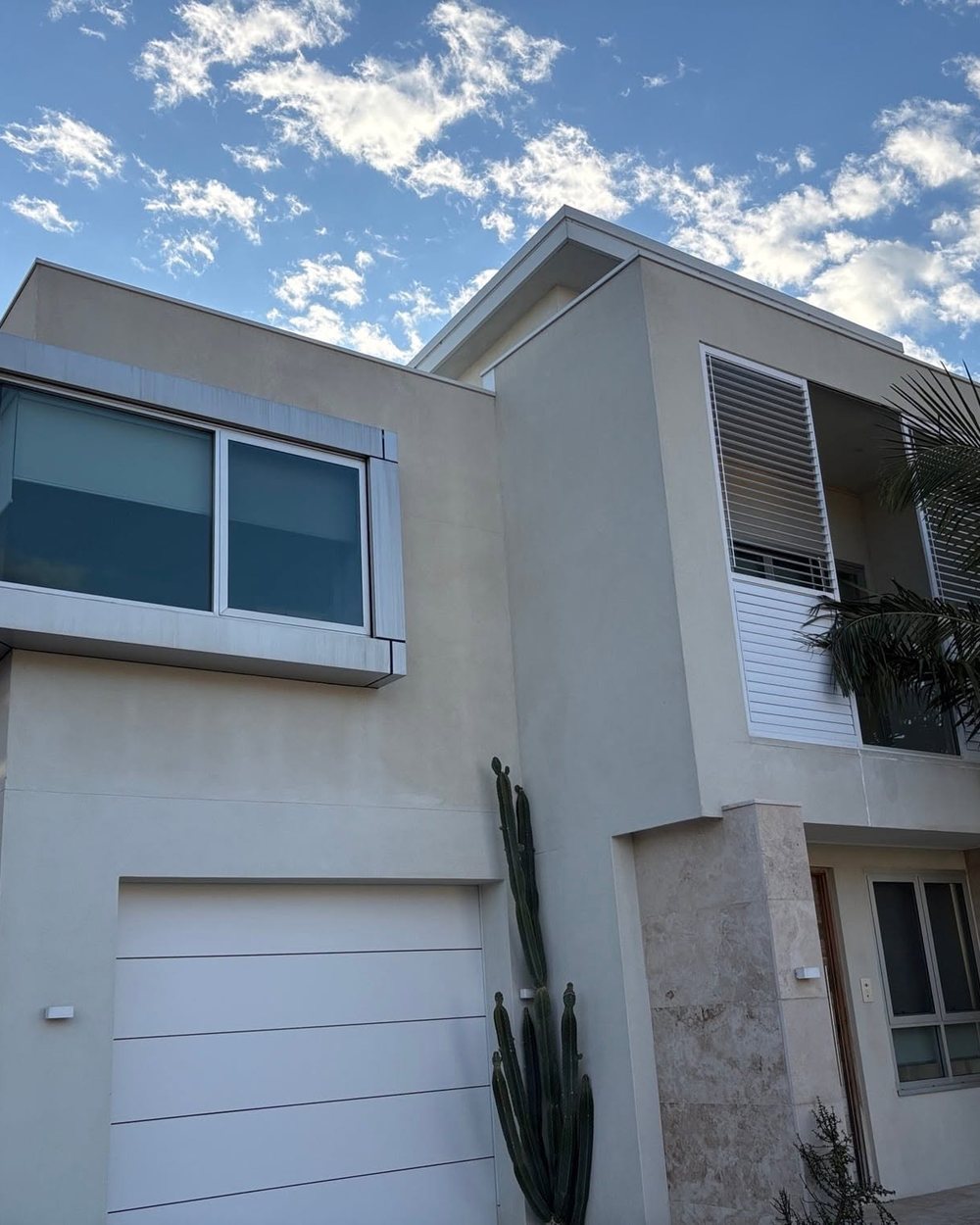
Turramurra puts walls in conditions that suit mould almost perfectly.
The suburb sits high on the ridge and takes noticeably more rain than the coastal and inner suburbs. Blocks then fall away steeply into the gullies running toward Ku-ring-gai Chase and Lane Cove National Park, and a gully holds cold air and moisture long after the ridge above has dried out. A wall facing south or east into one of those valleys can stay damp for days at a time.
The result is a green-black film that never fully clears, concentrated on the rear and lower elevations, which on a stepped block are also the ones nobody looks at.
Tannin is the second mark. Eucalypt litter breaking down in garden beds against the house leaches a brown pigment, and rain splashing off it stains the bottom metre of the wall in a band that owners usually read as rising damp.
The substrates vary from 1960s to 1980s brick and rendered brick through to original weatherboard and fibro on the older cottages and rear additions, and pressure damages all of them in different ways.
We work at low pressure with a biodegradable solution and dwell time, and rinse overhanging planting as we go.
The useful thing to understand here is that mould in a Turramurra gully has no off season, so waiting it out is not a strategy.
The direct cost is paint. A film holding moisture permanently against a coating degrades it from behind, and owners on these blocks routinely repaint the rear and southern elevations years before the street frontage needs anything. Washing on a schedule is what brings the house back onto a single, longer cycle rather than repainting one face at a time.
On weatherboard and fibro the consequences run past the coating. Timber that stays wet behind a failing paint film rots, and a damaged fibro sheet brings its own complications, which is exactly why forcing water into joints is the wrong approach.
The tannin band at the base of the wall is worth raising because it is fixable. Most owners have written it off as permanent staining or a damp problem in the brickwork, and are surprised when it lifts.
There is a liveability angle too, since the heaviest growth sits on the walls closest to windows and outdoor areas, and spores from a heavy exterior growth do not stay outside.
Why low pressure is the right method for render, painted brick and weatherboard, and what the process involves.
Proudly serving Sydney with expert exterior cleaning.
MONDAY: 7:30 AM — 6:00 PM
TUESDAY: 7:30 AM — 6:00 PM
WEDNESDAY: 7:30 AM — 6:00 PM
THURSDAY: 7:30 AM — 6:00 PM
FRIDAY: 7:30 AM — 6:00 PM
SATURDAY: CLOSED
SUNDAY: CLOSED