In St Ives it is the shaded elevations that go first. Walls facing south, or set behind established planting, never fully dry through winter under the canopy, and that constant damp grows the dark mould film you see creeping up from the base of the wall.
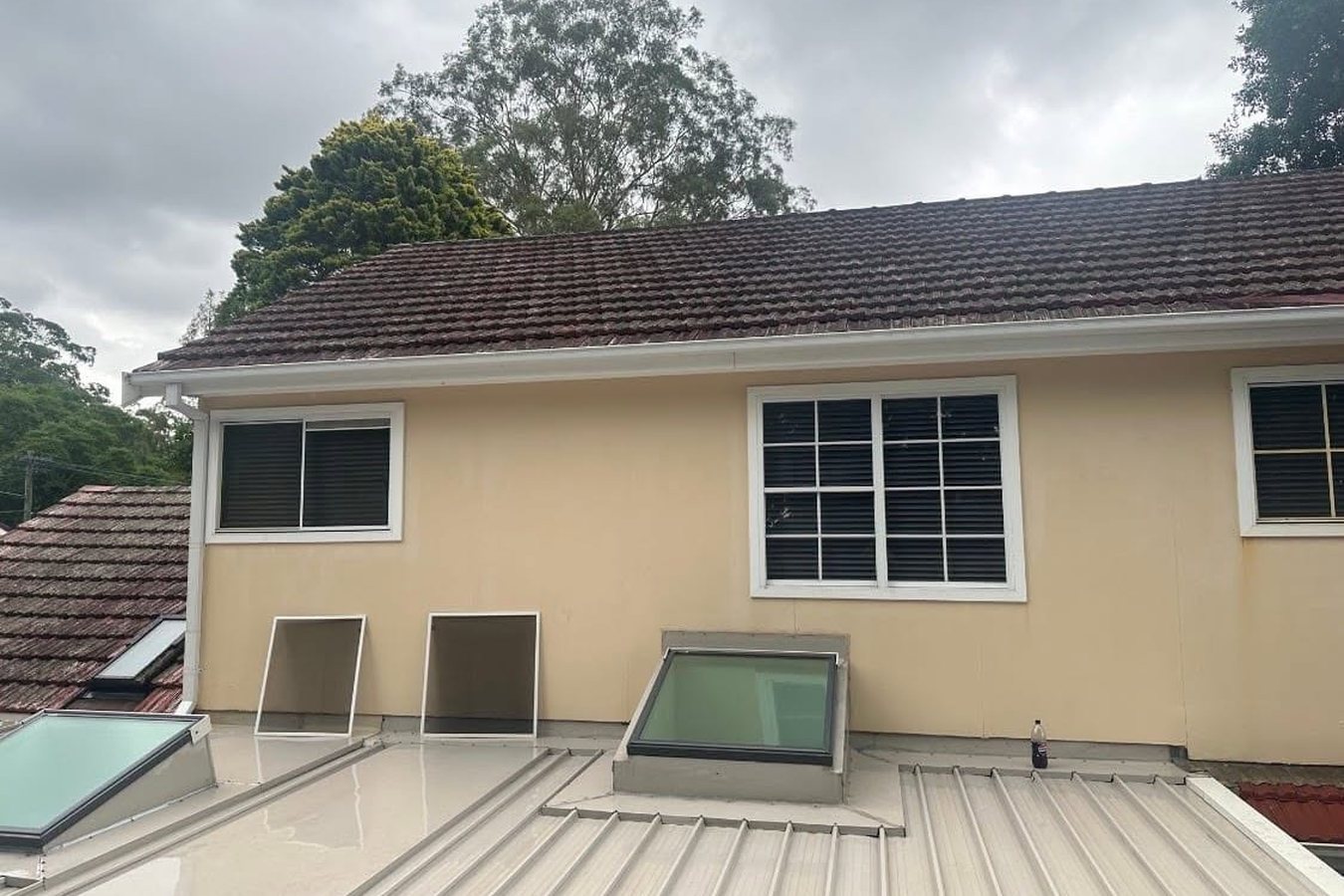
Wall grime in St Ives is biological, not industrial. There is no traffic film or coastal salt here to speak of. What there is instead is shade and moisture in abundance, and that grows mould and algae.
The pattern is consistent across the suburb. North-facing walls stay relatively clean because they get sun. South and south-east elevations, and anything tucked behind a mature garden, hold moisture from one rain event to the next and develop a green-black film that starts low and works upward. Rendered surfaces show it most obviously, but face brick collects it in the mortar joints where it is harder to see until the whole wall has dulled.
The housing stock is largely brick and rendered brick from the 1960s onward, with weatherboard and fibre cement on the older cottages and newer additions. All of it will take a low-pressure wash; none of it benefits from a high-pressure one, which drives water into mortar joints and behind paint.
We apply a biodegradable solution and let dwell time do the work, killing the growth at the root rather than stripping the visible layer and leaving it to return within months. Overhanging garden planting is rinsed as we go.
Mould on a St Ives wall is not a cosmetic problem you can wait out. Under this much canopy it does not dry off and disappear over summer the way it does in an open suburb, so left alone it only ever advances.
That matters for the coating. Mould growing in and under a paint film holds moisture permanently against it, and the film degrades from behind. On the south and south-east elevations that never get sun, owners here routinely find themselves repainting one side of a house years before the rest of it needs it. Washing on a schedule keeps the whole house on a single, longer repaint cycle.
There is a practical living benefit too. The walls that grow the heaviest film are usually the ones behind established planting, close to windows and outdoor areas, and spores from a heavy exterior growth do not stay outside.
Rendered surfaces show the problem first, but face brick collects it in the mortar joints, where it is harder to see and harder to shift once established.
A low-pressure wash with proper dwell time clears it without forcing water into joints.
Why low pressure is the right method for render, painted brick and weatherboard, and what the process involves.
Proudly serving Sydney with expert exterior cleaning.
MONDAY: 7:30 AM — 6:00 PM
TUESDAY: 7:30 AM — 6:00 PM
WEDNESDAY: 7:30 AM — 6:00 PM
THURSDAY: 7:30 AM — 6:00 PM
FRIDAY: 7:30 AM — 6:00 PM
SATURDAY: CLOSED
SUNDAY: CLOSED