St Ives windows have a seasonal enemy the coastal suburbs do not: pollen. Every spring the surrounding forest coats glass in a fine yellow film, and combined with sap drip from overhanging trees it produces a haze that ordinary washing tends to smear rather than remove.
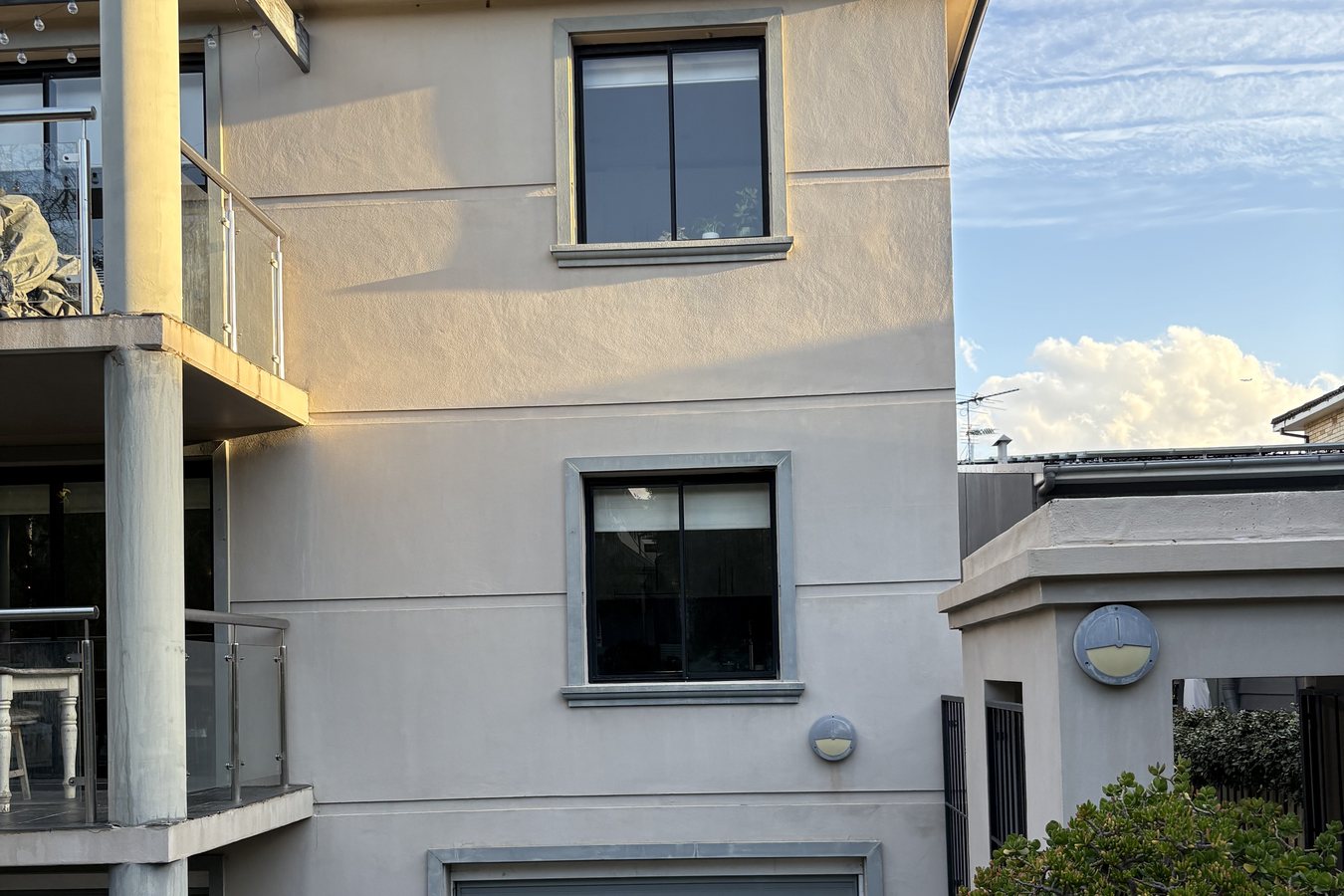
Homes in St Ives are generally built to look at the garden, which means large windows and sliding doors on the elevations facing the block rather than the street. Those are the panes under the trees, and they take everything the canopy produces.
Spring pollen is the most obvious of it. The surrounding blackbutt, turpentine and blue gum release enough that glass yellows visibly within days of a clean, and because pollen is sticky when damp it bonds rather than blowing clear. Sap and honeydew drip from trees directly overhead adds spotting that has to be dissolved rather than wiped, and dry-wiping either of them mostly moves the film around.
The rest of the year the issue is fine dust from bark and leaf breakdown, and the green film that grows on the frames and sills of windows sitting in permanent shade.
Access is a practical constraint on the large two-storey homes common here, where upper-level glass often sits above garden beds, retaining walls or a pool. Water-fed poles reach it from the ground, and the purified water dissolves pollen and sap without detergent, drying clear with no spotting and nothing leaning on your planting.
St Ives glass has a rhythm to it, and working with that rhythm is where the value is.
Spring pollen is the heaviest single event. It coats windows in a fine yellow film that bonds when damp, and attempting to dry-wipe it mostly smears it across the pane. A clean timed for after the pollen drop clears the whole season in one visit rather than fighting it repeatedly.
Sap and honeydew from overhanging trees is the persistent problem the rest of the year. It has to be dissolved rather than wiped, which is why household cleaning so often leaves a spotted result that looks worse in direct sun than it did beforehand.
There is a frame and sill benefit too. Windows in permanent canopy shade grow a green film on the frames and in the sill drainage, and left long enough that holds moisture against timber joinery on the older homes here.
Access is the practical constraint on large two-storey houses where the best glass looks out over garden beds and retaining walls. Poles reach it without a ladder in the garden.
Water-fed poles, purified water and spot-free glass up to three storeys, without a ladder against your gutters.
Proudly serving Sydney with expert exterior cleaning.
MONDAY: 7:30 AM — 6:00 PM
TUESDAY: 7:30 AM — 6:00 PM
WEDNESDAY: 7:30 AM — 6:00 PM
THURSDAY: 7:30 AM — 6:00 PM
FRIDAY: 7:30 AM — 6:00 PM
SATURDAY: CLOSED
SUNDAY: CLOSED