Wahroonga houses are full of glass you cannot simply squeegee. Leadlight in stair windows and front doors, timber casements with dozens of small panes, and deep reveals under wide verandahs, all of it under gardens that drip sap onto the panes from directly overhead.
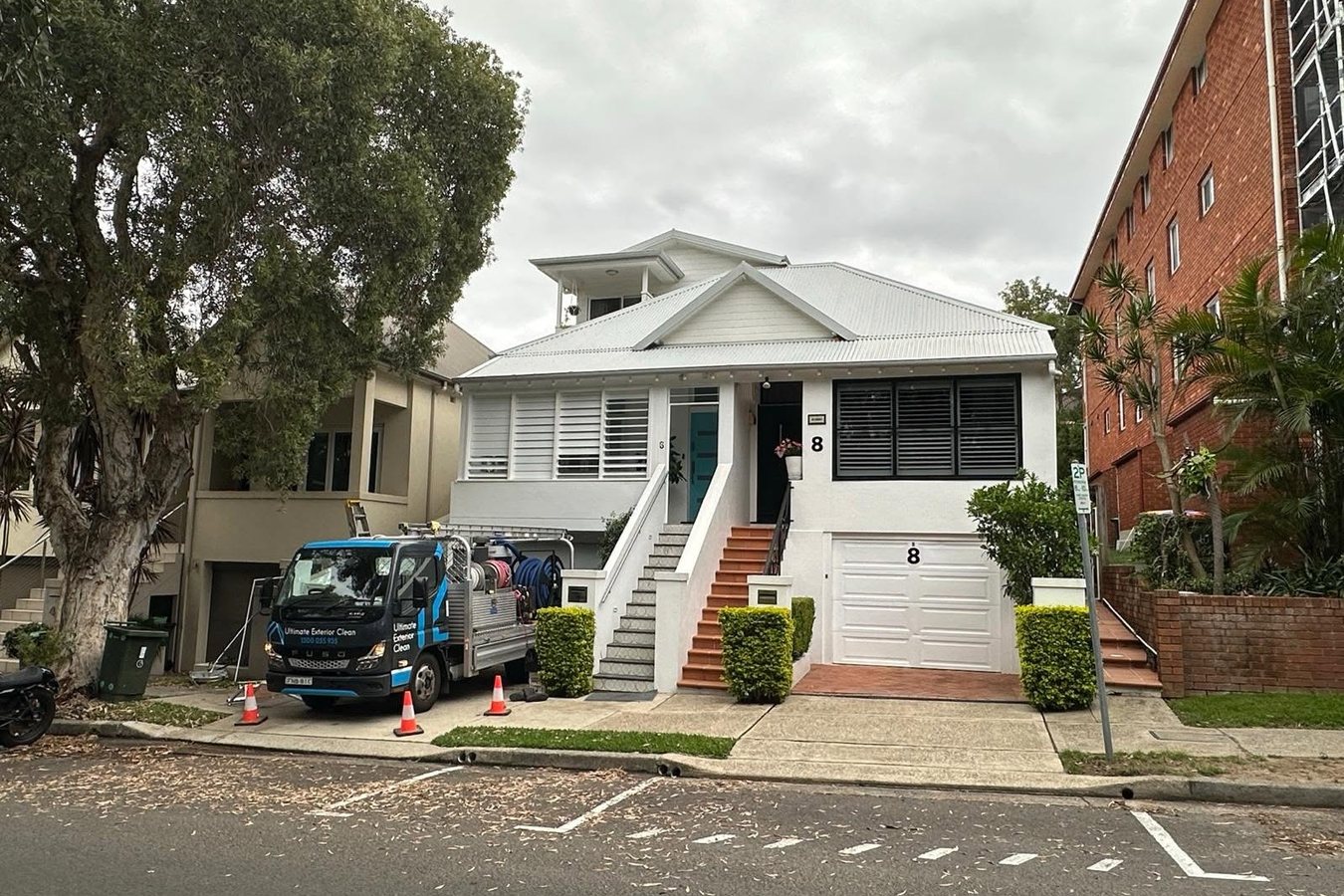
The combination of heritage joinery and mature garden is what defines window work in Wahroonga.
Federation and Arts and Crafts houses here carry leadlight in stair windows, front door surrounds and upper sashes, and timber casements divided into many small panes by painted glazing bars. Every one of those bars is a putty line and a paint edge, and there is far more of it per square metre of glass than on a modern window. Scraping and high pressure both damage it.
What lands on the glass is almost entirely organic. Mature exotic and remnant forest planting sits directly above these houses, so sap and honeydew drip onto panes as sticky spotting that smears rather than wipes, and spring brings a heavy pollen load off the surrounding Blue Gum High Forest. Webs are rebuilt in the corners of casements within days in this environment.
The deep verandahs and wide eaves that shade these houses also mean the interior relies heavily on what light does get through.
Water-fed poles reach the upper storey from the ground without a ladder against original sills or gutters, and purified water dissolves sap and pollen with no detergent and no spotting.
A Federation window is mostly frame, and that changes what a clean is worth and what it risks.
Because casements here are divided into many small panes, there is a great deal of painted glazing bar and putty per window, and all of it is doing a job. Scraping at the recess damages paint and putty that is holding the glass, and repairing period sashes and leadlight is specialist work. Water and dwell time rather than abrasion is the whole point of the method.
The gain in light is larger here than in most houses. Deep verandahs and wide eaves were designed to keep summer sun out, which means the interior is already working with limited light, and a pollen and sap film across the glass takes a noticeable amount more. Owners consistently underestimate the difference until it is done.
Sap and honeydew are the specific reason household cleaning disappoints, since they are sticky and organic and simply move around under a cloth.
Frames and sills matter too, because a green film in a sill drainage channel holds moisture against timber joinery that is a century old.
Water-fed poles, purified water and spot-free glass up to three storeys, without a ladder against your gutters.
Proudly serving Sydney with expert exterior cleaning.
MONDAY: 7:30 AM — 6:00 PM
TUESDAY: 7:30 AM — 6:00 PM
WEDNESDAY: 7:30 AM — 6:00 PM
THURSDAY: 7:30 AM — 6:00 PM
FRIDAY: 7:30 AM — 6:00 PM
SATURDAY: CLOSED
SUNDAY: CLOSED