Roofs in St Ives green over faster than almost anywhere else we work. The tall forest canopy keeps whole roof planes in shade for most of the day, and the concrete tile used across the suburb's 1960s to 1980s housing is porous enough for moss and lichen to take a firm hold.
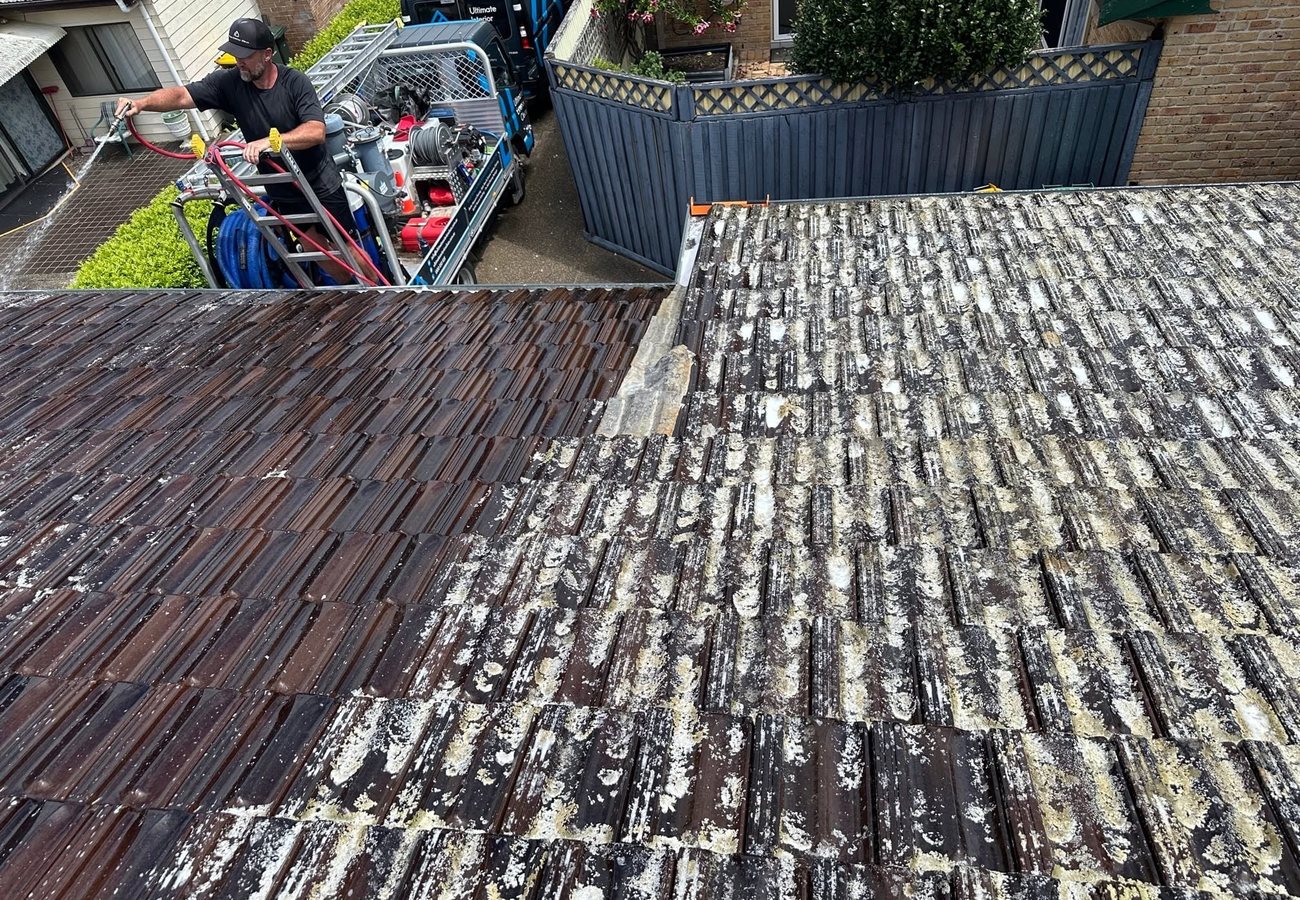
The combination that grows moss is shade, moisture and a porous surface, and St Ives has all three in quantity.
The housing stock is dominated by large brick homes built from the 1960s through the 1980s, almost all of them roofed in unglazed concrete tile. That tile is far more absorbent than glazed terracotta, so it stays damp long after the surface looks dry. Over the tall remnant forest canopy that covers much of the suburb, southern and south-eastern roof planes may get no direct sun at all through the middle of winter.
The result is not the thin algae film you see in open suburbs but thick, cushiony moss that lifts tile edges and holds water against the joints, and lichen that roots into the tile surface itself. Left long enough it works into the pointing on ridge capping.
Constant organic litter from the surrounding blackbutt and turpentine feeds it, and blocked valleys hold that litter in permanent contact with the tiles beneath. We soft wash rather than blast, so the tile surface and the ridge pointing survive the process, and we clear the valleys and gutters at the same time so the growth has less to feed on.
St Ives homes are large, and so are their roofs. That scale is what makes the maintenance case here so clear cut: the bigger the roof, the bigger the number at the end if you let it degrade.
Thick moss is the specific threat. Unlike a thin algae film it holds water permanently against the tile and lifts tile edges as it establishes, which lets water track sideways under the overlap instead of running off. That is how a roof that has never leaked starts leaking, and the first sign is usually a stain on a ceiling rather than anything visible from outside.
Left long enough it works into the ridge pointing, and repointing a large multi-gable roof is a serious expense. Replacing one is a far more serious one.
There is a drainage benefit as well. Moss and litter shedding off a roof is what fills the gutters and valleys below it, so cleaning the roof reduces how quickly the gutters block again.
Finally, presentation. In a suburb where houses are set back behind established gardens, the roof is often the largest visible surface from the street.
How we clean tile, terracotta and metal roofs across Sydney, what the process involves and what it costs.
Proudly serving Sydney with expert exterior cleaning.
MONDAY: 7:30 AM — 6:00 PM
TUESDAY: 7:30 AM — 6:00 PM
WEDNESDAY: 7:30 AM — 6:00 PM
THURSDAY: 7:30 AM — 6:00 PM
FRIDAY: 7:30 AM — 6:00 PM
SATURDAY: CLOSED
SUNDAY: CLOSED