The bungalows through Concord came with leadlight panels, timber sash windows and deep painted reveals, and a century on most of them are still original. That is lovely to own and unforgiving to clean, because the parts holding the glass in place are the parts a careless job damages.
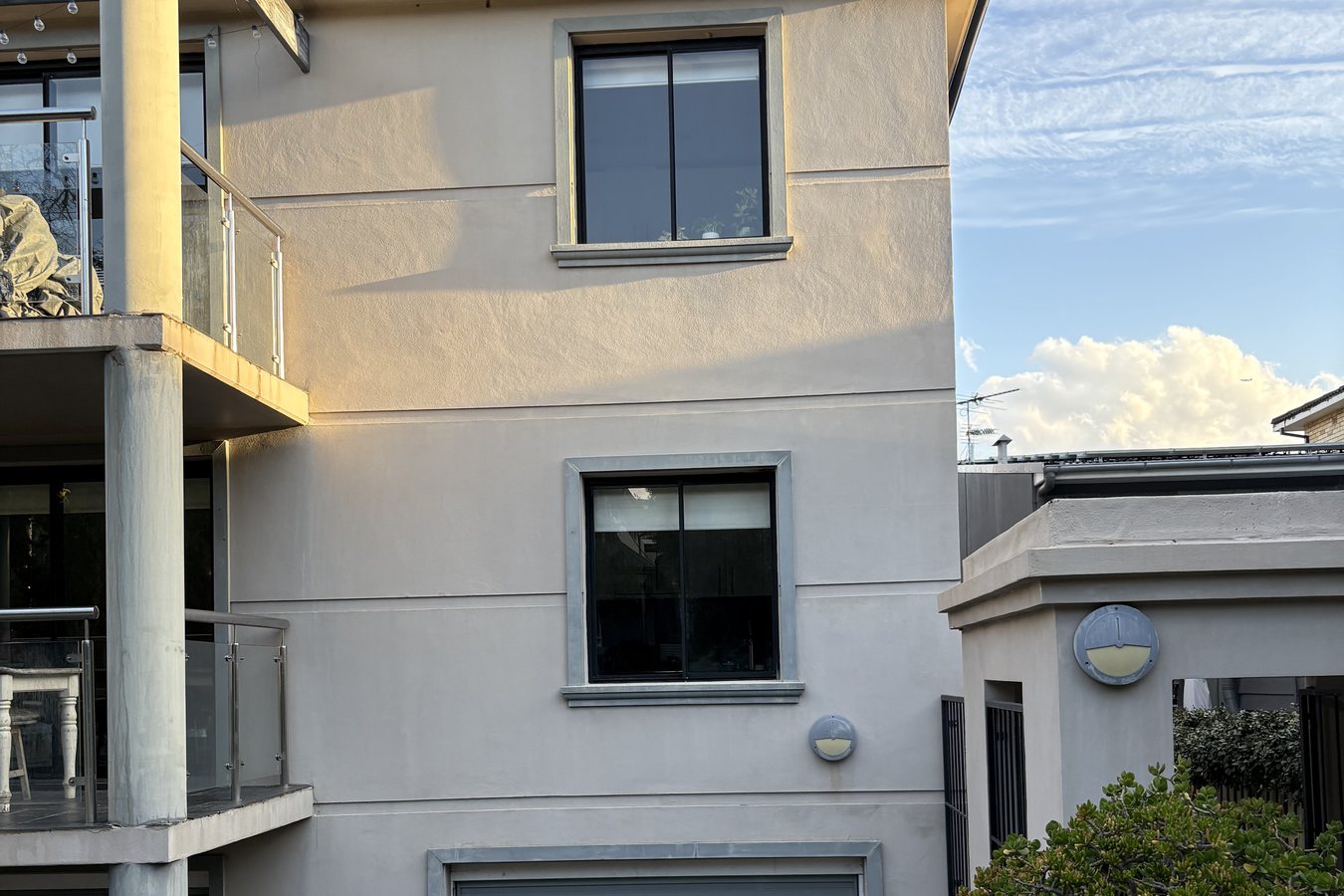
Concord's glass is period glass, and the joinery around it sets the method.
Leadlight is common here, in front door surrounds, fanlights and the upper sashes of bay windows on the better bungalows. The lead came holding those panels is soft and the cement between the lead and the glass is often a century old, so pressure pushes panels out of true and water forced into the joint accelerates the failure. Timber sash windows have painted glazing bars and putty lines that hold dirt in the recess and do not respond well to being scraped.
What actually dirties them is mostly organic. There is no coastal salt and little heavy traffic film, but the mature plane, brush box and jacaranda canopy sheds pollen, seed and sap onto the glass, and the river humidity keeps it damp so it bonds rather than blowing off.
Windows on the shaded southern side and in narrow side passages grow a green film on the frames and in the sill drainage channels.
Water-fed poles handle the reach on two-storey homes without a ladder against original fascia or sills, and purified water dissolves the film and rinses clear with no detergent residue.
On a Concord bungalow, window cleaning is partly a preservation job, and the reason is structural rather than aesthetic.
Timber sash windows rely on putty to hold the glass, and painted glazing bars are original on most of these houses. Scraping at dirt sitting in the recess damages both, and re-puttying and repainting period sashes is joinery work rather than maintenance. Dissolving the film and rinsing it clear avoids the question entirely.
Leadlight is the more serious case. Repairing a leadlight panel that has been pushed out of true is specialist restoration, priced accordingly, and on a bungalow those panels are a defining feature of the house.
The sills and drainage channels are worth including for their own sake. A green film sitting in a sill channel on timber joinery holds moisture against the frame, and blocked sill drainage is one of the common ways water finds its way inside an old window.
The ordinary benefit still applies: these houses have deep verandahs and wide eaves, so they rely on clean glass for interior light more than a modern home does.
Gently, and without pressure. The lead came in Concord leadlight is soft and the cement between lead and glass is often a century old, so forcing water into the joint or pushing on the panel can shift it out of true. Purified water rinses the film away without scrubbing and leaves no detergent residue on the glass.
Mostly the trees. Mature plane, brush box and jacaranda canopy sheds pollen, seed and sap onto the glass, and humidity off the river keeps it damp so it bonds instead of blowing away. On the shaded southern side and down narrow side passages, a green film also grows on the frames and in the sill drainage channels.
Yes, the glass, frames and sills are all included. On old timber joinery, a green film sitting in the sill channel holds moisture against the frame, and blocked sill drainage is one of the common ways water gets inside an old window. Clearing it is simple preservation for a century-old bungalow. You also receive before-and-after photos.
Look at what is overhead. Pollen, seed and sap from the mature canopy are the main source of dirt, so booking after the trees above your house have shed their heaviest load gets more from each visit. Windows on the shaded southern side grow a green film on frames and in sill channels, so check those between cleans.
Water-fed poles, purified water and spot-free glass up to three storeys, without a ladder against your gutters.
Proudly serving Sydney with expert exterior cleaning.
MONDAY: 7:30 AM — 6:00 PM
TUESDAY: 7:30 AM — 6:00 PM
WEDNESDAY: 7:30 AM — 6:00 PM
THURSDAY: 7:30 AM — 6:00 PM
FRIDAY: 7:30 AM — 6:00 PM
SATURDAY: CLOSED
SUNDAY: CLOSED