Some of Drummoyne's best windows are also its hardest to reach. Federation houses here were built with bay and oriel windows and leadlight, and an oriel projects from an upper wall with nothing beneath it to lean a ladder on. Down on the waterfront, two- to four-storey flat buildings on the old mansion sites face the river, and salt wind leaves a dull haze on their glass. A water-fed pole worked from the ground reaches both.
The heritage record for Drummoyne's Federation houses lists leadlight and bay or oriel windows alongside face brick and half-timbering. A bay window projects at ground level in three or more angled panes, so the side panes turn away from anyone standing in front of them. An oriel does the same from an upper storey, carried on brackets over a garden bed or path. Both are awkward with a ladder and well suited to a pole. Leadlight, held together by lead cames, needs a gentle hand rather than force.
Along Wolseley Street and St Georges Crescent the glass changes character. Large one- and two-storey Victorian and Federation houses on substantial lots share these streets with modern flat buildings, many standing where waterfront mansions once were. Waterfront windows here look over the Parramatta River, and on a peninsula with water on three sides they catch salt-laden wind that dries as a grey haze. Frames and sills in the shade of brush box add a green film.
Street-facing windows close to Victoria Road collect something else again: soot and brake dust from the traffic, which smears rather than rinsing when it rains. Our carbon-fibre water-fed pole reaches upper storeys from the ground, and purified water lifts salt and soot alike and dries spot-free, leaving no detergent on the glass, frames or sills.
For a house above Iron Cove or a two-bedroom unit looking over the river, the view is much of the point of the window. Salt haze takes it away a little after every windy day, gradually enough that it is easy to miss how dull the glass had become until it is clean again.
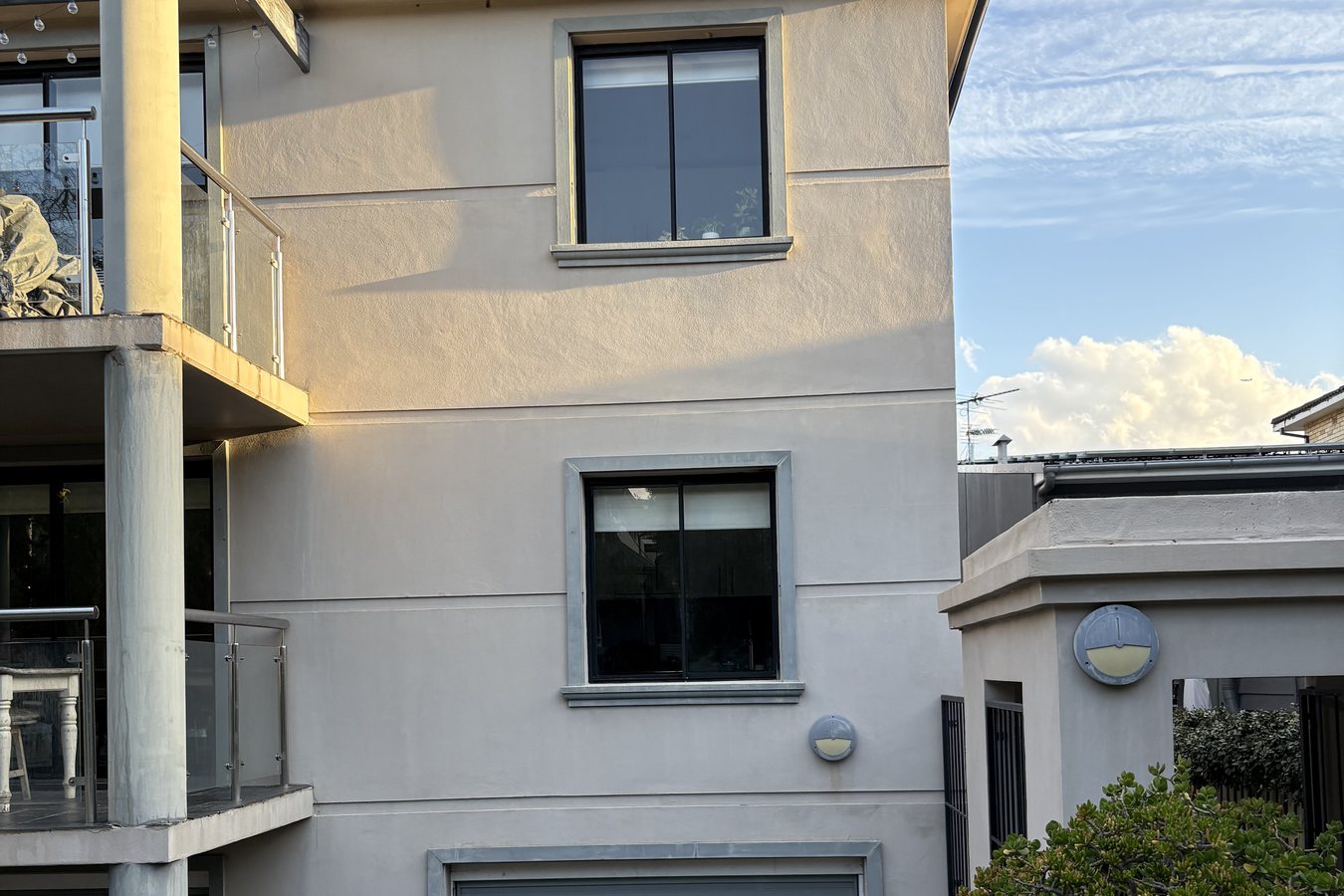
In apartment buildings, working from the ground means the upper windows of a low-rise block can be reached without anyone leaning off a balcony rail or setting a ladder on a common path. A clean across the whole building also looks consistent from the street, which individual residents with a squeegee cannot manage.
On the older houses the gain is protecting joinery that is hard to replace. Leadlight panels, timber frames and the angled frames of bay windows last best when cleaning involves no force and no chemicals working into old putty and paint.
Frames and sills are included as well as the glass, so the green film on shaded joinery goes along with the grime on the panes. Interior glass can be added on request, and each job is photographed before and after so you can see the difference for yourself.
Yes. The carbon-fibre water-fed pole is used from the ground, so an oriel projecting from an upper wall can be reached without propping a ladder against its brackets, the wall or the garden bed below. The same goes for the angled side panes of a ground-floor bay window, which are awkward to reach squarely by hand.
It is one of the gentlest ways to clean it. Purified water carries no minerals or detergent to leave on the glass or the lead, and the pole method relies on a light touch rather than pressure. If some panels already look loose or bowed, point them out when you arrange the clean so they can be treated with extra care.
Interior glass can be cleaned on request. The standard exterior clean covers the glass, frames and sills, and in a suburb where salt haze and traffic film both settle on the outside, that is usually where most of the build-up is. Mention interior windows when you ask for a free quote so they can be included.
Wind off the water carries fine salt spray, and Drummoyne's position on a peninsula with water on three sides leaves many river-facing windows exposed to it. When the spray dries, salt crystals stay on the glass and attract moisture and dust, building a dull film. Purified water dissolves it and dries clear, without detergent residue to hold the next layer.
Water-fed poles, purified water and spot-free glass up to three storeys, without a ladder against your gutters.
Proudly serving Sydney with expert exterior cleaning.
MONDAY: 7:30 AM — 6:00 PM
TUESDAY: 7:30 AM — 6:00 PM
WEDNESDAY: 7:30 AM — 6:00 PM
THURSDAY: 7:30 AM — 6:00 PM
FRIDAY: 7:30 AM — 6:00 PM
SATURDAY: CLOSED
SUNDAY: CLOSED