Front windows in Lilyfield's heritage streets are never far from the footpath. Gardens are small, setbacks regular and fences low, so the glass is on show to anyone walking past and catches whatever the street throws at it. Many of those windows sit in timber surrounds, and a good share of the suburb lives in flats rather than houses. Cleaning from the ground with a water-fed pole suits both the old joinery and the upper floors.
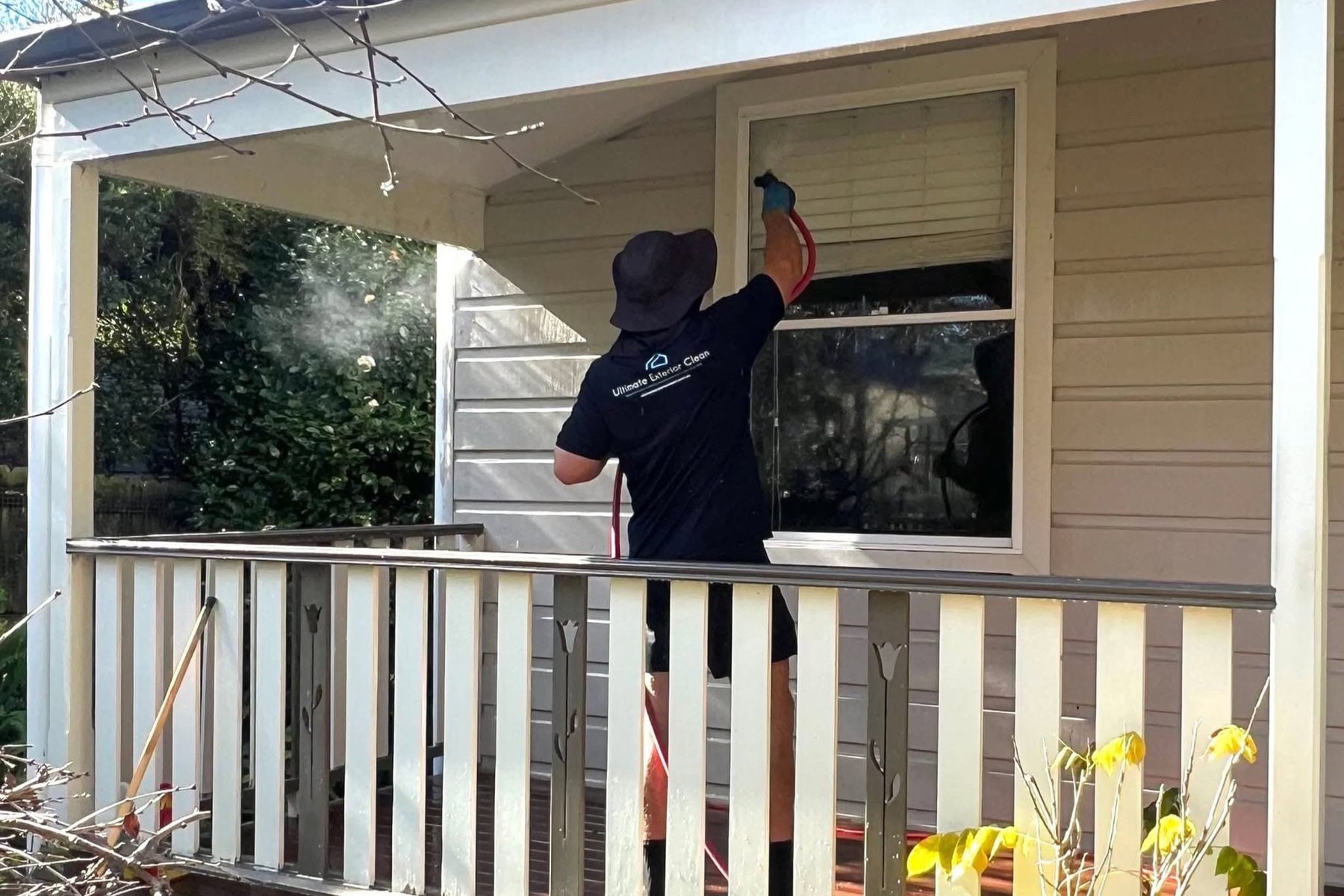
Council describes the Campbell Estate's 1920s bungalows as face brick with timber surrounds to the doors and windows. Timber frames, sills and glazing beads collect grime in every ledge and corner, and painted timber of that age does not take kindly to scrapers or harsh chemicals.
Street trees add to the load. Brush box in the roadway of the Austenham Estate streets and Campbell Street drops flowers and fine debris that, once wet, can dry onto front glass as a speckled film. Homes close to Callan Park, with its jacarandas and palms, can see much the same in season.
Then there are the flats. At the 2021 Census 27% of Lilyfield dwellings were flats or apartments, and low-rise blocks sit among the heritage houses, including walk-ups built in the 1970s on large Austenham Estate lots. The outside of an upper-floor window on one of those buildings can be awkward or unsafe to reach from inside, which leaves residents able to clean only half the glass.
We work with carbon-fibre water-fed poles and purified water from the ground, so upper storeys are cleaned without ladders in small front gardens or on a block's common paths. The glass, frames and sills all dry spot-free, with no detergent involved.
On a narrow lot the glass works harder. Single-fronted houses, like those on the half-width Glover Street lots, sit close to the houses either side, so the front and back windows bring in much of the daylight. A film of street grime and pollen on those few panes dims the rooms behind them more than it would in a house with windows on every side.
The timber is the other reason to have it done properly. Cleaning frames and sills with purified water removes grime from the joinery without scraping the paint or leaving detergent sitting in the joints, so the timber surrounds that are part of these streetscapes stay in good order.
For apartment owners and strata committees, ground-based cleaning means the outside of every window on a walk-up block can be done, including the ones nobody inside can reach. Interior glass can be added on request, which suits a lease change or a sale campaign where both sides of the glass need to look right.
There is a safety gain too. Nobody needs to lean out of an upper window or set up a ladder on uneven ground, and with the Austenham Estate sloping gently south from its ridge, a level footing is not always easy to find.
No. We clean from the ground with carbon-fibre water-fed poles, so upper storeys are reached without ladders against the building. That suits Lilyfield's low-rise flats, and it means residents no longer have to lean out of a window to get at the outside of the glass.
Yes. Frames and sills are included with the glass. On the timber surrounds found on Lilyfield's heritage houses, purified water lifts the grime without detergent sitting on the paint, and everything dries spot-free rather than streaky.
Interior glass can be added on request. It is worth considering when a property is between tenants or being prepared for sale, since streaky glass on the inside undoes much of the effect of a clean outside, particularly in front rooms facing the street.
Purified water has had its dissolved minerals removed, so it lifts dirt from the glass and dries clear without spots. Detergent can leave a residue that attracts dust and pollen, which on a street lined with brush box would only bring the film back sooner.
Water-fed poles, purified water and spot-free glass up to three storeys, without a ladder against your gutters.
Proudly serving Sydney with expert exterior cleaning.
MONDAY: 7:30 AM — 6:00 PM
TUESDAY: 7:30 AM — 6:00 PM
WEDNESDAY: 7:30 AM — 6:00 PM
THURSDAY: 7:30 AM — 6:00 PM
FRIDAY: 7:30 AM — 6:00 PM
SATURDAY: CLOSED
SUNDAY: CLOSED