Ashfield has two very different kinds of window. Council's heritage statements protect original timber-framed windows on Victorian, Federation and inter-war houses, while the flats that make up most of the suburb's homes put rows of glass several storeys up. Exterior window cleaning here uses a carbon-fibre water-fed pole and purified water, worked from the ground, so upper floors are reached without any ladder resting against old timber or brickwork.
In conservation areas including Rose Street, Service Avenue and Lucy Street, council lists original timber-framed windows among the features that give the streets their character, and swapping them for aluminium frames as an unsympathetic change. Frames, putty and sills of that age deserve a careful hand, and leaning a ladder on them risks marking the paint or the timber itself.
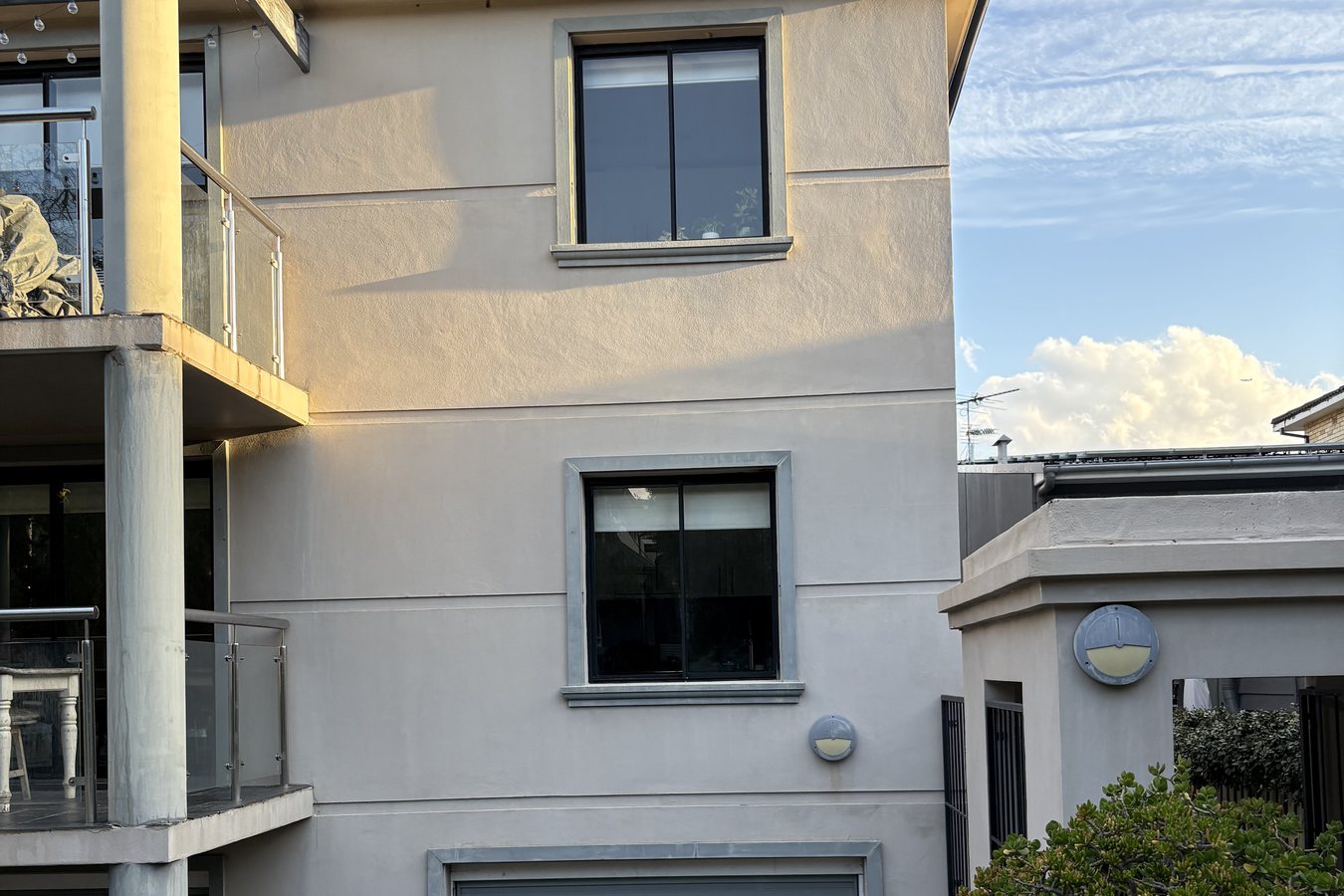
Height is the bigger challenge across most of the suburb. Post-war low-rise flats, the two-storey inter-war flat buildings of Hampden and King Streets and the newer flats still being built all put glass out of easy reach. With the pole worked from the ground, those windows are cleaned without scaffolding or climbing.
Windows facing Parramatta Road or Liverpool Road sit beside heavy, constant traffic, and the exhaust leaves a film that dulls the glass. Glass on those frontages is worth cleaning more often than windows facing a quiet side street.
Brush box in the older streets plays a part too. It flowers over much of the year and drops leaf and bark flakes, so street-facing glass under those trees collects its share of debris along with ordinary dust.
Clean glass changes how a room feels. More daylight comes through, and the view out, whether across a bungalow street or from a third-floor balcony, is no longer seen through a grey haze.
Purified water is what makes the result last. It contains no dissolved minerals and no detergent goes on, so it dries spot-free without leaving a soapy layer. Frames and sills are cleaned as part of the job, so grime gathered along timber ledges is removed at the same time.
For strata buildings, working from the ground keeps things simple. The outside of the glass can be done without arranging entry to individual units, and before-and-after photos give the committee a clear record. Interior glass can be added on request for owners or tenants who want both sides done.
Landlords and agents benefit at changeover. With a large share of Ashfield's residents renting, sparkling windows are an easy way to lift how a property photographs and presents to the next tenant.
And because nobody climbs a ladder, garden beds under the windows and the original timber joinery are left undisturbed.
Yes, for the outside of the glass. The carbon-fibre water-fed pole is worked from the ground and reaches upper storeys without ladders, so exterior panes, frames and sills can be cleaned without anyone entering the unit. If you would like the interior glass done as well, that can be arranged on request.
Because the pole is worked from the ground, no ladder rests against the frame or sill at any point. That suits the original timber-framed windows council wants retained in many Ashfield conservation areas. Frames and sills are cleaned along with the glass, using purified water and no detergent, so nothing harsh touches old paint.
Exhaust from heavy traffic leaves a film on glass that dulls it over time. Purified water cleaning lifts that film along with ordinary dust and marks, and since no detergent is used, nothing is left on the pane to streak. Frames and sills on the road-facing side are cleaned at the same visit.
They do. Purified water has had its minerals taken out, so there is nothing left behind to form spots as it dries. That is why detergent is unnecessary, and it is also why the method works as well on wide apartment glass as it does on the smaller panes of a Federation house.
Water-fed poles, purified water and spot-free glass up to three storeys, without a ladder against your gutters.
Proudly serving Sydney with expert exterior cleaning.
MONDAY: 7:30 AM — 6:00 PM
TUESDAY: 7:30 AM — 6:00 PM
WEDNESDAY: 7:30 AM — 6:00 PM
THURSDAY: 7:30 AM — 6:00 PM
FRIDAY: 7:30 AM — 6:00 PM
SATURDAY: CLOSED
SUNDAY: CLOSED