Marrickville windows face the street with no front garden to buffer them, so they take everything that passes. A fine grey film from the flight path and the main roads settles on the glass within weeks of a clean, and on original timber sash windows there is not much room for error in how you remove it.
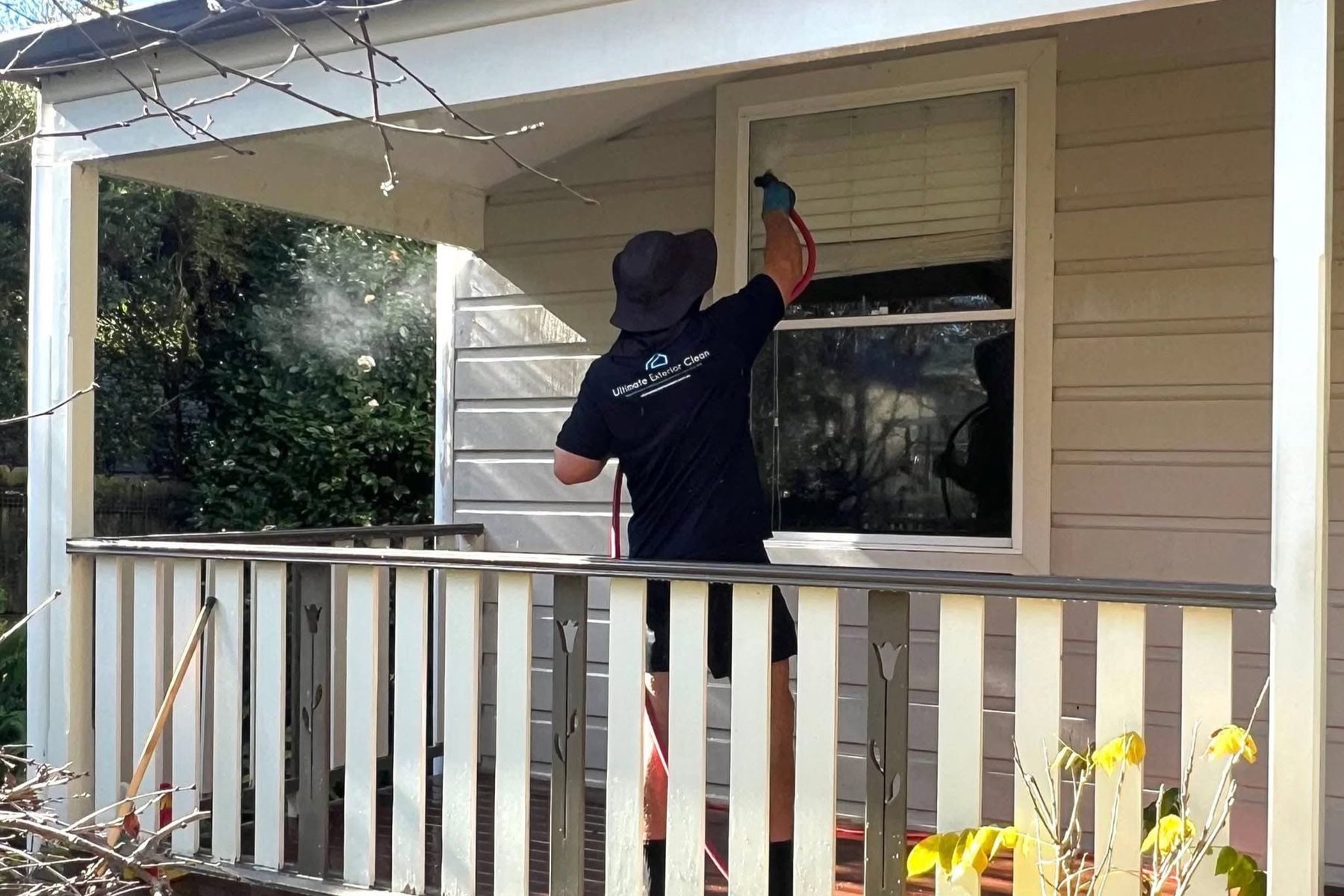
The thing that dulls glass in Marrickville is airborne and constant rather than seasonal.
Sitting under the airport approach and between two busy road corridors, the suburb collects a fine particulate that settles evenly on every exposed pane. It is slightly greasy, so it bonds rather than blowing off, and rain streaks it instead of clearing it. Because terraces and semis are built to the front boundary, street-facing windows have no setback and no garden to intercept any of it, and they show the film faster than almost anywhere.
The glazing is mostly original. Victorian and Federation terraces here have timber sash windows with painted glazing bars, putty lines and deep reveals that trap dirt in the recess. Some carry coloured or etched glass in the front door surround and fanlight, which is soft and easily damaged.
Rear elevations are a different job. Small courtyards and narrow side passages stay damp, and the frames and sills of windows facing them grow a green film.
Water-fed poles handle the reach on two-storey frontages without a ladder in the street or against a parapet, and the purified water dissolves the particulate and dries clear with no detergent residue.
Terraces are deep and narrow, and most of the natural light in one arrives through a small number of windows. That makes the state of the glass matter more here than in a house with light on four sides.
A grey particulate film cuts a surprising amount of that light, and because it builds evenly across every pane the whole house dims gradually rather than obviously. Owners consistently underestimate how much brighter the front rooms get after a proper clean, precisely because the change happened slowly.
On the joinery there is a preservation case. Timber sash windows rely on putty holding the glass, and painted glazing bars are original on a lot of these houses. Scraping at dirt in the recess damages both, and repairing or replacing period joinery is specialist work. Dissolving the film rather than abrading it avoids the question.
The frames and sills on the rear elevations are worth including for their own sake, since a green film sitting on timber joinery in a damp courtyard holds moisture against it.
Working from the ground with poles also means no ladder footed on a narrow footpath or in a rear lane.
Water-fed poles, purified water and spot-free glass up to three storeys, without a ladder against your gutters.
Proudly serving Sydney with expert exterior cleaning.
MONDAY: 7:30 AM — 6:00 PM
TUESDAY: 7:30 AM — 6:00 PM
WEDNESDAY: 7:30 AM — 6:00 PM
THURSDAY: 7:30 AM — 6:00 PM
FRIDAY: 7:30 AM — 6:00 PM
SATURDAY: CLOSED
SUNDAY: CLOSED