Marrickville facades collect a grey film that owners usually blame on age. It is not age. It is fine particulate from the flight path and the main road corridors settling on brick and render, and on a terrace laid in lime mortar the instinct to blast it off is the one thing you must not do.
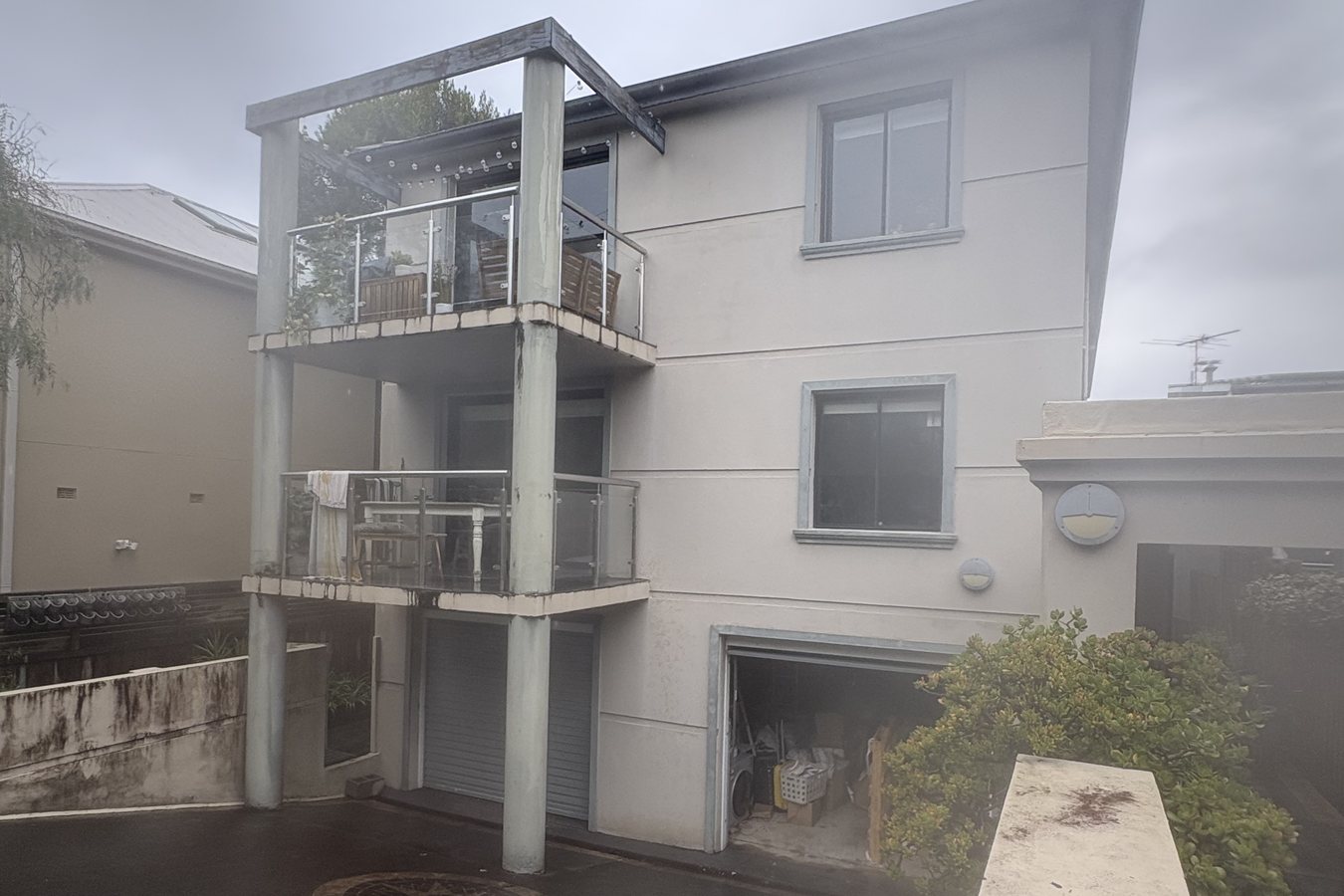
Marrickville walls face the street with almost no setback, which means they catch everything the street produces.
The suburb sits under the airport approach, and the fine particulate that comes with that combines with soot and brake dust from Illawarra Road and Marrickville Road. It settles as an even grey film across the whole facade rather than in patches, which is why people describe the brickwork as having faded rather than as being dirty. Street-facing elevations always show it first, and it is slightly greasy, so it bonds more stubbornly than dry dust.
The building fabric decides the method. Most of the housing is Victorian and Federation terraces and semis in face brick laid with lime mortar, with rendered and painted parapets, string courses and window surrounds. Lime mortar is softer than the brick by design so the wall can move, and a pressure washer strips it out of the joints in a single pass. Repointing a heritage facade costs many multiples of the clean that damaged it.
Behind the terraces, narrow side passages and rear courtyards stay damp and grow the usual mould, and down toward the Cooks River the ground is wetter again.
We use low pressure, a biodegradable solution and dwell time, which lifts the particulate and the mould while leaving the mortar and the paint alone.
The most useful thing a soft wash does on a Marrickville terrace is settle a question: is the facade dirty, or has the paint actually gone?
A great many owners here assume a dull grey frontage means a repaint is due. Frequently it does not. The wall is carrying a film of traffic and aircraft particulate that will come off, and the difference between a cleaned facade and a repainted one is thousands of dollars. On face brick the effect is more dramatic again, because the original brick colour returns rather than being painted over, which on a heritage terrace is the outcome you want.
Protecting the fabric is the other half. These walls are a century old, laid in soft mortar, with original render detailing that is difficult to match. Cleaning them in a way that does not touch the joints keeps repointing off the maintenance schedule entirely, and in a conservation area a non-destructive method is simply the defensible choice.
There is a row effect too. On a terrace the difference between a cleaned facade and its immediate neighbours is unmissable from the footpath, and it lifts how the whole property reads at sale or inspection.
Why low pressure is the right method for render, painted brick and weatherboard, and what the process involves.
Proudly serving Sydney with expert exterior cleaning.
MONDAY: 7:30 AM — 6:00 PM
TUESDAY: 7:30 AM — 6:00 PM
WEDNESDAY: 7:30 AM — 6:00 PM
THURSDAY: 7:30 AM — 6:00 PM
FRIDAY: 7:30 AM — 6:00 PM
SATURDAY: CLOSED
SUNDAY: CLOSED