Strathfield's older homes came with leadlight panels, timber sash windows and deep painted reveals. All of them need a gentler touch than modern aluminium, and all of them show the grey traffic film off the surrounding corridors more obviously than you would expect.
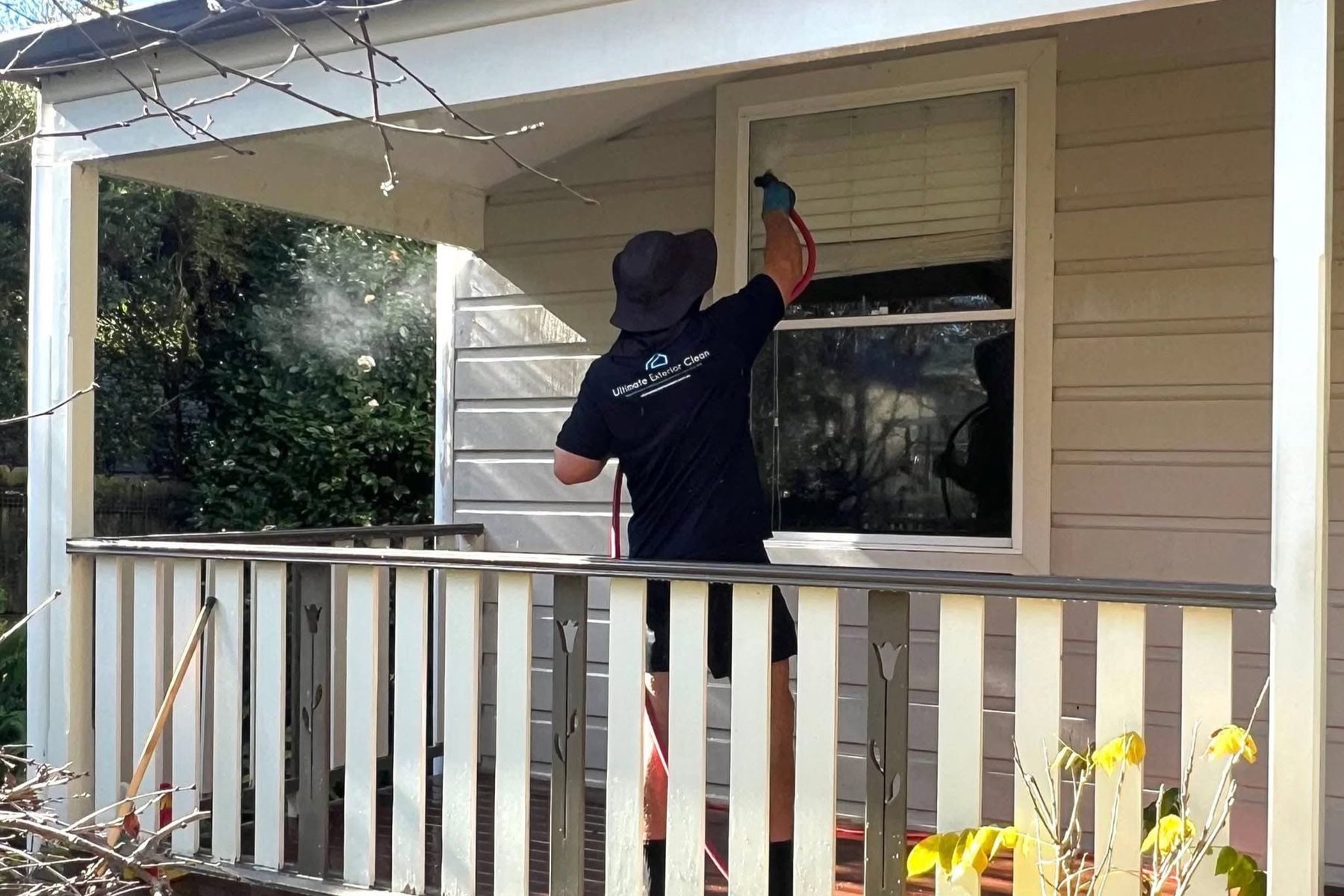
Window glass in Strathfield greys rather than hazes. The fine particulate from the nearby road and rail corridors settles evenly, and on a still week it builds quickly enough to notice, particularly on street-facing elevations and upper-storey windows that nobody reaches between cleans.
The heritage housing brings its own considerations. Leadlight panels are common in Federation homes here, and the lead came that holds the glass is soft and the cement between them is often a century old. High pressure will push panels out of true. Timber sash windows have painted glazing bars and putty lines that hold dirt in the recess and do not respond well to being scraped.
Autumn adds a specific mess. Plane and camphor laurel drop directly onto sills and into window reveals, where wet leaf sits against the timber and stains the paint as it breaks down.
Water-fed poles handle the reach on the large two-storey homes common here without a ladder resting against a heritage sill or gutter. The purified water dissolves the particulate film and rinses clear with no detergent residue and no mineral spotting, and around leadlight we work at low flow rather than forcing water at the panel.
The windows on a Strathfield period home are original, and that changes what cleaning them is for.
Leadlight is the clearest example. The lead came holding those panels is soft and the cement between the glass and the lead is often a century old. Pressure will push panels out of true, and repairing a leadlight window is specialist restoration work priced accordingly. Cleaning it correctly is a preservation task, not a cosmetic one.
Timber sash windows carry the same logic. Painted glazing bars and putty lines hold dirt in the recess, and scraping at them damages paint and putty that is holding the glass in place. Water and dwell time do the job without any of that risk.
The regular benefit is the traffic film. It settles evenly and greys the glass, and because it accumulates on every exposed pane the whole house dulls at once rather than in patches. Clearing it restores far more light to the interior than most owners expect.
Poles reach upper-storey glass without a ladder resting on original sills or guttering.
Water-fed poles, purified water and spot-free glass up to three storeys, without a ladder against your gutters.
Proudly serving Sydney with expert exterior cleaning.
MONDAY: 7:30 AM — 6:00 PM
TUESDAY: 7:30 AM — 6:00 PM
WEDNESDAY: 7:30 AM — 6:00 PM
THURSDAY: 7:30 AM — 6:00 PM
FRIDAY: 7:30 AM — 6:00 PM
SATURDAY: CLOSED
SUNDAY: CLOSED