Concord kept its housing stock. Street after street of California bungalows and interwar brick homes still carry their original terracotta tile, and that changes what a roof clean is for here. It is less about appearance than about protecting a roof covering that is now a century old and not easily replaced.
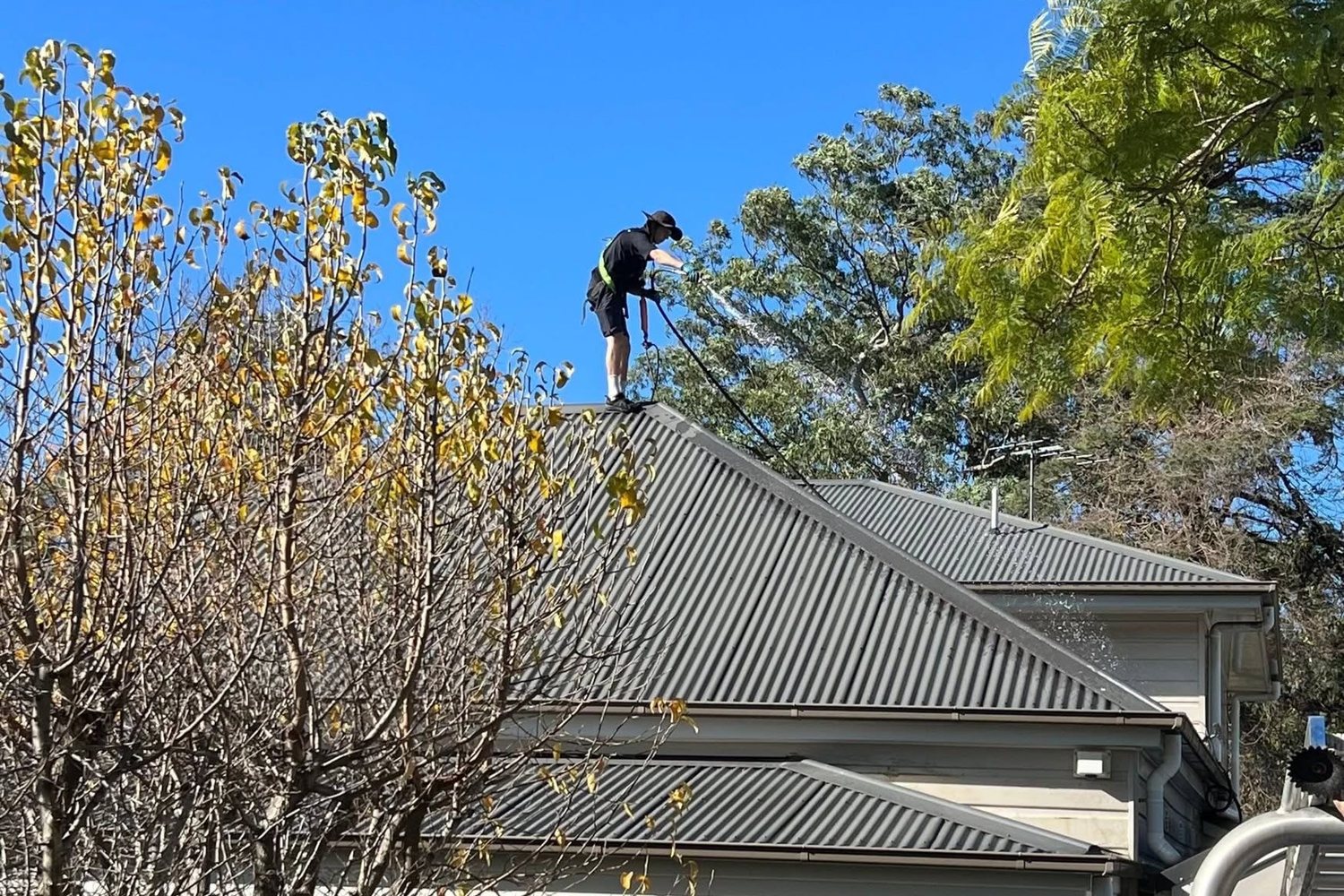
Two things drive roof growth in Concord, and neither is coastal.
The first is the river. Sitting on the Parramatta River with Majors Bay and Exile Bay cutting into the suburb, Concord holds humidity that inland Inner West suburbs do not. Morning damp lingers on roof planes, particularly on the streets closest to the water, and that extra moisture is what lets lichen establish on a roof that would stay comparatively clear a few kilometres south.
The second is canopy. The established plane, brush box and jacaranda planting through these streets is mature and dense, and roof planes beneath it stay shaded well into the day. Southern and south-eastern pitches carry the heaviest growth.
The roofing itself sets the method. Original Marseille-pattern terracotta from the 1920s and 1930s has usually lost some surface glaze, which lets lichen root into the clay rather than sit on it. Pressure that a modern concrete tile shrugs off will take the surface with it. Some of the larger interwar homes carry slate, which is more fragile again.
We match pressure and product to the material, clear the valleys in the same visit, and work to City of Canada Bay requirements on wash water.
The strongest argument for cleaning a Concord roof is that most of them still have the tiles they were built with.
Marseille-pattern terracotta from the interwar period is no longer made to the same profiles, so matching it means salvage rather than a supplier. On a California bungalow the roof is also a defining part of the architecture, with its low pitch, wide eaves and decorative ridge capping visible from the footpath. Replacing it in a modern tile changes the character of the house and, on the better examples, the value.
That reframes cleaning as life extension rather than cosmetics. Lifting lichen before it roots deeply into aged, partly de-glazed terracotta is the single most useful thing an owner can do for that roof.
The ridge pointing is the other consideration. Lichen holding permanent moisture against the ridge line works into century-old pointing, and repointing a full ridge on a bungalow with multiple gables runs well into four figures.
Because we work the valleys in the same visit, cracked tiles, failed pointing and corroded valley irons get identified while they are still isolated repairs.
How we clean tile, terracotta and metal roofs across Sydney, what the process involves and what it costs.
Proudly serving Sydney with expert exterior cleaning.
MONDAY: 7:30 AM — 6:00 PM
TUESDAY: 7:30 AM — 6:00 PM
WEDNESDAY: 7:30 AM — 6:00 PM
THURSDAY: 7:30 AM — 6:00 PM
FRIDAY: 7:30 AM — 6:00 PM
SATURDAY: CLOSED
SUNDAY: CLOSED