Concord sits on the river and keeps its damp. Morning moisture lingers on brickwork here longer than it does further inland, and combined with the mature canopy over these streets it grows the dark film you see creeping up from the base of a bungalow wall on the shaded side.
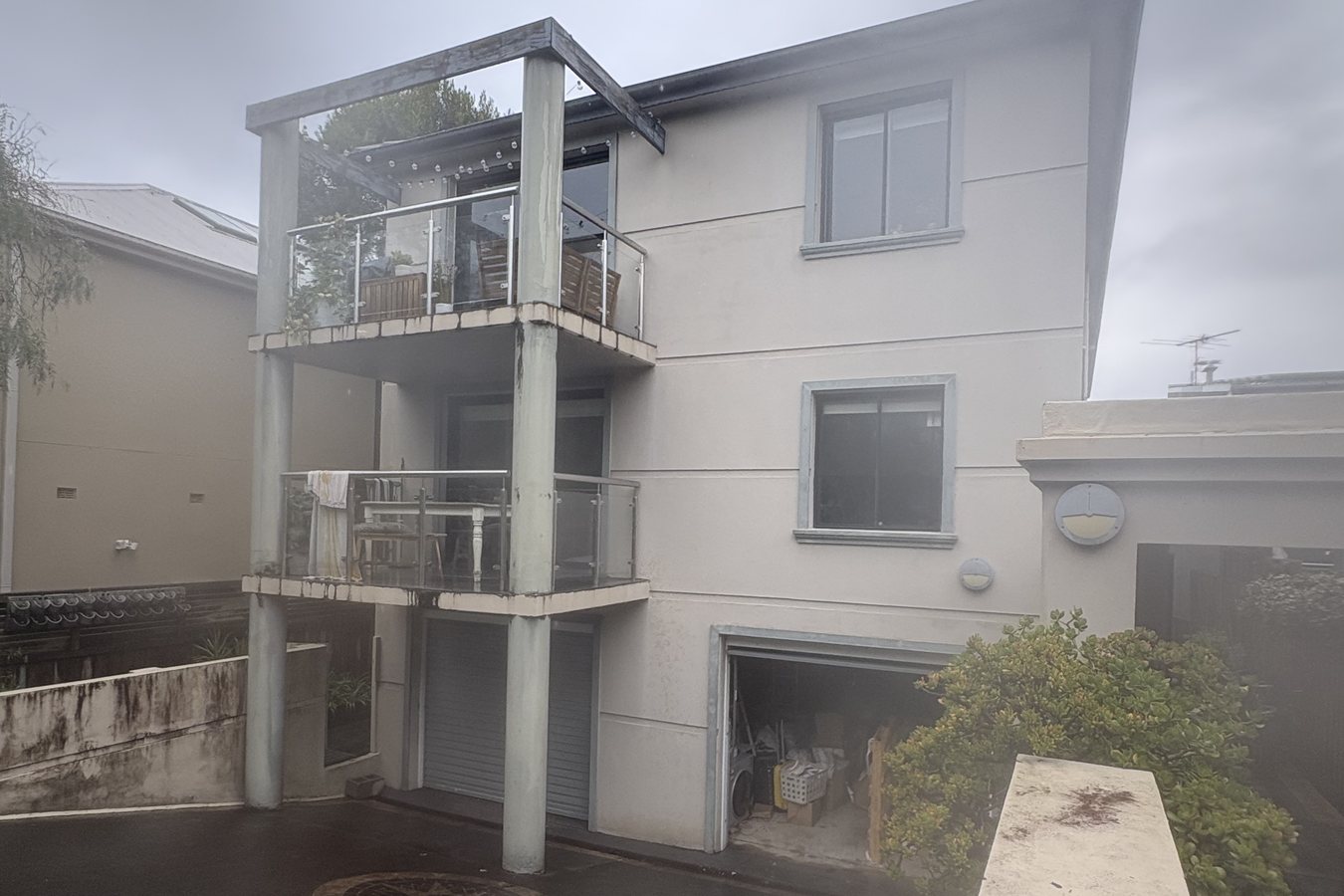
The Parramatta River is the reason walls stay damp in Concord, and the canopy is the reason they stay shaded.
With Majors Bay and Exile Bay cutting into the suburb, humidity sits over these streets in the mornings and takes longer to lift than it does a few kilometres inland. Add the mature plane, brush box and jacaranda planting overhead and south-facing elevations, side passages and anything set behind established garden hold moisture from one rain event to the next. That grows the green-black film that starts at the base of a wall and works upward.
The substrates are largely period. California bungalows and interwar homes here are face brick with rendered and painted detailing, tuckpointing on the better examples, and painted timber on porch posts, brackets and window joinery. Older brickwork laid in softer mortar will lose its joints to a pressure washer, and painted timber detailing lifts once water gets behind the film.
There is no coastal salt and comparatively little traffic film, so what you are removing here is almost entirely biological.
We use low pressure, a biodegradable solution and proper dwell time, then rinse gently, which suits brick, render, painted timber and fibro alike.
Concord trades on the quality and consistency of its period housing, and the exterior detail is a large part of what a buyer is actually paying for.
That makes the method matter more than the result. Face brick laid in soft mortar, tuckpointing, rendered string courses and painted timber brackets are all expensive to repair and difficult to match, and a pressure washer damages every one of them. Cleaning that removes growth without touching the joints or the paint film keeps an original facade original, which is not something you can undo later.
The paint-life argument applies as well. Mould growing in and under a coating holds moisture permanently against it and degrades it from behind, so the shaded river-side elevations here routinely need repainting years before the rest of the house. Washing on a schedule brings the whole property back onto one longer cycle.
On the timber elements the stakes are higher again, because timber that stays wet behind a failing paint film starts to rot, and replicating a bungalow bracket or a run of moulded fascia is joinery work.
Killing the growth at the root also means the result holds through the following winter rather than returning within months.
Why low pressure is the right method for render, painted brick and weatherboard, and what the process involves.
Proudly serving Sydney with expert exterior cleaning.
MONDAY: 7:30 AM — 6:00 PM
TUESDAY: 7:30 AM — 6:00 PM
WEDNESDAY: 7:30 AM — 6:00 PM
THURSDAY: 7:30 AM — 6:00 PM
FRIDAY: 7:30 AM — 6:00 PM
SATURDAY: CLOSED
SUNDAY: CLOSED