Manly has water on two sides, and roofs here take salt from both. Very few Sydney suburbs are this exposed. Add the Norfolk Island pines along the beachfront, the art deco walk-ups through the middle, and streets too narrow and steep for easy access, and roof work here needs planning before anyone climbs anything.
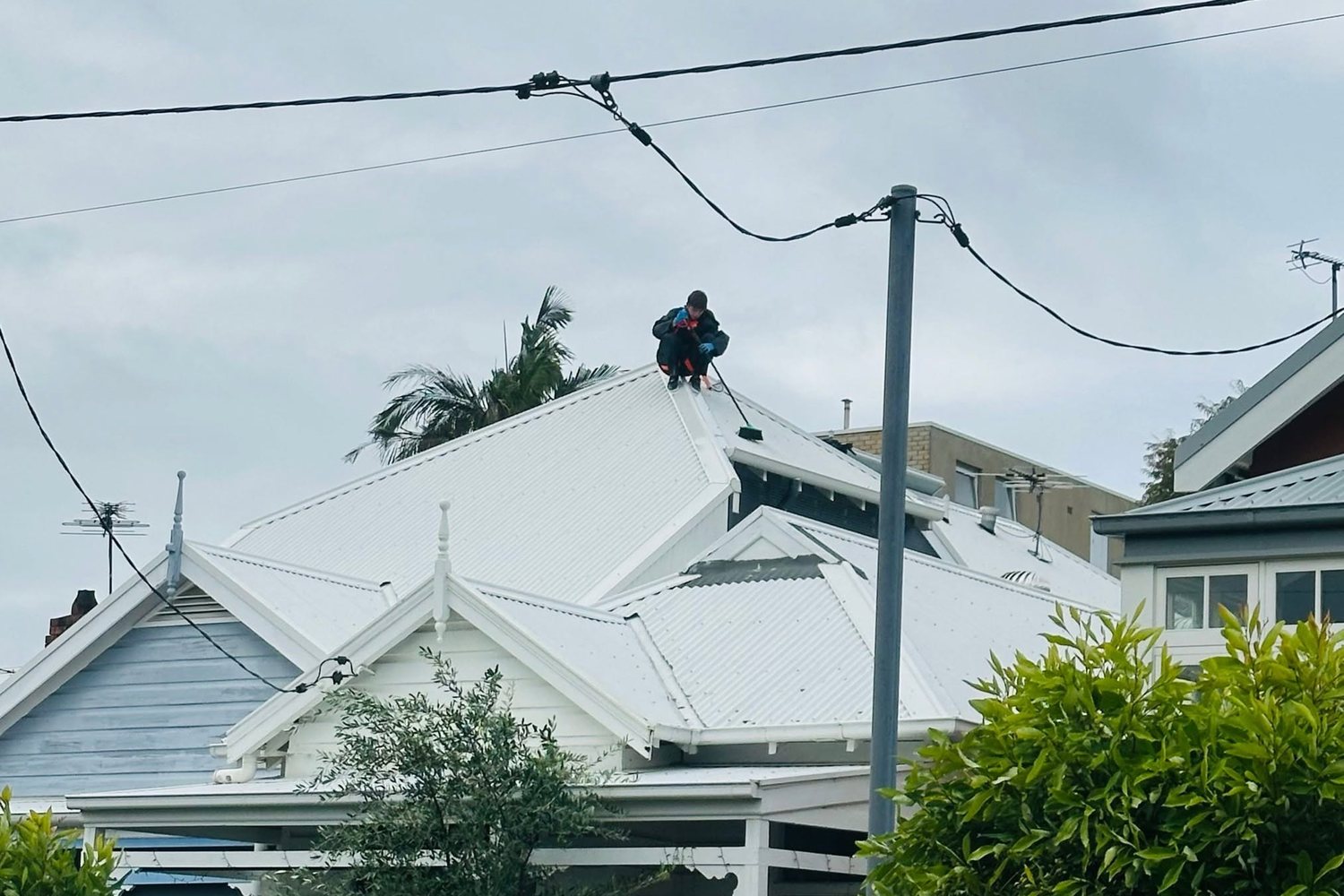
Sitting on the isthmus between the ocean and the harbour, Manly is about as salt-exposed as Sydney roofing gets, and unlike a suburb with one coastline there is no sheltered side to retreat to.
Salt is hygroscopic, so it does not dry to a dust and blow away. It stays faintly damp, binds airborne grit to the surface and holds moisture against whatever it settles on. On the unglazed concrete tile through the middle of the suburb that means algae and lichen persist even through drier months. On metal roofing, and on the older Zincalume in particular, it concentrates around fixings and sheet laps where corrosion starts.
The building stock adds its own requirements. Federation and interwar semis carry original terracotta, the art deco walk-ups have low-pitch roofs behind parapets, and the heritage conservation areas mean a good deal of original material that is expensive to match.
Norfolk Island pines are the local debris source. The needle fall is fine, near-continuous, and packs into valleys and box gutters where it holds salt-laden moisture against the roof.
We work at low pressure matched to material and finish with a thorough fresh-water rinse, because carrying the salt off matters more here than the scrub itself. Access on the narrow streets is planned in advance.
On a Manly roof the clock runs faster than it does inland, and that is the whole argument for staying ahead of it.
Salt does not simply sit on a surface, it accelerates the breakdown of whatever it lands on. On metal roofing, corrosion beginning at the fixings and laps does not stay local: once it takes hold in a sheet you are replacing the sheet rather than treating it, and on a two-sided exposure like this that process starts years earlier than it would a few kilometres west.
On tile, salt holding permanent moisture against a porous surface feeds the lichen and works into the ridge pointing. Repointing a ridge line is a four-figure job and a re-roof a five-figure one, and on a heritage property in a conservation area the terracotta has to be matched before either can happen.
Property values here reward presentation heavily, and a roof is a large part of what is visible from the street and from the hills above.
Because a rinse removes the salt rather than just the growth, a properly finished clean holds far longer in this position than a scrub that leaves the salt in place.
Salt is hygroscopic, so it never dries to a dust and blows away. It stays faintly damp, binds airborne grit to the surface and holds moisture against whatever it settles on. On the unglazed concrete tile through the middle of Manly, that keeps algae and lichen alive when a roof inland would be drying out.
Here it often is. Sitting on the isthmus between the ocean and the harbour, Manly roofs take salt from both sides with no sheltered side to retreat to. We clean at low pressure matched to the material, then give the roof a thorough fresh-water rinse, because salt left behind keeps working at fixings, sheet laps and tile surfaces.
Access is planned in advance rather than worked out on the day. Many streets are too narrow and steep for easy setup, so we look at where equipment can go and how the roof will be reached before anyone climbs anything. Everyone on the roof is certified to work safely at heights, and we carry full public liability insurance.
Before any corrosion shows. On Manly's two-sided exposure, salt concentrates around fixings and sheet laps, and once corrosion takes hold in a sheet it means replacing the sheet rather than treating it. Regular cleaning with a fresh-water rinse lifts that salt before it settles in, and you receive before-and-after photos of the roof.
How we clean tile, terracotta and metal roofs across Sydney, what the process involves and what it costs.
Proudly serving Sydney with expert exterior cleaning.
MONDAY: 7:30 AM — 6:00 PM
TUESDAY: 7:30 AM — 6:00 PM
WEDNESDAY: 7:30 AM — 6:00 PM
THURSDAY: 7:30 AM — 6:00 PM
FRIDAY: 7:30 AM — 6:00 PM
SATURDAY: CLOSED
SUNDAY: CLOSED