Randwick arrays have a problem most suburbs do not: they sit under a flight path used by flying foxes and a very large bird population moving between Centennial Park and the coast. Droppings are opaque, and on a solar panel an opaque mark does not dim a cell, it blocks it.
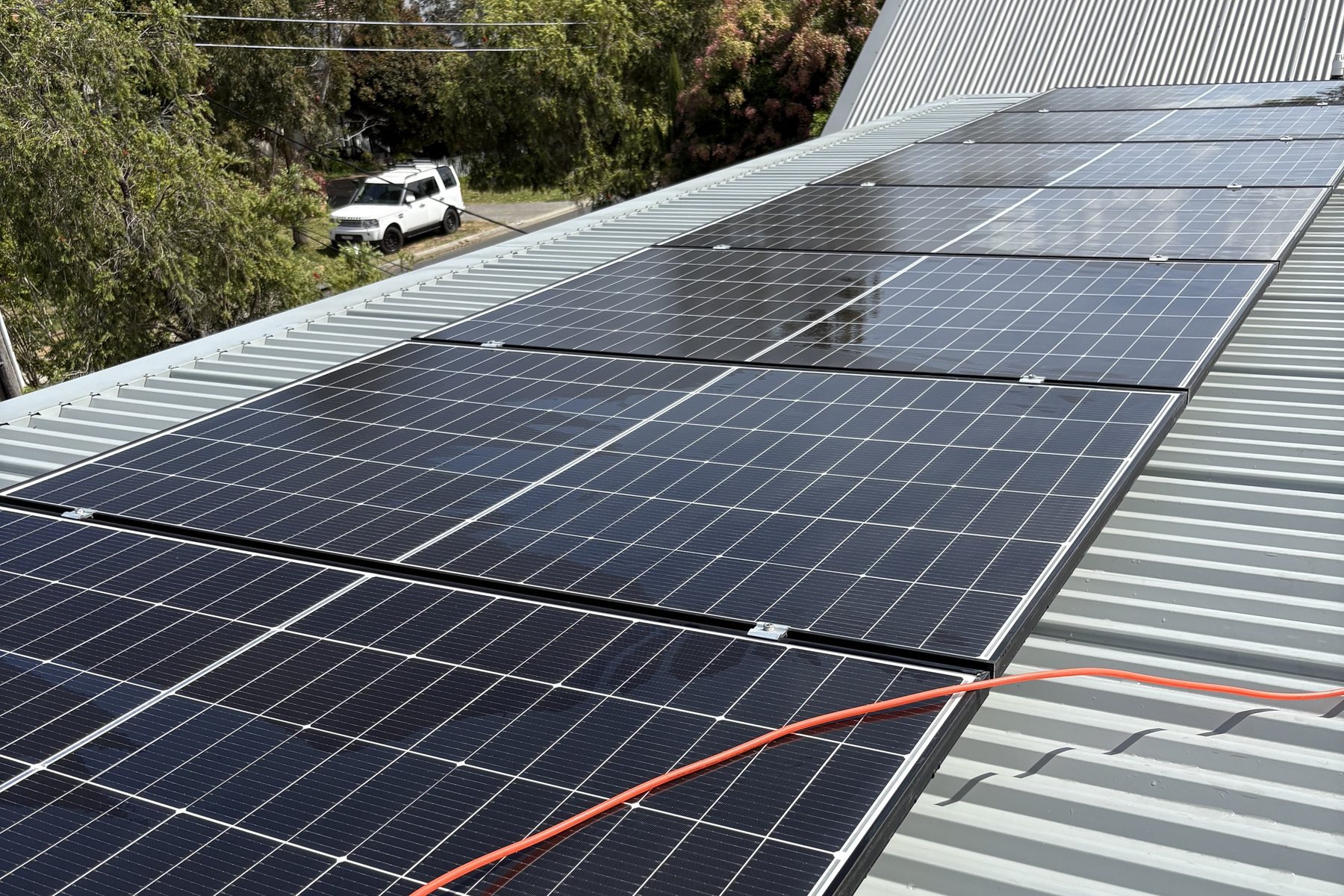
Two local factors do most of the damage to a Randwick array, and neither is ordinary dust.
The first is fouling. The suburb sits on the movement corridor between the Centennial Park reserves and the coast, and grey-headed flying foxes and large birds both pass over it in numbers. Bat droppings and fruit debris are acidic and dry hard onto glass, and gull and ibis droppings do the same. Because a dropping is opaque rather than translucent it blocks a cell outright, and since cells run in series within a panel, one fully shaded cell throttles the current for the whole string it belongs to. A handful of small marks can cost far more generation than their surface area suggests.
The second is the canopy. Randwick's Moreton Bay figs are enormous, and an array that was installed in full sun a decade ago may now be partially shaded for part of the day. Fig leaf and fruit landing on panels compounds it, because the leaf is heavy and waxy and does not slide off a low-pitch array.
A light coastal salt film binds airborne dust to the glass on top of all that.
We clean with purified water and a soft brush, no detergent, working from roof ladders and height-safety gear rather than walking the array.
The single most useful thing to understand about a Randwick array is how disproportionate the cost of bird and bat fouling is.
Because panels are wired in series, output is limited by the worst-performing cell in a string. That means a few opaque droppings scattered across a panel do not cost you the two percent of surface they cover; they can throttle an entire string. Owners frequently look at an array that appears mostly clean and cannot understand why generation has dropped.
Left long enough the problem stops being about performance. Droppings bake onto the glass in summer sun and are acidic enough to etch the surface permanently, and etched glass is a hardware cost rather than a cleaning one. Performance warranties generally assume reasonable maintenance, so neglect can matter there too.
There is a diagnostic benefit as well. Because the canopy has grown around a lot of these installations, cleaning establishes whether your reduced output is soiling or shading. That is worth knowing before anyone spends money adding panels to compensate.
Purified water leaves no residue for the next round of dust and salt to key into, so the result holds longer than a hose and a sponge.
How we clean arrays with purified water and no detergent, and why output recovers once the glass is clear.
Proudly serving Sydney with expert exterior cleaning.
MONDAY: 7:30 AM — 6:00 PM
TUESDAY: 7:30 AM — 6:00 PM
WEDNESDAY: 7:30 AM — 6:00 PM
THURSDAY: 7:30 AM — 6:00 PM
FRIDAY: 7:30 AM — 6:00 PM
SATURDAY: CLOSED
SUNDAY: CLOSED