On Kingsford's separate houses, the cottages and bungalows that make up about a third of local homes, a solar array has to contend with busy Anzac Parade nearby, sandy dune soils and a growing crop of young street trees, and each adds something to the glass. Solar panel cleaning with purified water and no detergent removes that film and dries spot-free, without leaving residue behind for fresh dust to stick to.
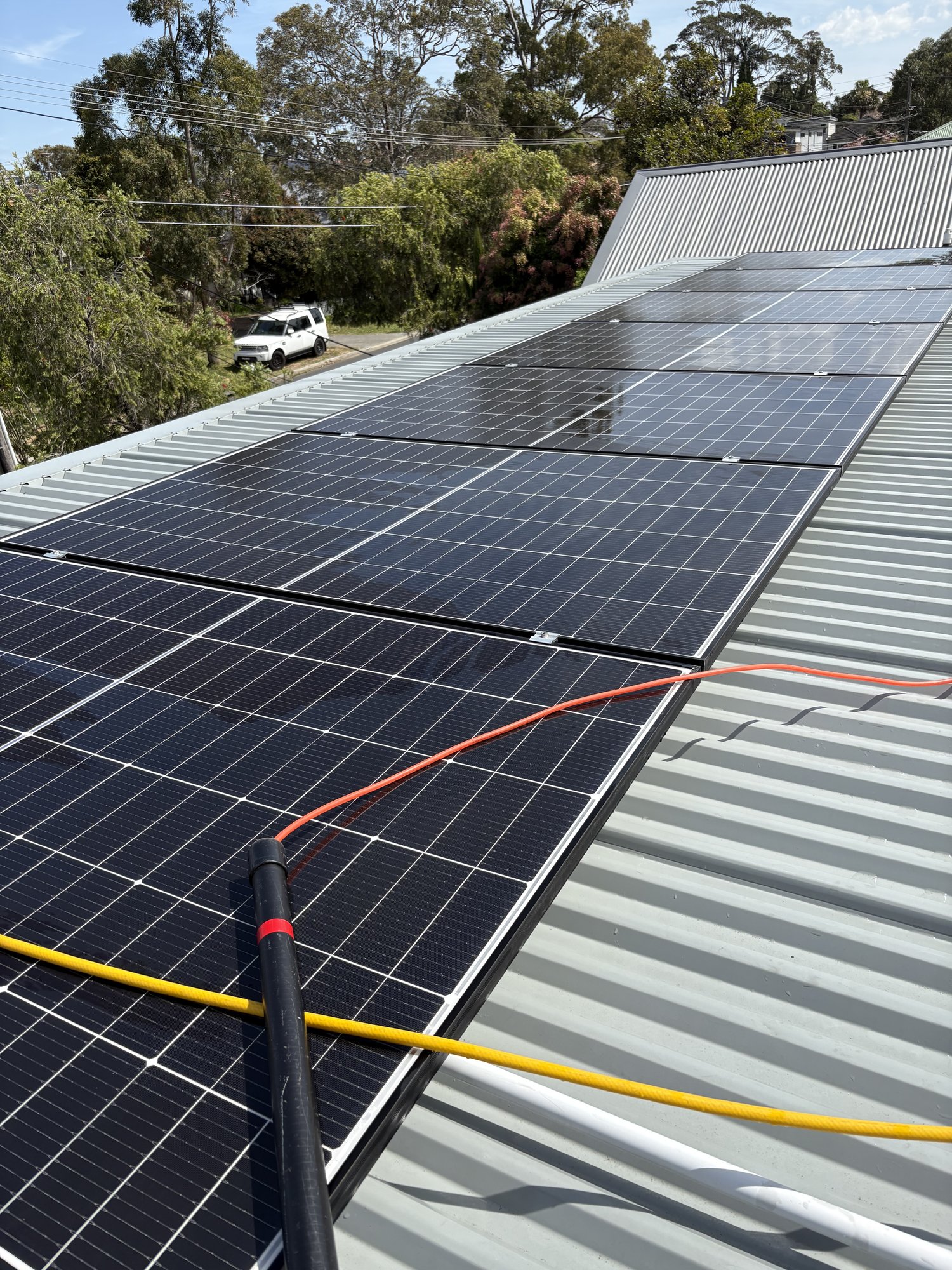
Dust is the steady background. Kingsford sits on the Botany Sands, wind-blown dune deposits running up from Botany Bay, and dry, windy days lift fine material that settles on any low-pitched array. Morning dew then binds it to the glass as a dull film.
Traffic adds soot. Anzac Parade is the suburb's main road, carrying general traffic and the L3 light rail to its terminus near the Nine Ways, and houses on or close to it collect a grey, oily residue that rain does not fully shift.
Then there is biology. When the cycleway from the Kingsford terminus towards Centennial Park was built, council proposed native replacement trees including blueberry ash, whose berries attract seed-eating birds, and lilly pilly, which bears red fruit. Where fruiting trees grow near a roof, birds tend to follow, and droppings land on the panels below. Flowering trees also shed pollen that sticks to the glass.
Coogee Beach is about four kilometres east, so a light salt film can also appear after onshore winds.
Panels convert the light that reaches the cells. A uniform dust film shaves a little off output across the whole array, while an opaque mark such as a bird dropping can block part of a cell and drag down the panels wired with it. Neither fixes itself completely in the rain, especially on low-pitched installations where water runs off slowly.
Cleaning with purified water matters for the glass as well as the yield. Tap water leaves mineral spots as it dries, and detergents can leave a residue. Purified water with no detergent dries spot-free and is gentle on the glass and its coatings, so it does not create a sticky base for the next layer of dust.
There is a diagnostic benefit too. If your system's output has dropped, a clean shows whether the cause was soiling or something else, such as new shade from a growing tree or a neighbouring building. That is worth knowing before anyone suggests more panels or a new inverter.
Before-and-after photos come with every clean, so you can compare the panels yourself.
Traffic soot is oily, so it smears and sticks instead of sitting loose like dust. Homes near a main road such as Anzac Parade collect more of it, and rain alone rarely removes it. Purified water lifts the film and dries spot-free without detergent, which helps the glass stay cleaner for longer.
It can. Birds feeding in fruiting or berry-bearing trees often perch on nearby roofs, and droppings on a panel block light more completely than dust. Even a few marks can reduce output from the affected panel. Cleaning removes them along with the pollen and dust settled around them.
Tap water leaves mineral spots as it dries, and detergent can leave a residue that attracts dust and may not suit the glass coatings. Purified water with no detergent dries spot-free and protects the glass, which is why it is the only method used for solar panel cleaning.
Cleaning removes soiling, not shade, but it does help separate the two. Once the panels are clean, any remaining drop in output is more clearly down to shading, which is useful information if you are considering moving or adding panels. You will also get before-and-after photos of the array.
How we clean arrays with purified water and no detergent, and why output recovers once the glass is clear.
Proudly serving Sydney with expert exterior cleaning.
MONDAY: 7:30 AM — 6:00 PM
TUESDAY: 7:30 AM — 6:00 PM
WEDNESDAY: 7:30 AM — 6:00 PM
THURSDAY: 7:30 AM — 6:00 PM
FRIDAY: 7:30 AM — 6:00 PM
SATURDAY: CLOSED
SUNDAY: CLOSED