Randwick sits far enough back from the water to escape the worst of the salt, but close enough that it still lands on every roof. Combine that with the deep shade thrown by the suburb's mature figs and you get roofs carrying heavy lichen on one pitch and looking almost clean on the other. The housing runs from Victorian slate through to post-war concrete tile, and each of those needs a different approach.
Randwick's roofs are a cross-section of a century of Sydney building, and that variety is the first thing that shapes the work.
Through the conservation areas near The Spot and along Alison Road there is original slate and Marseille-pattern terracotta on Victorian and Federation homes. Behind them the post-war streets carry unglazed concrete tile, and the newer infill closer to the hospital and university is mostly Colorbond. Slate and aged terracotta will not tolerate the pressure a 1970s tile roof shrugs off, so the method is chosen per property rather than per booking.
Exposure here is moderate rather than severe. Sitting roughly two kilometres back from Coogee, Randwick catches salt on the easterly without the constant aerosol a beachfront suburb lives with. What it does have in quantity is shade. The Moreton Bay figs and plane trees through the older streets are large and dense, and roof planes beneath them stay damp long enough for lichen to establish, particularly on southern and south-eastern pitches.
Fig leaf is the other factor. It is heavy and waxy, breaks down slowly, and packs into valleys where it holds moisture against the tiles rather than blowing clear the way eucalypt litter does.
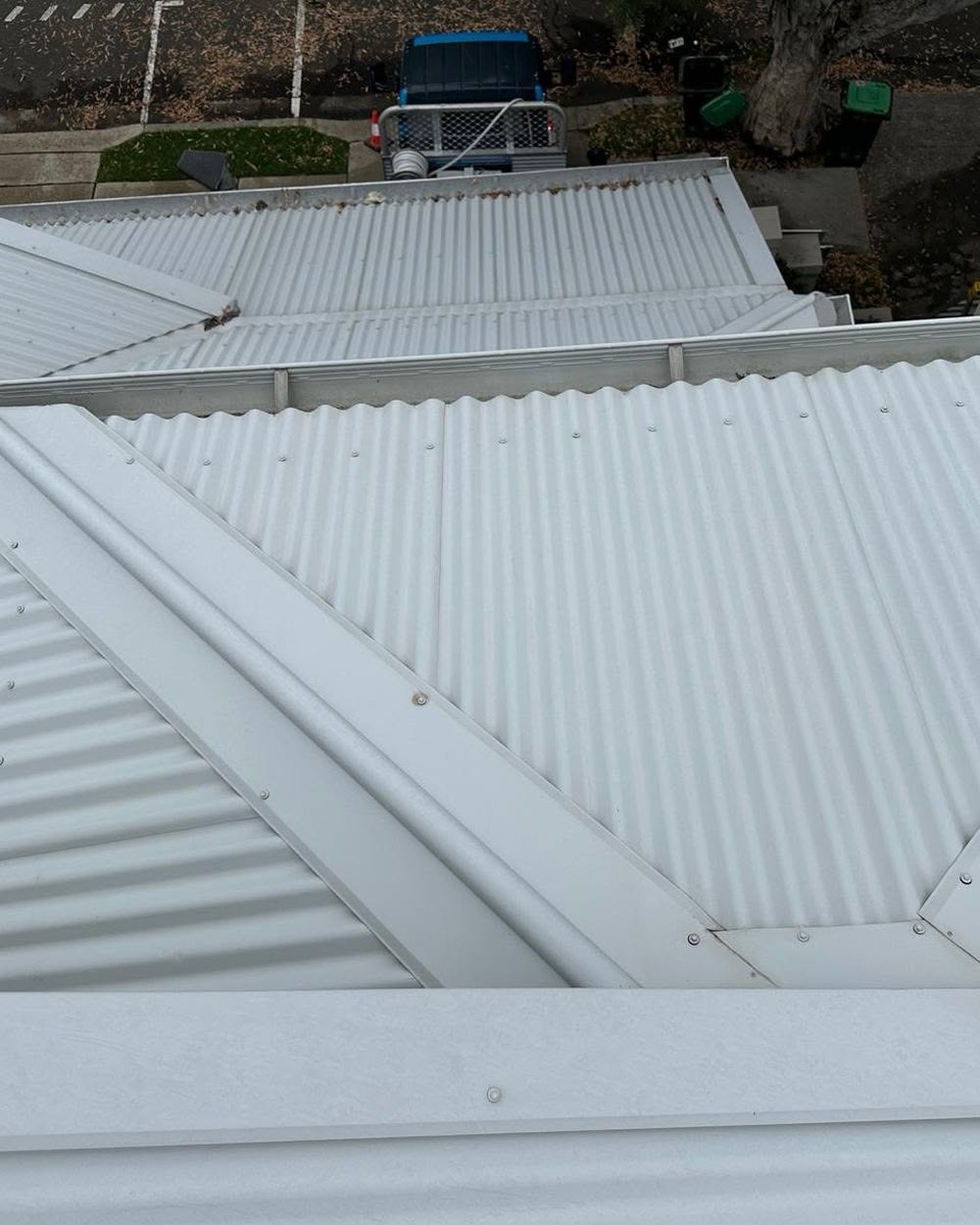
We match pressure and product to the roofing material, clear the valleys in the same visit, and contain wash water in line with Randwick City Council requirements.
The argument for cleaning a Randwick roof turns mostly on how much of the local housing stock cannot be replaced like for like.
In the conservation areas the slate and Marseille terracotta is original, and matching it means salvage rather than a trip to a supplier. Council also has a view on what is permitted to go back up. That makes cleaning a life-extension job rather than a cosmetic one, and lifting lichen before it roots into aged terracotta is the single most useful thing you can do for that roof.
On the post-war concrete tile through the middle of the suburb the case is more ordinary but no less real. Lichen holding moisture against porous tile degrades the surface and works into the ridge pointing, and repointing a full ridge line runs into four figures well before anyone mentions a re-roof.
There is a tenancy and resale angle as well. Randwick carries a lot of investor-owned housing around the university and the hospital, and a streaked roof shapes what a property achieves at inspection more than most owners expect.
Because our crews are up there anyway, cracked tiles, slipped slates and failing flashings get flagged while they are still individual repairs rather than a section replacement.
How we clean tile, terracotta and metal roofs across Sydney, what the process involves and what it costs.
Proudly serving Sydney with expert exterior cleaning.
MONDAY: 7:30 AM — 6:00 PM
TUESDAY: 7:30 AM — 6:00 PM
WEDNESDAY: 7:30 AM — 6:00 PM
THURSDAY: 7:30 AM — 6:00 PM
FRIDAY: 7:30 AM — 6:00 PM
SATURDAY: CLOSED
SUNDAY: CLOSED