Westleigh's roofs do not follow a single pattern. Scan recent sale listings and you find a slate-roofed A-frame recorded as a 1970 house, brick homes with Colorbond replaced as recently as 2021 and 2023, and two-storey homes in the Settlers Green and Sanctuary Gardens estates. Sitting on one bush-edged ridge, they all face different slopes, shade and damp. Roof cleaning here starts with identifying what is up there and which way each plane faces.
The RFS describes Westleigh as ridge-top development with varying aspect, exposure and slope, and that variety is what decides where growth appears. Its bulletin observes that country to the east and south-east of the suburb typically receives less sun than land to the north-west, and so stays wetter. The same logic works at roof scale. A plane turned away from the northern sun, particularly one that looks into a gully or a wall of retained trees, can hold moisture long after the rest has dried.
Retained trees are common here. The Dictionary of Sydney records that clearing for houses was done carefully to preserve native vegetation, which can leave trees close to the roofline. Bark, twigs and needles can lodge on the roof surface, particularly in valleys and against raised sections, and each small pile keeps its patch damp, giving moss and lichen a foothold.
Building form plays a part too. Homes built from 1967 onward include split-level and multi-level designs, so one house can carry several roof planes at different heights, some shaded by the others. A steep A-frame presents much more roof to the weather than its footprint suggests.
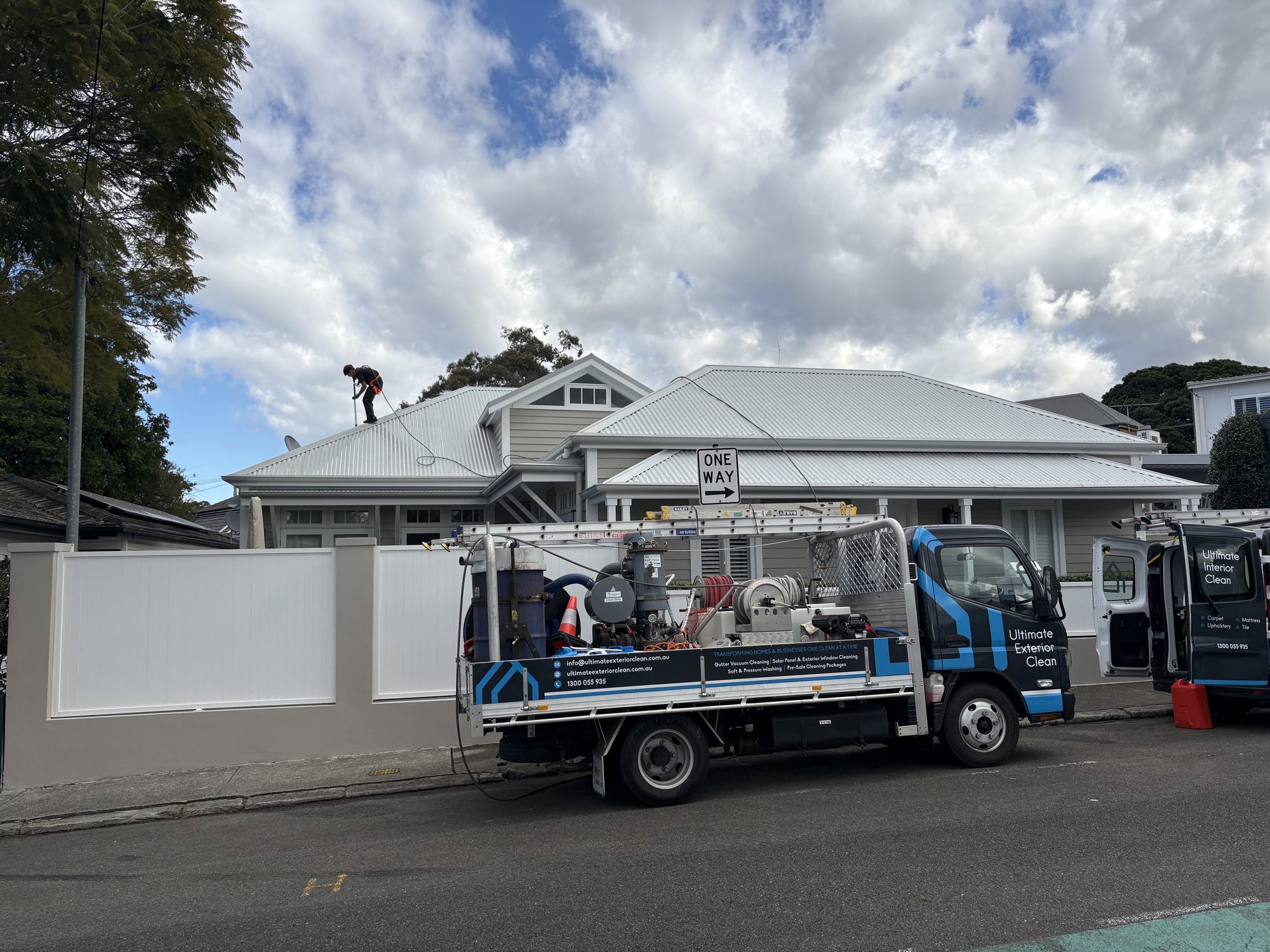
Every roof is inspected first, then cleaned with a soft wash or controlled pressure to suit its condition. Concrete and terracotta tile, slate, and corrugated or Colorbond metal are all covered.
Most Westleigh households own the home they live in, and 2021 Census figures reported by Microburbs put outright ownership at about 46 per cent. For the owner of a house from the 1970s or 1980s, the question is how to get more years from a roof that has already given plenty. Moss and lichen hold water against the surface, so taking them off while they are still shallow reduces that constant damp.
Looking first has its own value. Slipped or cracked tiles, worn slate, rust on older sheets and lifted edges all show up more plainly once the growth is gone. The RFS bulletin points out that fine soot and ash can lodge under roof tiles or loose roof edges during ember attack, which makes a loose edge worth knowing about in a suburb like this.
A newer Colorbond roof deserves attention as well. Replacing a roof is a big outlay, and keeping it free of growth and black streaks preserves the look you paid for.
Once clean, the roof receives an anti-mould and lichen treatment to slow regrowth, most useful on shaded planes that dry slowly. Biodegradable products are safe around gardens, pets and children, which suits a family garden on the bush edge. Before-and-after photos show what was done up where you cannot easily look.
Yes, slate is one of the roofing types covered, alongside terracotta and concrete tile and metal. It is inspected before anything else happens, because the method depends on the condition of the slates and fixings. Then the choice between a soft wash and controlled pressure can be made.
Age is not the only factor. Shade, retained trees and litter on the surface can all keep a section of metal damp, and that gives mould and algae something to work with. A clean followed by the anti-mould and lichen treatment helps slow it down on those slower-drying sections.
It usually gets less sun and dries more slowly. Westleigh sits on a ridge with forested gullies to the north and south-west, and the RFS notes that east and south-east country stays wetter. Planes looking into trees or a slope tend to grow moss and lichen first.
Everything applied is biodegradable and eco-friendly, and the company's safety claim covers gardens, pets and children. If your block backs directly onto bushland or the Great North Walk, say so when you call so it can be taken into account at the inspection.
How we clean tile, terracotta and metal roofs across Sydney, what the process involves and what it costs.
Proudly serving Sydney with expert exterior cleaning.
MONDAY: 7:30 AM — 6:00 PM
TUESDAY: 7:30 AM — 6:00 PM
WEDNESDAY: 7:30 AM — 6:00 PM
THURSDAY: 7:30 AM — 6:00 PM
FRIDAY: 7:30 AM — 6:00 PM
SATURDAY: CLOSED
SUNDAY: CLOSED