In Newtown the roofs are part of what heritage controls protect. Council's statement for the Enmore-Newtown conservation area singles out its roofscapes as high quality, with ridgelines parallel to the street, regular chimneys and few second-storey additions to break the rhythm. Slate with decorative ridge capping survives on some Holmwood Estate terraces. Roof cleaning here is about taking off moss, lichen and black streaks while leaving the roofscape looking the way council wants it kept.
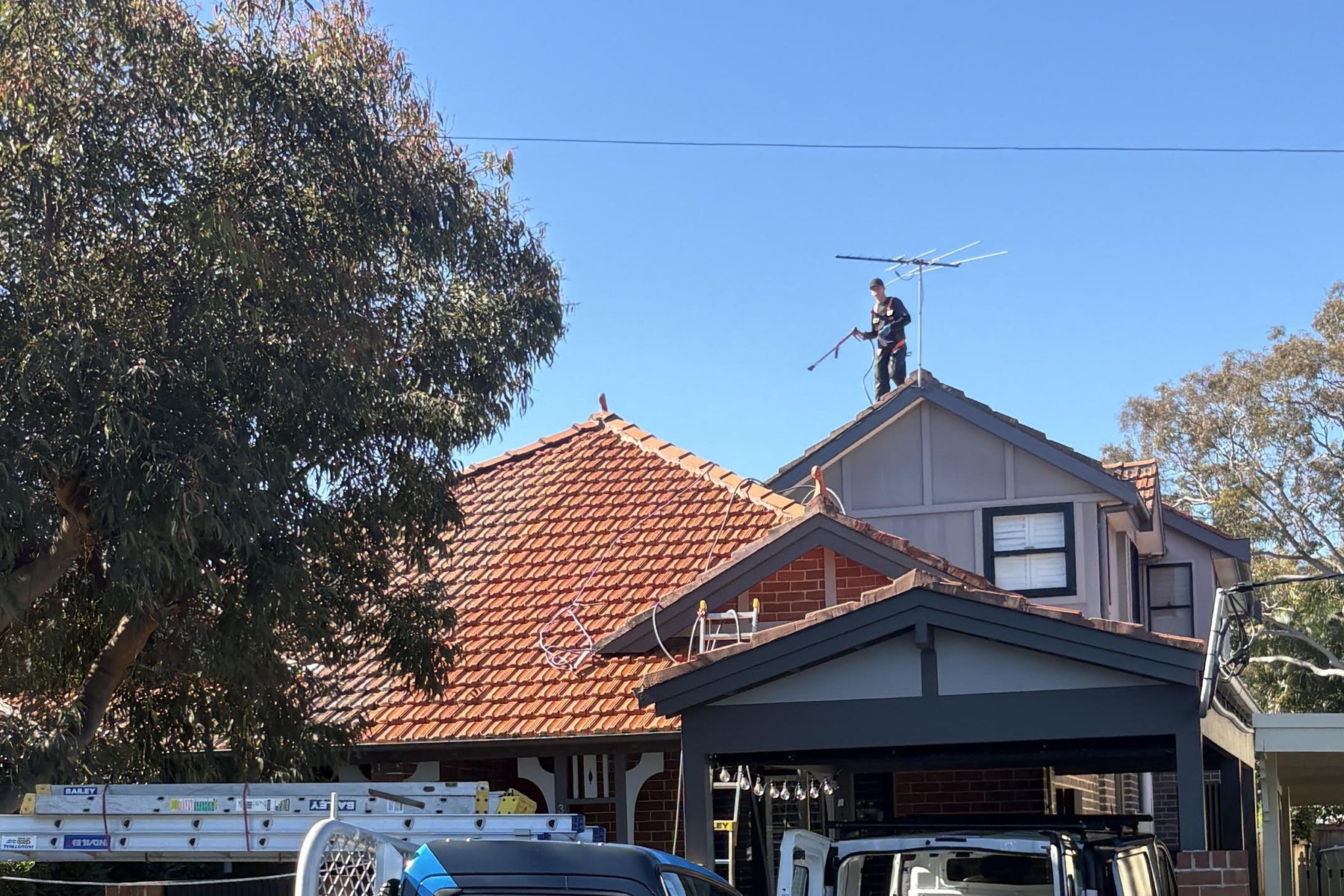
Newtown's roofs are small and closely packed. Terraces about 4 metres wide sit in long runs, many with party walls raised above the roof, and at the northern end of the Enmore-Newtown area the two-storey rows on Holt and Station Streets present strong parapet lines to the street. Further down the slope, around Simmons and Margaret Streets, modest single-storey terraces take over, and some early rows there sit under a single hipped roof shared by several houses.
Materials vary from house to house. Council's heritage statements record slate on some terraces and list concrete tiles and inappropriate metal sheeting among the changes that detract from a streetscape, which tells you original roofing is valued. Roof cleaning covers terracotta and concrete tile and corrugated or Colorbond metal. If your roof is slate, say so when you ask for a quote so it can be talked through first.
Growth follows shade and moisture. A raised party wall, a chimney stack or a neighbour's taller parapet can keep part of a roof plane in shadow for much of the day, and those damp corners are where moss and lichen tend to settle. Roofs near the large trees of Camperdown Memorial Rest Park, Salmon Park or Enmore Park also catch leaf litter that holds moisture against the surface.
Every roof is inspected before work starts, and the inspection decides whether a soft wash or controlled pressure cleaning suits each surface.
On a heritage street, a roof is seen as part of a group. When one roof in a run of matching terraces is streaked black or blotched with lichen, it breaks the consistent pitch and rhythm that council's conservation statements value, and the contrast is obvious from the footpath opposite or from the upstairs windows across the street.
Removing growth also slows wear. Moss and lichen hold water against tile and metal, and on older roofing that persistent damp speeds up decay. Once the roof is clean, an anti-mould and lichen treatment is applied to slow regrowth, which pays off most on planes that sit in the shadow of a parapet or party wall.
The inspection at the start has value of its own. Cracked or slipped tiles, rust on metal sheets and tired flashings around chimneys are far easier to spot on a clean roof. Dealing with them as small repairs is much simpler than tracing a leak through the ceiling of a terrace with a shared wall on either side.
Each roof clean is documented with before-and-after photos. For an owner selling a terrace in a conservation area, or a landlord keeping records on a rental, they show exactly what condition the roof was in and what was done to it.
The aim is to remove moss, lichen, mould and black streaks, not to alter the roof. The roofing itself is not replaced or painted as part of a clean. If you are unsure what your conservation area allows for roof work, Inner West Council or the City of Sydney can advise, depending on which side of the boundary you are on.
It can. On rows built under a single hipped roof, like some early workers' terraces in south Newtown, there is no firewall marking where one house ends, so mention the layout when you ask for a quote. Having the whole run cleaned at once keeps the roof looking even from the street.
Roof cleaning covers terracotta and concrete tile and corrugated or Colorbond metal. Slate survives on some Newtown terraces and needs to be assessed on its own merits, so tell us it is slate when you call for a quote. The roof is always inspected before any method is chosen.
Growth needs moisture and shade, and on a terrace both are uneven. The side of a raised party wall, the area behind a chimney or a plane overshadowed by a neighbour's parapet can stay damp long after the rest has dried. Those patches are usually where moss and lichen appear first.
How we clean tile, terracotta and metal roofs across Sydney, what the process involves and what it costs.
Proudly serving Sydney with expert exterior cleaning.
MONDAY: 7:30 AM — 6:00 PM
TUESDAY: 7:30 AM — 6:00 PM
WEDNESDAY: 7:30 AM — 6:00 PM
THURSDAY: 7:30 AM — 6:00 PM
FRIDAY: 7:30 AM — 6:00 PM
SATURDAY: CLOSED
SUNDAY: CLOSED