Upstairs glass on a Paddington terrace usually has something in front of it. Many houses have a first-floor balcony enclosed by a cast iron balustrade, and some rows are built to the front boundary with the balcony cantilevering over the footpath. A ladder has few good places to stand in that arrangement. A carbon-fibre water-fed pole with purified water is worked from the ground, so upper storeys are reached without leaning anything against the lace.
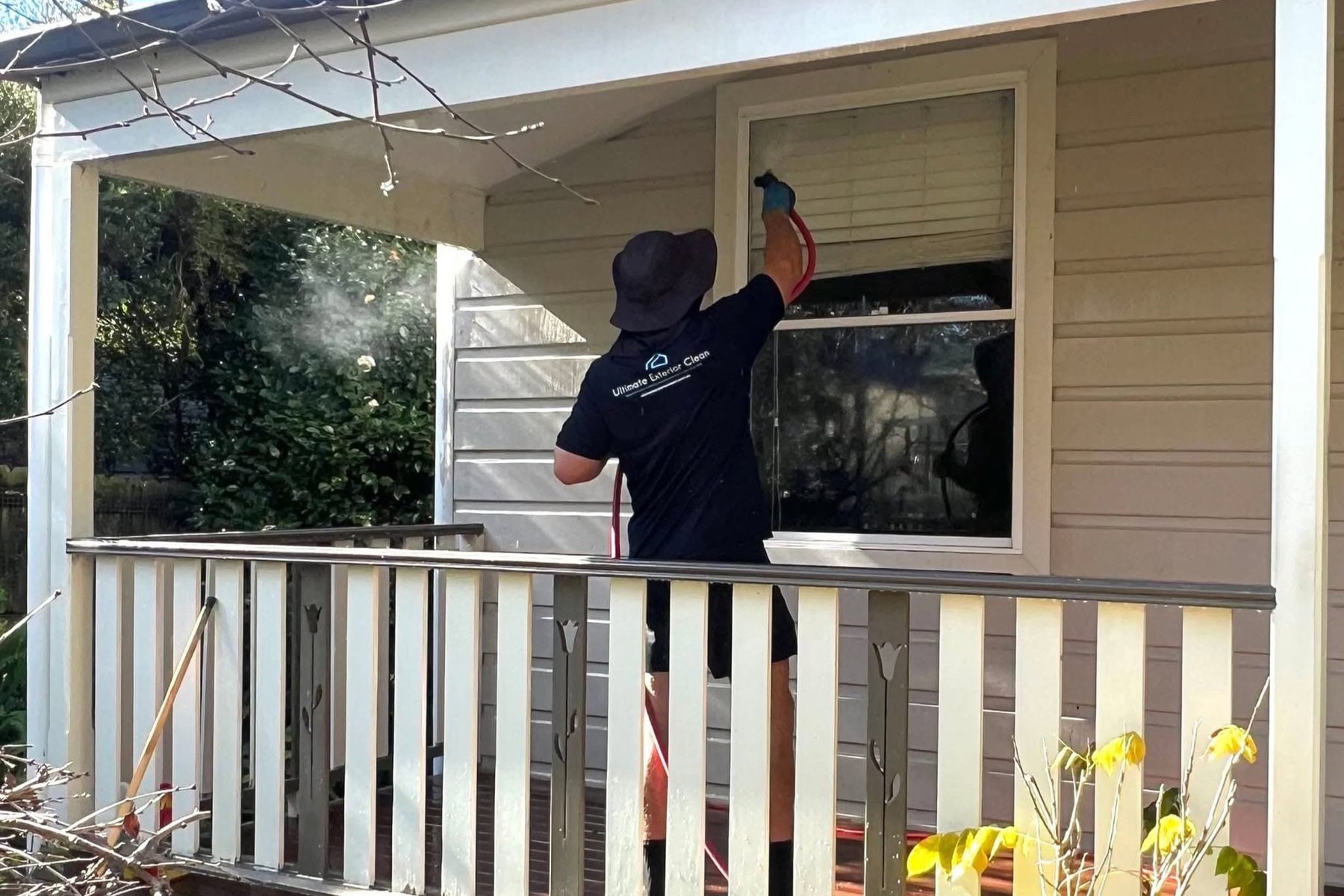
The frames themselves are worth noticing. Traditional windows here are timber double hung sashes, with plain glass and sometimes patterned or coloured glass, and Woollahra's controls list aluminium frames in the front elevation as intrusive. Timber is the expected finish on these fronts. Frames and sills are cleaned along with the glass, and purified water leaves no detergent on the timber.
Street layout changes the approach. The old village on the western side has short, angled, narrow roads and rows that often sit at zero setback, so the pole may have to work from the footpath. Eastern streets are wider and often have a lane behind, which can give a second way to reach the rear. South of Oxford Street, the City of Sydney's conservation area is predominantly two to three storey Victorian terraces with lanes inside the larger blocks. The slope adds another variable: a terrace with a basement taking up the fall of the site can have one more level of glass at the back than it shows at the front.
Dirt differs from place to place. Above-awning windows along Oxford Street face the primary bus corridor between Bondi Junction and the city, and soot and road grime settle on glass and sills. On Paddington Street, the trees stand close to the road and overhead cables run along one side, so mention that when you ask for a quote.
Inter-War flats and 1960s and 1970s units also sit among the terraces. The pole suits homes and low-rise buildings, and taller buildings are assessed first.
A terrace in the middle of a row typically has party walls down both sides, which leaves the front and rear as the main places for windows. Rooms in that kind of house depend on a small number of panes for their daylight, so clearing grime and film makes a noticeable difference to how bright they feel. It helps most in rooms set back behind a balcony roof, where less light reaches the glass to start with.
For some homes the prize is the view. Council's heritage chapter describes panoramic views over the harbour, the foreshores and the city skyline from private properties as well as public places, and a hazy pane dulls that outlook every day it is left. A slope that opens up a view can also mean a high rear window that is hard to reach by hand, which is where working from the ground pays off.
Old timber joinery benefits from a little regular attention. Clearing grit and dirt from sills and frames keeps the sashes looking cared for, and on a house where original windows are valued, that is a modest way to look after them.
Oxford Street's shops have become a destination for fashion retail, and clean glass above and below the awning is part of how those buildings present. Interior glass can be added on request, and before-and-after photos are supplied with every job.
The water-fed pole is designed to reach upper storeys from the ground, without ladders. A deep balcony or a low balcony roof can change the angle, so tell us about the layout when you ask for a quote. If you can open the balcony for access on the day, mention that as well.
Purified water with no detergent is used on glass, frames and sills, and it dries spot-free. Patterned and coloured glass appears in some Paddington building types, so point it out when you ask for a quote, along with any loose putty, cracked panes or flaking paint so they can be considered first.
The pole suits homes and low-rise buildings, and taller buildings are assessed first. Paddington has a mix of Inter-War flats and 1960s and 1970s units, so heights vary considerably. A strata committee or managing agent can call 1300 055 935 for a free quote, and upper floors can be talked through then.
Above-awning windows are the sort of glass a pole worked from the ground is meant for, though the awning depth, footpath and bus lanes can affect the setup. Commercial buildings are covered. Let us know the number of levels and whether there is a rear lane you can use when you ask for a quote.
Water-fed poles, purified water and spot-free glass up to three storeys, without a ladder against your gutters.
Proudly serving Sydney with expert exterior cleaning.
MONDAY: 7:30 AM — 6:00 PM
TUESDAY: 7:30 AM — 6:00 PM
WEDNESDAY: 7:30 AM — 6:00 PM
THURSDAY: 7:30 AM — 6:00 PM
FRIDAY: 7:30 AM — 6:00 PM
SATURDAY: CLOSED
SUNDAY: CLOSED