Ocean-facing glass in Coogee hazes over within weeks of a clean, and washing it with tap water never quite works because the minerals dry back onto the pane. On a walk-up block the problem is compounded by the fact that nobody can safely reach the upper floors.
Coogee is a high-glass suburb, and almost all of that glass points at the water.
The blocks along the beachfront and up the slopes behind it were built to face the bay, which means large windows and balcony doors on the most exposed elevation available. Salt aerosol lands on them continuously. Because salt is hygroscopic it stays faintly damp instead of drying to a dust that blows off, and it catches windblown sand and dust to build the grey haze that dulls a view even when the glass looks dry. East and north-east elevations get the worst of it, which is exactly where the outlook is.
Aluminium sliding door tracks are the secondary problem. Salt and beach sand collect in the tracks and drainage slots, and over time that shows as pitting and stiff, gritty doors well before anyone blames the windows.
Access is the practical constraint. On strata property, ladder work over common paths, garden beds and carpark aprons is generally restricted and rarely safe, and the steep streets here leave little level footing anyway.
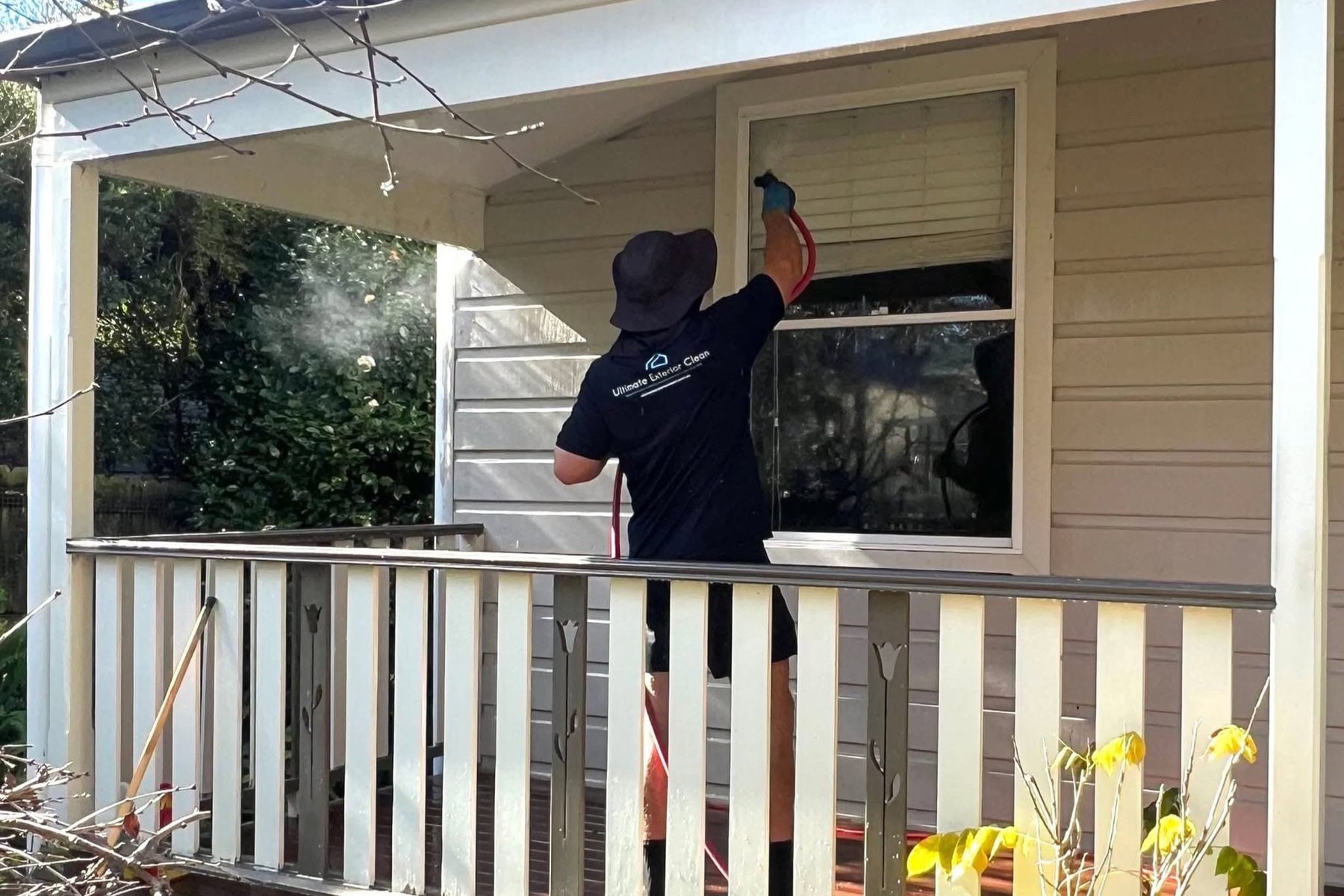
Water-fed poles reach three storeys from the ground with nothing resting against the building, and the purified water dries clear with no mineral spotting.
Owners here clean their own glass, watch the haze return within a fortnight and conclude that coastal windows are a lost cause. The method is the problem rather than the effort.
Sydney tap water carries dissolved minerals. Wash salt-filmed glass with it, let it dry, and those minerals stay behind as a fine deposit that then attracts and holds the next round of salt. Every clean done that way makes the following one harder. Purified water carries nothing, so the glass dries genuinely clear and stays clear noticeably longer in a position like this.
Beyond appearance there is hardware to protect. Salt collecting in aluminium tracks and drainage slots causes corrosion pitting, and a corroded track is a repair rather than a clean. Clearing the tracks matters as much as the panes.
For an owners corporation the return is simpler again: upper-level glass on a Coogee block frequently goes uncleaned for years purely because nobody can reach it, and clean, evenly finished glass across a whole facade is one of the cheapest ways to lift how a building presents.
And the view is most of what these apartments are worth.
Salt aerosol lands on it continuously. Salt holds moisture, so rather than drying to a dust and blowing off it stays faintly damp and traps windblown sand and grit, building a grey haze. East and north-east elevations cop the worst of it, which is unfortunately where most Coogee views point.
Sydney tap water carries dissolved minerals. On salt-filmed glass, those minerals dry into a fine deposit that holds on to the next round of salt, so each home clean makes the following one harder. We use purified water, which carries nothing, so the glass dries spot-free with no detergent and stays clear for longer.
Yes. Ladder work over common paths, garden beds and carpark aprons is generally restricted, and Coogee's steep streets leave little level footing anyway. Our carbon-fibre poles are worked from path level and clean glass up to the third storey without touching the facade. We hold public liability insurance and work on strata buildings as well as houses.
More often than glass inland. Ocean-facing panes can haze over within weeks of a clean, and east and north-east elevations get the worst of the salt, so those windows usually warrant more frequent visits than the rest of the building. Cleaning with purified water helps stretch the gap, because no mineral deposit is left behind for fresh salt to grip.
Water-fed poles, purified water and spot-free glass up to three storeys, without a ladder against your gutters.
Proudly serving Sydney with expert exterior cleaning.
MONDAY: 7:30 AM — 6:00 PM
TUESDAY: 7:30 AM — 6:00 PM
WEDNESDAY: 7:30 AM — 6:00 PM
THURSDAY: 7:30 AM — 6:00 PM
FRIDAY: 7:30 AM — 6:00 PM
SATURDAY: CLOSED
SUNDAY: CLOSED